‘If we don’t fight back, we don’t have a future’: the journalist taking on the ‘tech fascists’ of Silicon Valley
Journalist Gil Durán argues that Silicon Valley billionaires, including Elon Musk and Peter Thiel, have abandoned democratic principles and aligned with a 'fascist movement' to gain economic and political control.
Intelligence analysis by Gemini 2.5 Flash
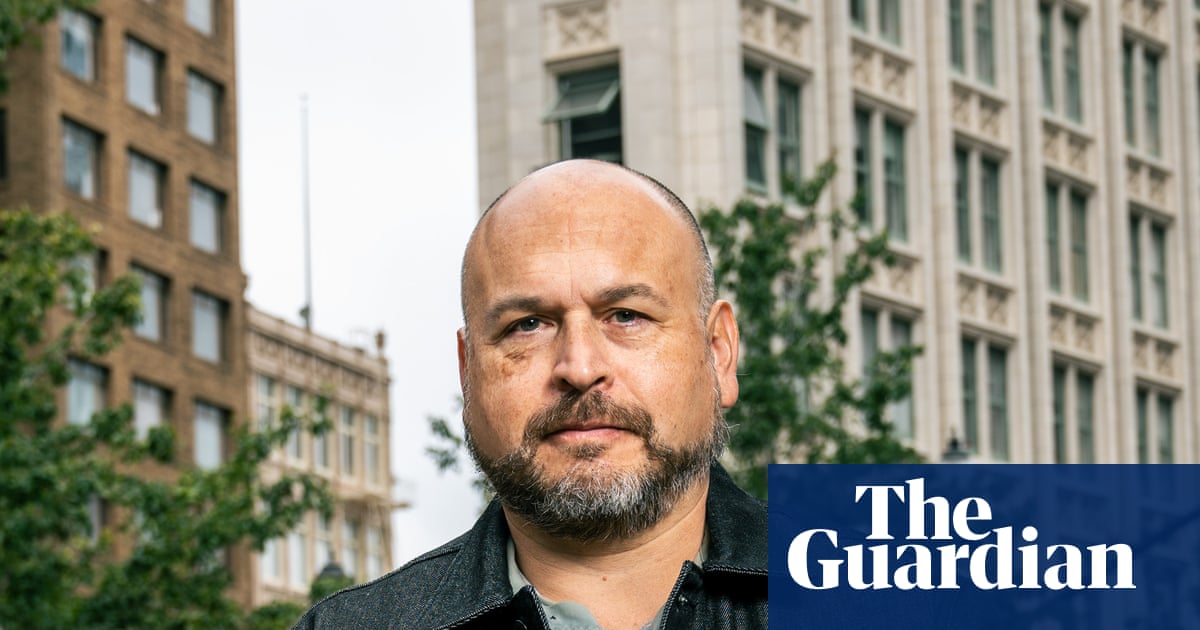
Durán's new book, 'The Nerd Reich,' claims that powerful tech figures are steering society towards their apocalyptic visions, using their wealth and influence to support a political ideology he defines as fascism. He cites examples like Palantir's manifesto, Musk's actions on X, and tech leaders' alignment with Donald Trump.
Imagine some super-rich grown-ups who own big computer companies. This journalist says they're not just making cool gadgets, but they're also trying to control how our country is run and what everyone thinks. He thinks they have some strange ideas about the future and want to make all the big decisions themselves, which could be a problem for everyone else.
Analysis
The Blurring Lines of Power
Journalist Gil Durán's central thesis posits a dangerous convergence of immense wealth, technological prowess, and political ambition within Silicon Valley. He argues that figures like Elon Musk and Peter Thiel, alongside other tech titans, have leveraged their economic dominance to exert significant political control, effectively abandoning traditional democratic ideals. This alignment is not merely ideological but manifests in tangible ways, such as tech leaders reportedly backing Donald Trump's second inauguration and companies like Palantir providing AI-driven surveillance technology for government agencies, enabling actions like deportations. The article suggests a 'cosy relationship' where tech billionaires benefit from government contracts and freedom from regulation, while in turn, they help political figures accumulate wealth through ventures like cryptocurrency. This dynamic raises critical questions about the separation of corporate and state power, and the potential for economic monopolies to translate into unchecked political influence, fundamentally altering the landscape of governance and public accountability.
The Technofascist Ideology
Durán meticulously defines the ideology he labels 'technofascism,' drawing parallels between the Make America Great Again (Maga) movement and the beliefs espoused by Silicon Valley's elite. He characterizes Maga as a 'cult of grievance' that uses propaganda to demonize enemies and establish a permanent hierarchy. By extension, he argues, Silicon Valley has adopted this fascist alignment as a 'vehicle for gaining power.' Beyond political alignment, Durán identifies an 'extreme ideology of tech supremacy' among these figures. While Maga looks to a mythical past, 'technofascists' envision a 'mythical glorious future' of transhumanism and multiplanetary existence, achieved through accelerated technology and the elimination of perceived obstacles. He cites alarming statements from figures like Musk, Thiel, and Marc Andreessen, who have expressed anti-democratic sentiments, described empathy as a weakness, or advocated for technology as a 'violent assault' on the unknown, echoing historical fascist manifestos. These beliefs, Durán suggests, stem from a conviction of their own superiority, born from their billionaire status, leading them to believe they alone should dictate humanity's future.
Implications for Democracy and Society
The implications of this alleged 'technofascist' movement, as outlined by Durán, are profound for both democratic institutions and societal structures. The concentration of economic and political power in the hands of a few unelected tech billionaires, driven by an ideology that views those outside their circle as 'expendable,' poses a direct threat to democratic principles of equality, representation, and individual rights. The article highlights how platforms like X (formerly Twitter) can be used to silence dissenting voices, as exemplified by Durán's own ban for a simple critical comment. This control over information and public discourse, combined with the deployment of advanced surveillance technologies, could erode civil liberties and create a society where dissent is suppressed and a specific, elite-driven vision of the future is enforced. Durán's work serves as a stark warning about the potential for technological advancement, when coupled with unchecked power and extreme ideologies, to undermine the foundations of an open, democratic society, leading to a future dictated by a select few rather than collective will.
Key points
- Journalist Gil Durán's new book, 'The Nerd Reich,' argues that Silicon Valley billionaires are aligning with a 'fascist movement' to gain political and economic control.
- Durán defines 'technofascism' as an ideology of tech supremacy, where elites aim to dictate humanity's future through accelerated technology, often expressing anti-democratic sentiments.
- Examples cited include Elon Musk's actions on X, Palantir's 'technological manifesto,' and tech leaders' support for Donald Trump.
- The article highlights concerns about the blurring lines between corporate and state power, and the potential for economic monopolies to translate into unchecked political influence.
- Durán's ban from X for a critical post is presented as evidence of tech platforms silencing dissenting voices, challenging 'free-speech absolutism'.
The article suggests a future where unchecked tech billionaire influence could lead to a society governed by an elite few, eroding democratic principles, suppressing dissent, and implementing surveillance technologies that undermine civil liberties. This trajectory risks a permanent hierarchy where the interests of 'regular people' are sidelined in favor of a 'technofascist' vision.