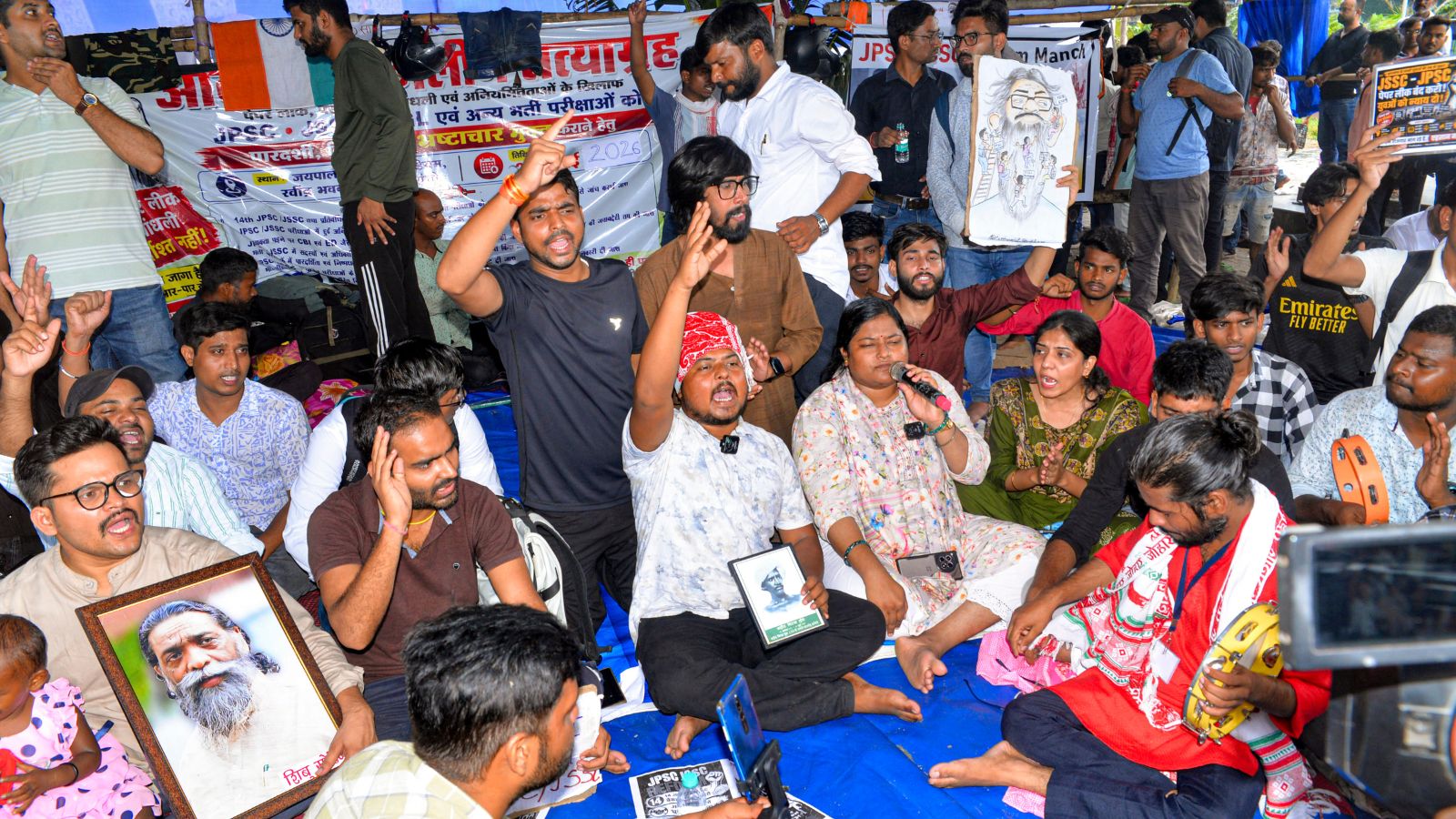
India Inc's Silence on CJP Protests Raises Uncomfortable Questions
India's largest companies face criticism for their silence during recent youth protests. These businesses have contributed to precarious employment conditions for young graduates. Many young Indians feel despair and anger over livelihood issues and exam leaks.
Intelligence analysis by Llama

India Inc's silence on CJP protests raises uncomfortable questions about their involvement in precarious employment conditions for young graduates and their disconnect from Gen Z. Businesses have a direct stake in speaking up when policy failure threatens stability, and their silence may have reputational consequences.
Imagine you're a young person in India, and you're feeling really angry and frustrated because you can't find a good job. You're not alone - many young Indians feel this way because of the way businesses have treated them. Businesses have been quiet about the problems that young people are facing, and that's making things worse. It's like they're not listening to what's really going on.
Analysis
The Disconnect Between Corporate India and Gen Z
The recent CJP protests have made visible the disconnect between corporate India and Gen Z, the very cohort it's hiring from and selling to. This disconnect is evident in the way businesses have contributed to precarious employment conditions for young graduates. The employment that has been generated is largely precarious and, in many cases, exploitative, especially in gig work that is yet to be provided the security of formal economy work. These conditions have contributed in no small way to the despair and anger many young Indians feel. So, the cause for anger transcends exam paper leaks, and spills into livelihood issues.
The Role of Mainstream Media
Much of the mainstream electronic media, sustained by Big Business advertising, continued a narrative that visibly mismatched what was being witnessed on social media feeds that bypassed the usual 'mediator'. AI-enabled facial recognition software and surveillance technologies like Meta AI glasses were, in a way, even product placements. This highlights the need for businesses to speak up on issues that matter to them, rather than relying on mainstream media to present a different narrative.
The Reputational Calculus
Firms that take progressive, credible stances build goodwill with the workforce and customers they will have to depend on for decades to come. The CJP protests have made visible how disconnected much of corporate India remains from Gen Z, the very cohort it's hiring from and selling to. Gen Z has not yet explicitly targeted brands, except for calling some of them out for remaining silent, or using their campaigns for parodies. But these memes and call-outs show that much of Gen Z is watching closely, and many younger employees now expect their leaders to speak on issues that matter to them.
Key points
- India's largest companies face criticism for their silence during recent youth protests.
- These businesses have contributed to precarious employment conditions for young graduates.
- Many young Indians feel despair and anger over livelihood issues and exam leaks.
- Mainstream media, funded by corporate advertising, presented a different narrative.
- Corporate India's disconnect from Gen Z is evident as protests highlight policy failures.
If businesses start speaking up on issues that matter to Gen Z, it could lead to a more positive relationship between them and the younger workforce. This could also lead to more progressive and credible stances being taken by firms, which would build goodwill with the workforce and customers they will have to depend on for decades to come.
If businesses continue to remain silent on issues that matter to Gen Z, it could lead to a further disconnect between them and the younger workforce. This could also lead to reputational consequences and compromise the stability of democratic institutions.