India launches first private orbital rocket as space start-ups expand
India's Skyroot Aerospace successfully launched its Vikram-1 rocket, the nation's first privately built orbital rocket, marking a significant step for its burgeoning space industry. This achievement positions India to capture a larger share of the global space economy.
Intelligence analysis by Gemini 2.5 Flash
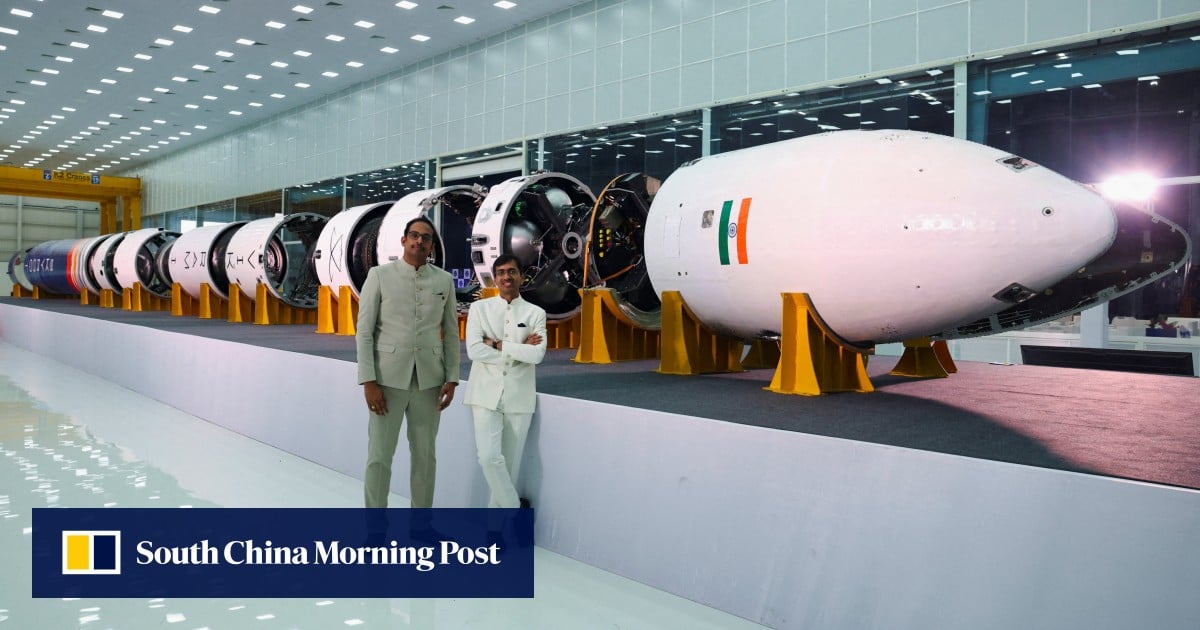
India has taken a major step in its private space sector with Skyroot Aerospace's successful launch of the Vikram-1 rocket. This inaugural orbital flight by an Indian private company demonstrates the nation's growing capabilities and ambition to become a key player in the commercial space market, supported by government encouragement.
Imagine a country that wants to send things into space, like tiny toy cars, but instead of the government doing it all, a private company built its own giant toy rocket! India just did that with a company called Skyroot, launching their rocket, Vikram-1, into space. It's like a new team joining the big space race, showing they can build their own cool stuff to reach the stars.
Analysis
India's Ascent in Commercial Space
India's successful launch of the Vikram-1 rocket by Skyroot Aerospace represents a pivotal moment for the nation's private space sector. This maiden orbital flight by a non-governmental entity underscores a strategic shift towards fostering private innovation and participation in space exploration and commercialization. The Vikram-1, capable of carrying payloads up to 350kg, is designed to serve the growing demand for small satellite launches, a segment of the market experiencing rapid expansion globally.
The achievement was met with widespread acclaim, including from Prime Minister Narendra Modi, who hailed it as "a defining moment in India’s space journey." This high-level endorsement, coupled with the support from the Indian National Space Promotion and Authorisation Centre (IN-SPACe), highlights the government's commitment to nurturing a robust private space ecosystem. The goal is clear: to secure a larger portion of the lucrative global space economy, which is increasingly driven by private enterprise and technological advancements.
The Global Space Race Heats Up
The successful launch of Vikram-1 places India firmly among the nations with burgeoning private space capabilities, joining a competitive landscape that includes established players like SpaceX in the United States and various European and Chinese private ventures. This development is not merely a national triumph but also a significant indicator of the evolving dynamics in the global space race. As more private companies enter the orbital launch market, the competition for satellite deployment contracts intensifies, potentially leading to more cost-effective and frequent access to space.
This trend challenges the traditional dominance of state-backed space agencies and fosters an environment of rapid innovation. India's entry into this private orbital launch capability signals its intent to be a major service provider, not just a consumer, in the international space arena. The success of Skyroot Aerospace could inspire further private investment and technological breakthroughs within India, accelerating its overall progress in space technology and applications.
Implications for Regional Dynamics
India's growing prowess in the private space sector carries significant implications for regional dynamics, particularly in Asia. With China also pursuing an aggressive and well-funded space program, including its own private sector initiatives, India's advancements contribute to a more competitive and complex regional space environment. While the article does not explicitly mention China, the broader context of a "global space economy" inherently involves major players like China.
This increased capability could lead to both intensified competition for commercial contracts and potential strategic realignments in space partnerships. India's ability to offer independent, private launch services could attract international clients looking for alternatives or diversified launch options. Ultimately, the success of Vikram-1 reinforces India's position as a significant technological power in Asia, potentially influencing geopolitical considerations and fostering a new era of space-related collaboration or rivalry in the region.
Key points
- India's Skyroot Aerospace successfully launched its Vikram-1 rocket, the nation's first private orbital rocket.
- The Vikram-1 is designed to carry small satellites into low-Earth orbit and is about seven storeys tall.
- This achievement is seen as a significant step for India to gain a larger share of the global space economy.
- The launch was hailed by Prime Minister Narendra Modi and government space officials as a defining moment.
This successful launch could catalyze further investment and innovation within India's private space sector, leading to more affordable and frequent access to space for small satellites. It positions India as a more attractive partner for international space ventures and could foster significant economic growth through new space-related industries and job creation.
While a success, the nascent private space sector in India still faces intense global competition and significant technological hurdles, including scaling production and ensuring consistent reliability. Over-reliance on government support or insufficient private funding could hinder its long-term growth and ability to truly challenge established players.