Indian officials may join Taliban's Victory Day celebrations
Indian officials are expected to attend the Taliban's fifth Victory Day celebration at the Afghan embassy in Delhi on Aug 15, reflecting intensifying pragmatic engagement on trade, aid and regional security.
Intelligence analysis by Llama
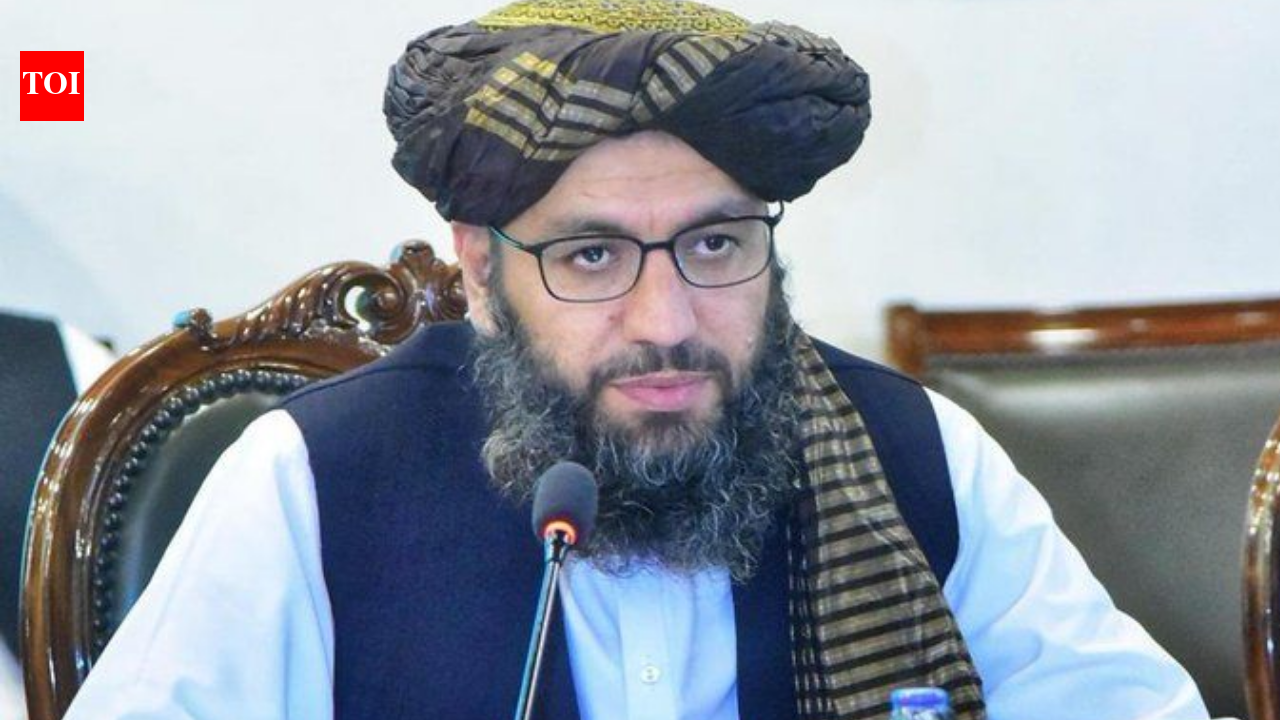
Taliban's fifth Victory Day will be observed at the Afghan embassy in Delhi with senior Indian officials reportedly attending. India still does not officially recognize the Islamic Emirate but continues pragmatic engagement, leveraging its development footprint and goodwill to protect regional interests against Pakistan.
Imagine two kids who used to refuse to play together because the principal said so. Now they're sharing lunch in the schoolyard. India hasn't said the Taliban's government is the real government, but it's showing up to their party, which is a big change from a few years ago.
Analysis
Mufti Noor Ahmad Noor's invitation and the Islamic Emirate emblem
The event at the Afghan embassy in Delhi is built around an invitation from Afghanistan charge d'affaires Mufti Noor Ahmad Noor, and according to the article, the invite itself carries the emblem of the Islamic Emirate of Afghanistan. That detail matters: it underlines that the diplomatic engagement India is tolerating, and arguably encouraging, is happening under the formal insignia of the Taliban government, not a transitional or apolitical Afghan mission. For a country that maintains it does not officially recognize the Islamic Emirate, hosting an anniversary of the Taliban's return to power on Aug 15 inside an Indian capital embassy is a notable escalation of optics, even if it is framed as a consular or cultural occasion.
The Pakistan tail: TTP fallout and a Kashmir pivot
The article ties India's deepening engagement to what it calls a dramatic shift in Taliban's ties with Pakistan. India and Afghanistan continue to back each other's sovereignty and territorial integrity, with India standing by Kabul in the latter's border conflict with Pakistan. The piece notes that the Taliban backed India's sovereignty over Jammu and Kashmir in a joint statement last year, endorsing a reference to the UT as located in India while condemning the Pahalgam attack. This is a significant alignment: it positions the Taliban, at least publicly, against Pakistan on the Kashmir question, giving India diplomatic cover in a forum where Pakistan has traditionally sought solidarity. It also reflects New Delhi's calculation that the Tehrik-i-Taliban Pakistan (TTP) problem makes the Afghan Taliban a potentially useful partner rather than a purely adversarial one.
Muttaqi's visit and the embassy swap
The relationship was cemented by the restoration of India's own embassy in Kabul last year and by what the article describes as a landmark visit by Afghan foreign minister Amir Khan Muttaqi to India. India agreed to the appointment of Taliban diplomats as part of that exchange. The trajectory from non-recognizing government to accepting Taliban-nominated envoys to now likely hosting Victory Day at the embassy compound captures how India's Afghanistan policy has evolved from strict non-engagement under the 2021 fallout to a working, issue-based partnership focused on humanitarian aid, trade routes, and counter-terror coordination. The Friday invite is less a one-off ceremony than a marker of how far that drift has travelled.
Key points
- Taliban to mark fifth Victory Day on Aug 15 at the Afghan embassy in Delhi, with senior Indian officials expected to attend
- Invitation issued by charge d'affaires Mufti Noor Ahmad Noor, bearing the Islamic Emirate of Afghanistan emblem
- India still does not officially recognize the Islamic Emirate but allows Taliban to run the Afghan embassy
- Engagement driven by trade, humanitarian aid and counter-terror cooperation, and by a souring of Taliban-Pakistan ties
- Taliban backed India's stance on J&K and condemned the Pahalgam attack in a joint statement last year
- Ties were cemented by foreign minister Amir Khan Muttaqi's visit and India's reopening of its Kabul embassy
If managed carefully, the engagement could help India secure trade routes, contain Pakistan-based terror groups operating from Afghan soil, and protect its development investments in Afghanistan. The Taliban's public endorsement of Indian sovereignty over J&K also gives New Delhi diplomatic leverage in regional forums.
Closer ties risk legitimizing the Taliban's governance model and drawing criticism from Western partners. Any Taliban complicity with the TTP or a relapse into harboring anti-India groups could quickly reverse the goodwill, and the optics of Indian officials at a Victory Day event will invite domestic political pushback.