Industrial chicken farming accelerating spread of diarrhoea bacteria, study finds
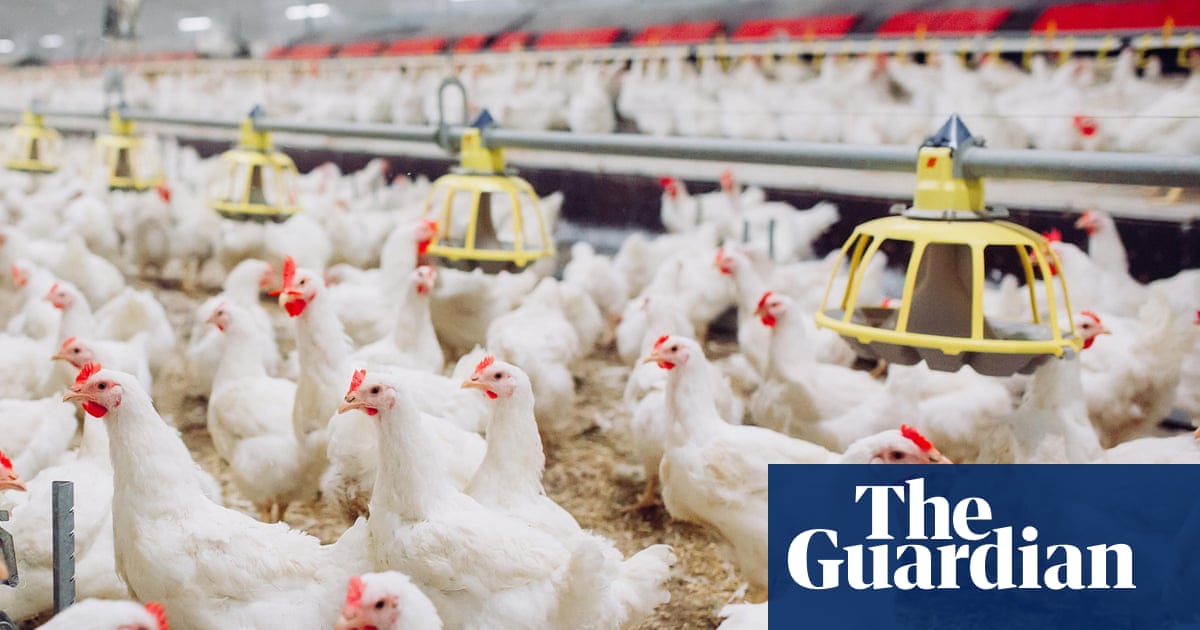
Industrial chicken farming is accelerating the spread of the world's most common bacterial cause of diarrhoea, scientists have found. The study found a dramatic increase in the exchange of campylobacter strains between wild birds and chickens as farming has intensified.
Intelligence analysis by Llama
A study has found that industrial chicken farming is accelerating the spread of diarrhoea bacteria, campylobacter, due to the increased exchange of strains between wild birds and chickens. This has led to the evolution of new, more resistant strains of the bacteria, raising concerns about the treatment of serious illness in people.
Imagine a big farm with lots of chickens. These chickens are getting sick with a type of bacteria called campylobacter. This bacteria is making people very sick with diarrhoea. The problem is that the chickens are getting sick from other birds, and it's making the bacteria stronger and harder to treat. We need to find a way to stop this from happening so that people don't get sick.
Analysis
A $60B Vote of Confidence
The industrialisation of chicken farming has led to affordable animal protein at scale, but also presents new health risks. The latest work, published in the journal Proceedings of the National Academy of Sciences, analysed nearly 2,800 bacterial genomes collected from chickens and wild birds in 30 countries, including the UK, US and China, between 1979 and 2024.
Why Cursor?
The scale of chicken production is a major risk factor for the evolution of pathogens within those birds. By adjusting the world's ecosystems in this dramatic way, it leads to the evolution of pathogens within those birds. That's a massive risk to us. We can't continue to produce chickens at this huge capacity.
The Road Ahead
The researchers also identified genetic changes in campylobacter that were associated with adaptation to the chicken environment. These included genes involved in antimicrobial resistance, which can help bacteria survive and thrive in modern poultry production systems, where antibiotics are routinely given to encourage rapid growth or to keep disease under control in densely packed sheds. Intensive chicken farming has spread out of control in the UK, and the 100-fold increase in the movement of campylobacter is the latest in a long list of devastating consequences.
Key points
- Industrial chicken farming is accelerating the spread of diarrhoea bacteria, campylobacter.
- The study found a dramatic increase in the exchange of campylobacter strains between wild birds and chickens as farming has intensified.
- The scale of chicken production is a major risk factor for the evolution of pathogens within those birds.
- The researchers identified genetic changes in campylobacter that were associated with adaptation to the chicken environment.
If we can find a way to reduce the scale of chicken production and make farming more sustainable, we may be able to slow down the spread of diarrhoea bacteria and reduce the risk of serious illness in people.
If we continue to produce chickens at the current scale, we may see a continued increase in the spread of diarrhoea bacteria, making it harder to treat and increasing the risk of serious illness in people.