Iran at the World Cup: What Do We Know About the Backstage Game Between Taj, Infantino and Trump?
BBC Persian says Iran’s World Cup plan was reshaped by quiet talks among FIFA, the U.S., Mexico and Iran. The result left Iran playing in the U.S. but based in Mexico.
Intelligence analysis by GPT-5.4 Mini
The article says Iran’s 2026 World Cup arrangements were altered through back-channel diplomacy after Trump first questioned Iran’s participation, then later said the team could play. FIFA, Iran’s federation and Mexican officials each offered different versions of who drove the change.
This is like a school trip where adults argue over which gate the kids may use, who gets to walk where, and where they can sleep. Iran still gets to play, but the route and rules were changed behind the scenes.
Analysis
Behind the scenes
BBC Persian says the key issue around Iran’s 2026 World Cup participation was not whether the team would play, but where it would be based and how it would move during the tournament. The piece says Donald Trump first said he did not see Iran’s presence as appropriate, citing concerns about the safety of Iranian players, and then later said the national team could take part.
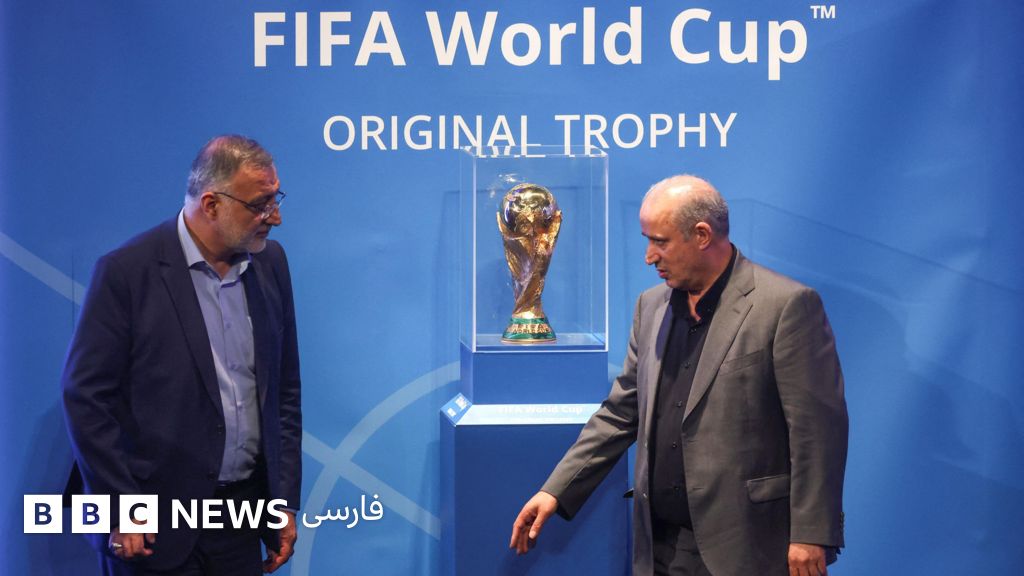
According to the article, FIFA president Gianni Infantino insisted that there was no fallback plan and that only the main plan existed. But after meetings in Istanbul and a webinar with FIFA’s secretary general, Iran’s federation chief Mehdi Taj said Iran’s request was approved in a different form: not to move matches, which FIFA never accepted, but to change the training camp. The article says that allowed Iran to remain in the tournament while moving its base out of the United States.
Mexican President Claudia Sheinbaum gave a different account, saying FIFA contacted Mexico after the U.S. said it did not want Iran’s team to remain in the country during the tournament, and that Mexico had no reason to refuse. Taj, however, told Iranian audiences the opposite, saying it was Iran’s own decision.
The practical outcome is that Iran will set up camp in Tijuana, at Club Tijuana’s facilities, while the article says about 300 federal officers will be deployed to California along with FIFA staff and Iranian representatives to protect the camp. Earlier talk had suggested players would enter the U.S. on very short visas and not stay overnight, but by Tuesday, the U.S. Department of Homeland Security said there would be no restriction on Iran’s team and that it could arrive one day before matches.
The article also places Infantino in a broader pattern of political balancing. It recalls him giving Trump a newly created FIFA “peace prize” in Washington, a move criticized by the rights group Fairsquare as a clear breach of FIFA neutrality. It also notes FIFA’s silence over protests in Iran, including the deaths of footballers during unrest, which drew criticism from Iranian players and journalists.
Bigger picture
The story presents Iran as both a bargaining chip and a prize: useful to FIFA for the appearance of universality, useful to Trump for political signaling, and useful to Iran for keeping its team in the tournament while limiting exposure in the U.S.
Key points
- BBC Persian says Iran’s World Cup plans were reshaped through quiet diplomacy involving FIFA, the U.S., Mexico and Iran.
- Trump first questioned Iran’s participation, then later said the team could compete.
- FIFA rejected Iran’s push to move matches, but Iran’s training camp was shifted to Tijuana.
- Mexican officials say FIFA contacted them after the U.S. said it did not want Iran’s team to stay in the country.
- The article links Infantino’s handling of Trump and Iran to wider criticism about FIFA’s political neutrality and silence on unrest in Iran.
If the arrangement holds, Iran can participate in the World Cup without the dispute blocking its place in the tournament. A base in Mexico could also reduce friction over U.S. entry and keep the team’s logistics more stable.
The arrangement shows how fragile Iran’s participation remains when it depends on shifting political decisions in Washington and FIFA’s behind-the-scenes handling. The conflicting public accounts from Iran, Mexico and the U.S. also suggest the issue could remain politically contested and hard to trust.