Iran attacks US allies in Middle East as renewed conflict enters second week
Iran struck US allies in the Middle East as the renewed conflict with Washington widened, hitting Kuwait, Bahrain and Jordan.
Intelligence analysis by GPT-5.4 Mini
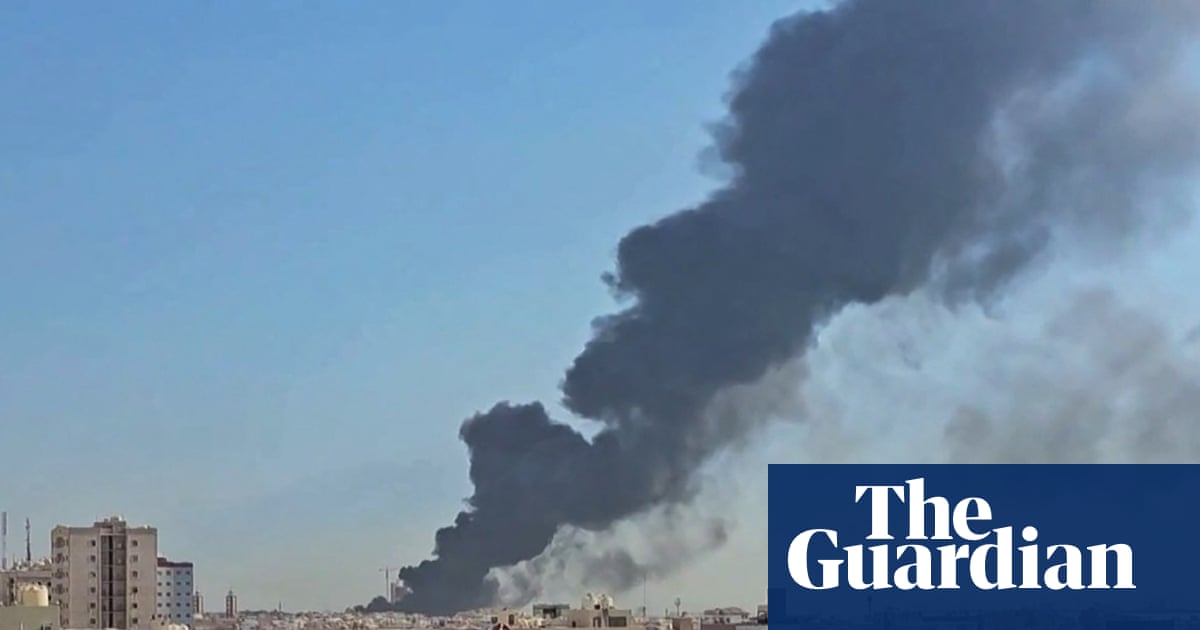
The fighting is no longer confined to strikes on Iran and is spilling into US-aligned states and critical waterways. The article frames this as a sharp escalation, with civilian infrastructure, air defenses and military sites all pulled into the conflict.
The fight is spreading like a fire jumping from one house to the next. Instead of staying between Iran and the US, it is now hitting nearby countries, roads in the sky, and places people need for water, power, and safety.
Analysis
A Conflict That Is Spreading Beyond Iran
The article shows a war that is no longer being fought only over Iranian territory or against Iranian military assets. By striking Kuwait, Bahrain and Jordan, Iran is testing the willingness and capacity of US partners to absorb pressure while still supporting Washington. That makes the conflict more politically dangerous than a simple exchange of blows between two states.
The framing matters because it suggests a widening circle of risk. Once civilian sites, airspace and regional bases become targets or battlegrounds, the conflict stops being a bilateral crisis and becomes a test of the entire security architecture in the Gulf and the Levant.
Civilian Infrastructure As The Pressure Point
The article repeatedly emphasizes infrastructure: a power and water desalination plant in Kuwait, power facilities, oil-related sites and military support centers. That is not just about battlefield damage. It is also about creating political pressure by threatening the systems people rely on every day, especially in places where water and electricity are already strategic vulnerabilities.
Kuwait’s reliance on desalination makes the reported strike especially sensitive. When a conflict touches essential services, the political cost climbs quickly because governments have to reassure their own populations while also deciding whether to widen or restrain the response.
The Strait Of Hormuz And The Next Escalation Ladder
The mention of attacks in and around the Strait of Hormuz is the clearest sign that this is becoming a global issue, not only a regional one. Even the claim about tankers and ships, whether disputed or not, points to the central political fact of the conflict: control and disruption of sea lanes can be as consequential as airstrikes.
The article also shows both sides raising the stakes rhetorically. Iran’s senior figures are warning that the country could move from retaliation to broader offensive operations, while US Central Command says it is trying to keep degrading Iranian capabilities. That combination creates a narrow path for de-escalation and a wide runway for miscalculation.
Key points
- Iran attacked US allies in Kuwait, Bahrain and Jordan as the conflict entered a second week.
- Kuwait said civilian sites and infrastructure were targeted, including a power and water desalination plant.
- Jordan said its air defenses shot down Iranian missiles, and Bahrain activated air sirens.
- The article says two US military personnel were killed in Jordan in earlier fighting.
- US Central Command said its strikes were aimed at degrading Iranian military capabilities.
If the attacks stop short of a full regional spillover, governments in the Gulf may be able to keep their infrastructure working and limit civilian harm. A clearer warning from both sides about what is off-limits could also slow the slide toward a much broader war.
If the pattern continues, the conflict could draw more US allies directly into the fighting and make civilian infrastructure a standing target. Damage to ships, air bases or energy facilities around Hormuz would raise the risk of a wider crisis well beyond the immediate combat zone.
Market signals
- OIL Escalation around the Strait of Hormuz and reported attacks on oil-related facilities raise supply-risk concerns.
- XAU A widening regional conflict usually increases demand for safe-haven assets.
AI-generated analysis of potential market relevance. Not financial advice.