‘It’s only going to get worse’: wildfires forcing firefighters to make impossible choices
Wildfires are growing hotter, more frequent, and harder to contain, forcing firefighters to ration scarce crews and resources.
Intelligence analysis by GPT-5.4 Mini
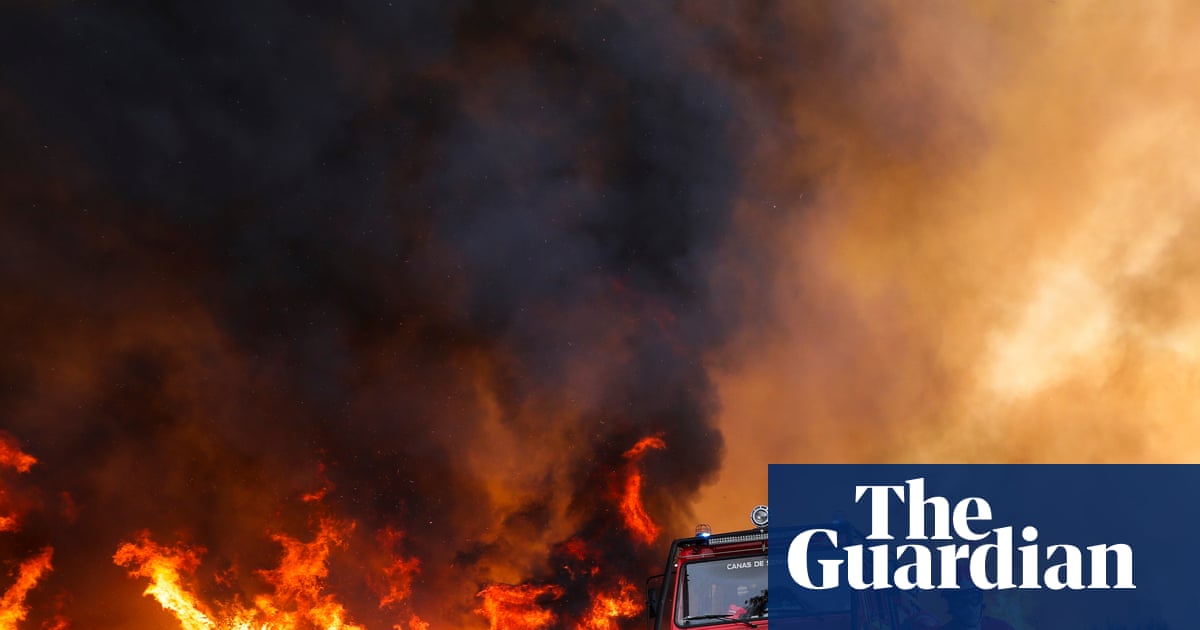
The article argues that the wildfire problem is shifting from single blazes to overload: too many fires, too little capacity, and impossible triage decisions. It links that pressure to a warming climate, changing land use, and fires spreading into places that were once less exposed.
Firefighters are being asked to save too many places at once, like one babysitter trying to watch ten kids. Hotter weather makes dry plants catch fire faster, so the fires spread before crews can reach them.
Analysis
Triage Under Fire
The central shift in the story is not just scale, but simultaneity. Fire commanders are no longer dealing with one major blaze at a time; they are facing clusters of fires that force immediate decisions about where to send people, aircraft, and water first.
That changes the job from suppression to triage. As César Alcaraz describes it, the logic starts to resemble an emergency room with too few ventilators, where the hardest part is not only fighting flames but deciding which community can be helped in time.
When Heat Turns Routine
The article ties that triage pressure to a hotter climate and changing landscapes. Heatwaves dry out vegetation, wet winters and springs can leave more fuel to burn later, and abandoned farmland can create larger continuous stretches of flammable terrain.
That combination makes fires hotter, less predictable, and more likely to spread into the wildland-urban interface. The result is not only more burned land, but more danger to homes, parks, roads, and city edges, where ordinary fire planning is much less effective.
A Wider Political Burden
This is why the piece reads as a policy warning as much as a disaster report. France, Spain, Portugal, and the UK are all being pushed to stretch finite emergency systems, while other countries are also dealing with smoke drifting far beyond the fire zone.
The political implication is that wildfire response now depends on long-term choices about land management, rural abandonment, emergency staffing, and climate adaptation. The article suggests that if governments treat these events as isolated emergencies, they will keep arriving too late, with too few tools, for a problem that is becoming structural.
Key points
- Firefighters are increasingly forced to choose which blazes to fight first when several break out at once.
- The article links worsening wildfire behavior to heatwaves, dry vegetation, and changing land use.
- Fires are spreading into places like cities, parks, gardens, and the wildland-urban interface.
- Countries across western Europe are struggling with limited response capacity during extreme fire periods.
- Smoke from distant fires is becoming a cross-border health problem, not just a local emergency.
The article suggests that better preparation in colder regions and smarter planning for scarce resources could help fire services cope with worse seasons. If governments treat this as a long-term adaptation problem, they may reduce the chance of operational collapse.
If heatwaves keep multiplying and fires keep arriving at the same time, firefighters may face more situations they simply cannot cover. The article also shows that smoke can travel far beyond the flames, widening the public health damage even when the fire lines are contained.