Iran declares US presence the sole cause of instability in the Strait of Hormuz
Iran's armed forces spokesman, Brigadier General Abolfazl Shekarchi, stated that the US presence is the main cause of instability in the West Asia region, particularly in the Strait of Hormuz. He emphasized that Iran's presence in the strait is aimed at ensuring the secur…
Intelligence analysis by Llama
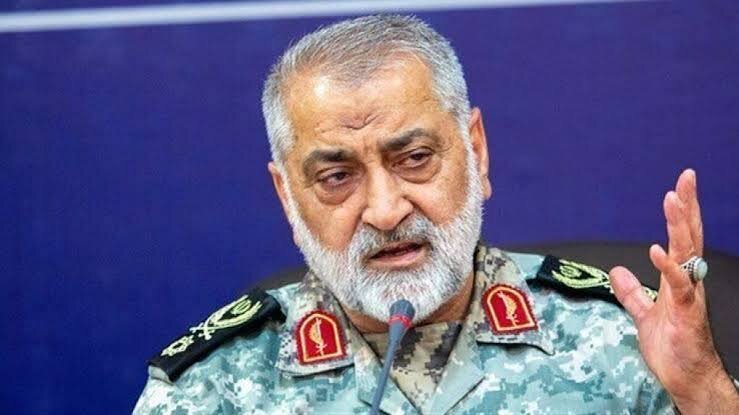
Iran's armed forces spokesman, Brigadier General Abolfazl Shekarchi, attributed the instability in the Strait of Hormuz to the US presence, emphasizing Iran's commitment to ensuring the security of commercial shipping and vessels.
Iran's armed forces spokesman, Brigadier General Abolfazl Shekarchi, said that the US presence in the Strait of Hormuz is the main reason for instability in the region. He explained that Iran's goal is to ensure the security of ships and vessels in the strait, not to cause problems. Shekarchi compared it to a neighborhood where a foreigner comes and starts causing trouble, and the homeowner tries to protect their property.
Analysis
The Root Cause of Instability in the Strait of Hormuz
According to Brigadier General Abolfazl Shekarchi, the presence of American forces is the primary cause of instability in the entire West Asia region, particularly in the Strait of Hormuz. This assertion is grounded in the fact that the US has no legal right to interfere in the strait, as it is located within the territorial waters of Iran and Oman. The general emphasized that Iran's presence in the strait is solely aimed at ensuring the security of commercial shipping, oil tankers, and vessels.
The US Interference in Maritime Routes
Shekarchi pointed out that the US is attempting to create insecurity by interfering in maritime routes and imposing its will on international vessels. In contrast, the Islamic Republic has acted to establish security in the region. The general noted that since the Americans declared the ceasefire, their drone flights over the Persian Gulf and the Strait of Hormuz have not stopped for a single day, demonstrating their continued hostile approach.
The Regional Countries' Role in Ensuring Security
Shekarchi urged regional countries not to allow their territory to be used for American military aggression against the Islamic Republic of Iran. He emphasized that if the Muslim countries of the region do not place their skies, coasts, and logistical facilities at the disposal of the aggressor US army, many security problems will disappear. The general made it clear that Iran will never retreat on the issue of managing the strategic waterway and that the situation will not return to what it was before the war that was launched by the US and Israeli on February 28.
Iran's Readiness for Any Scenario
Shekarchi stressed that Iranian armed forces are at full readiness for any possible scenario and capable of continuing the fight for months or even years if necessary. He added that if the US targets Iran's infrastructure, all regional infrastructure will become legitimate targets for the Islamic Republic.
Key points
- The US presence is the main cause of instability in the Strait of Hormuz, according to Iran's armed forces spokesman.
- Iran's presence in the strait is aimed at ensuring the security of commercial shipping, oil tankers, and vessels.
- The US is attempting to create insecurity by interfering in maritime routes and imposing its will on international vessels.
- Regional countries must not allow their territory to be used for American military aggression against Iran.
- Iran will never retreat on the issue of managing the strategic waterway.
If the regional countries join hands with Iran, they can establish security in the Strait of Hormuz and prevent the US from interfering in maritime routes. This could lead to a more stable and secure region, with reduced tensions between Iran and the US.
If the US continues to interfere in the Strait of Hormuz and impose its will on international vessels, it could lead to a significant escalation of tensions between Iran and the US. This could result in a more unstable and insecure region, with increased risk of conflict.