What happens if both Bab al-Mandab and the Strait of Hormuz are closed?
Iranian newspapers examine the potential consequences of a simultaneous shutdown of Bab al-Mandab and the Strait of Hormuz, including rising transportation costs, disruptions in oil exports, and pressure on the Suez Canal.
Intelligence analysis by Llama
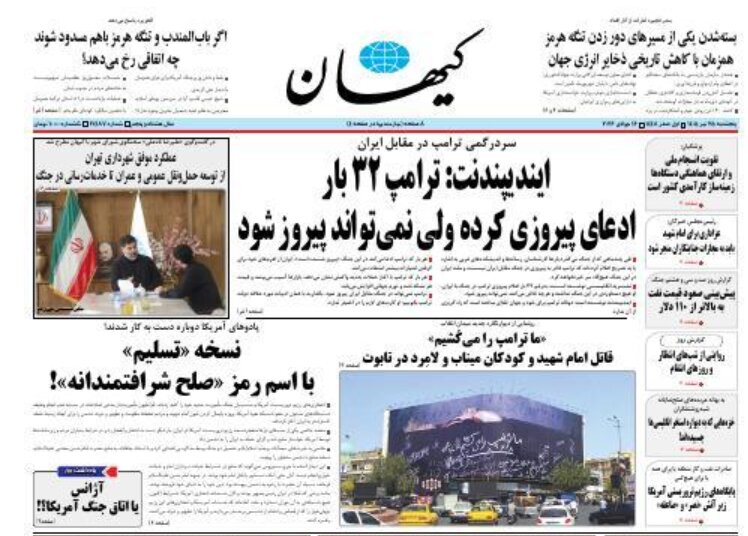
Iranian newspapers analyze the potential consequences of a simultaneous shutdown of Bab al-Mandab and the Strait of Hormuz, including rising transportation costs, disruptions in oil exports, and pressure on the Suez Canal.
Imagine two important waterways that connect different parts of the world. If both of them were closed, it would be very hard for countries to trade with each other, and it could even cause a global economic crisis. It's like a big traffic jam, but instead of cars, it's ships and oil that can't move.
Analysis
A Global Economic Crisis Unfolds
The convergence of security threats in Bab al-Mandab and the Strait of Hormuz would push global trade into a new phase. Rising transportation costs, disruptions in oil exports, pressure on the Suez Canal, and the spread of crisis to major world economies would be only part of the potential consequences of a simultaneous shutdown of these vital passages. Moreover, the closure of both straits would effectively disable Saudi Arabia's most important alternative route for bypassing the Strait of Hormuz.
Under such conditions, Saudi Arabia, Egypt, China, and major energy-importing economies such as Europe, India, Japan, and South Korea would be among the main victims, and the scope of the crisis would expand from a regional conflict into a widespread global economic crisis.
Iran's Resilience in the Face of Pressure
Iran remains a decisive actor in geopolitical equations, despite the US's maximum pressure strategy. The recent war provided the latest opportunity to test the maximum pressure strategy, but Iran did not become an obedient actor, nor did its political system fall. Although maximum pressure weakened parts of Iran's defensive capacity, it did not turn Iran into an insignificant player. The outcome is a country that has been harmed but has become more resilient against external pressure—and more inclined toward China and Russia.
The Environmental Crisis in the Persian Gulf
The Persian Gulf is now the intersection of competition among Iran, the US, Israel, Arab states, and emerging powers. Each actor speaks of energy security and balance of power, yet all ignore one reality: pollution recognizes neither borders nor power rivalries. Perhaps the greatest geopolitical mistake today is imagining that security can be preserved without protecting the environment. War can be halted with a ceasefire, but pollution cannot. The Persian Gulf today needs cooperation more than warships, because no defense system can contain the threat that arises from environmental destruction.
Key points
- The closure of Bab al-Mandab and the Strait of Hormuz could have significant economic and security implications for major world economies.
- Iran remains a decisive actor in geopolitical equations, despite the US's maximum pressure strategy.
- The recent war provided the latest opportunity to test the maximum pressure strategy, but Iran did not become an obedient actor, nor did its political system fall.
- The closure of both straits would effectively disable Saudi Arabia's most important alternative route for bypassing the Strait of Hormuz.
- The Persian Gulf is now the intersection of competition among Iran, the US, Israel, Arab states, and emerging powers.
If the US and Iran can find a way to resolve their differences and cooperate on security and environmental issues, it could lead to a more stable and peaceful region. This could also lead to increased trade and economic growth for countries in the region.
If the closure of Bab al-Mandab and the Strait of Hormuz leads to a global economic crisis, it could have severe consequences for countries that rely heavily on trade, including Saudi Arabia, Egypt, China, and energy-importing economies such as Europe, India, Japan, and South Korea.