Iran hostilities flare after US strike in strait of Hormuz; supertanker hits mines and catches fire – Middle East crisis live
Hostilities between the US and Iran have flared, with American airstrikes on Iran's Larak Island prompting retaliatory missile attacks on US bases in Jordan and the UAE. Concurrently, a supertanker reportedly hit naval mines and caught fire in the Strait of Hormuz.
Intelligence analysis by Gemini 2.5 Flash
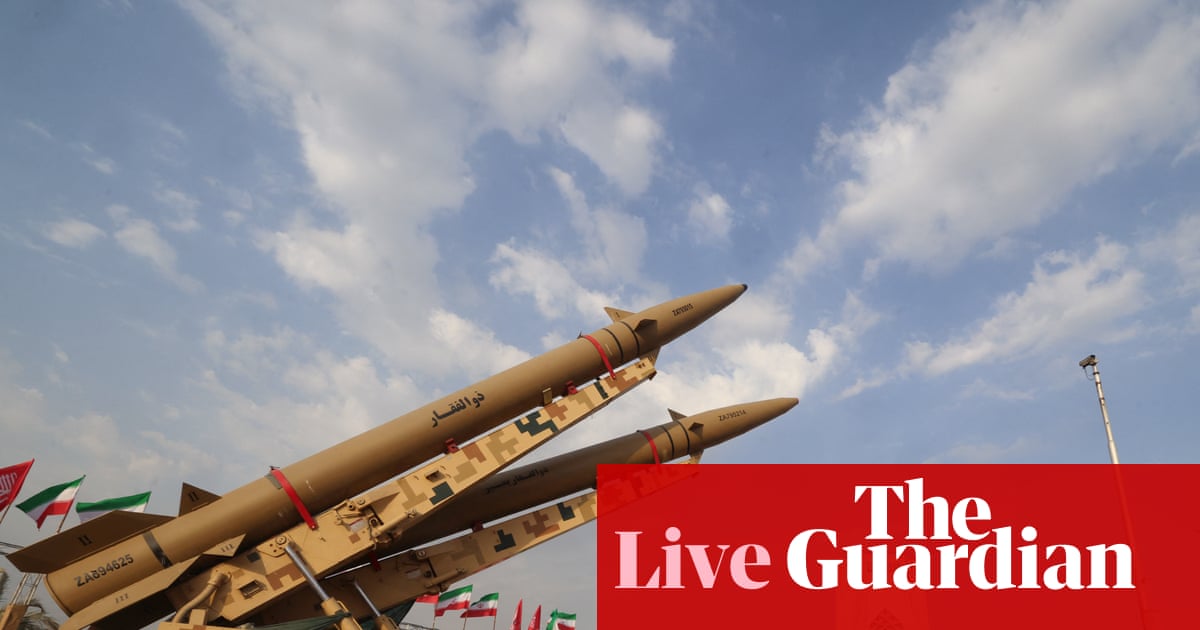
The Middle East is experiencing a significant escalation in tensions as the US and Iran engage in direct military exchanges for the first time in a month. These actions, coupled with a critical incident involving a supertanker in the vital Strait of Hormuz, signal a dangerous turn in the ongoing regional crisis, raising concerns about broader conflict and global energy security.
The US and Iran are in a dangerous fight. The US attacked Iranian rocket launchers, and Iran fired missiles back at US bases. A giant oil ship also hit hidden bombs in the Strait of Hormuz, a key path for oil. This could make the fight worse and disrupt global oil supplies, like a big road closing down.
Analysis
Larak Island
The recent escalation in US-Iran hostilities commenced with American airstrikes targeting Iranian rocket launchers on Larak Island. According to US officials, these strikes were a preemptive measure, as the Islamic Revolutionary Guard Corps (IRGC) was reportedly preparing to deploy sea mines into the critical Strait of Hormuz waterway. This action marks the first direct exchange of fire between the two nations in over a month, signaling a significant deterioration in regional security.
The US justification for the strike underscores concerns about Iran's intent to disrupt maritime traffic in the strait, a vital artery for global oil shipments. Such a move would have severe implications for international trade and energy markets. The US response highlights its commitment to maintaining freedom of navigation and deterring Iranian aggression in the region.
Strait of Hormuz
Following the US strike, a supertanker reportedly struck two naval mines in the southern Strait of Hormuz, catching fire and coming to a complete halt. Iran's state TV, citing the IRGC, claimed the tanker was attempting to pass through the waterway illegally and warned that other vessels violating its security rules would face a similar fate. This incident directly demonstrates the immediate and tangible risks associated with the heightened tensions.
The Strait of Hormuz is a narrow choke point through which a significant portion of the world's crude oil passes daily. Any disruption, whether from direct attacks or the deployment of mines, poses a severe threat to global energy supplies and could trigger a sharp increase in oil prices. The IRGC's warning further emphasizes Iran's asserted control over the strait and its willingness to enforce its regulations, potentially leading to further confrontations.
Kharg Island
Amidst the escalating conflict, former US President Donald Trump claimed on social media that Iran's energy hub, Kharg Island, was “being blown to smithereens,” a statement he accompanied with an AI-generated video. This assertion was swiftly dismissed by Hamid Bovard, CEO of the National Iranian Oil Company, who stated that oil operations on the island were continuing normally. Bovard mocked Trump's claims, highlighting the island's resilience to past attacks.
Kharg Island is strategically crucial for Iran, handling approximately 90% of the country's crude oil exports. Its importance makes it a prime economic target in any conflict scenario. Trump's past threats to seize the island, and his subsequent retraction, underscore the immense logistical and military challenges such a move would entail, including the necessity of deploying ground forces and exposing them to Iranian retaliation. The current exchange of rhetoric and counter-claims surrounding Kharg Island reflects the high stakes involved in the broader US-Iran confrontation.
Key points
- The US conducted airstrikes on Iranian rocket launchers on Larak Island, citing IRGC preparations to deploy sea mines.
- Iran retaliated by attacking US military airbases in Jordan and the United Arab Emirates with ballistic missiles.
- A supertanker caught fire after hitting two naval mines in the southern Strait of Hormuz, with Iran's IRGC claiming it was violating security rules.
- Donald Trump's claim that Iran's Kharg Island was under attack was dismissed by the National Iranian Oil Company, which stated operations continued normally.
- Iran's supreme leader called the US and Israel enemies of all Islamic nations, urging Muslim rulers to confront them.
The direct military exchanges between the US and Iran, coupled with the attack on a supertanker in the Strait of Hormuz, significantly increase the risk of a wider regional conflict. This escalation could lead to severe disruptions in global oil supplies, further destabilizing the Middle East and potentially drawing in other international actors.
Market signals
- OIL Escalating hostilities and attacks on shipping in the Strait of Hormuz, a critical oil transit route, increase supply-route risk and push oil prices higher.
- XAU Increased geopolitical instability and military conflict between major powers typically drive safe-haven demand for gold among investors.
AI-generated analysis of potential market relevance. Not financial advice.


