Iran rejects US role in setting war terms
Iran has declared it will not allow the United States to dictate its security decisions, reaffirming its right to self-defense and independent foreign policy, while also warning Ukraine over a reported vessel attack and clarifying bilateral talks with Oman.
Intelligence analysis by Gemini 2.5 Flash
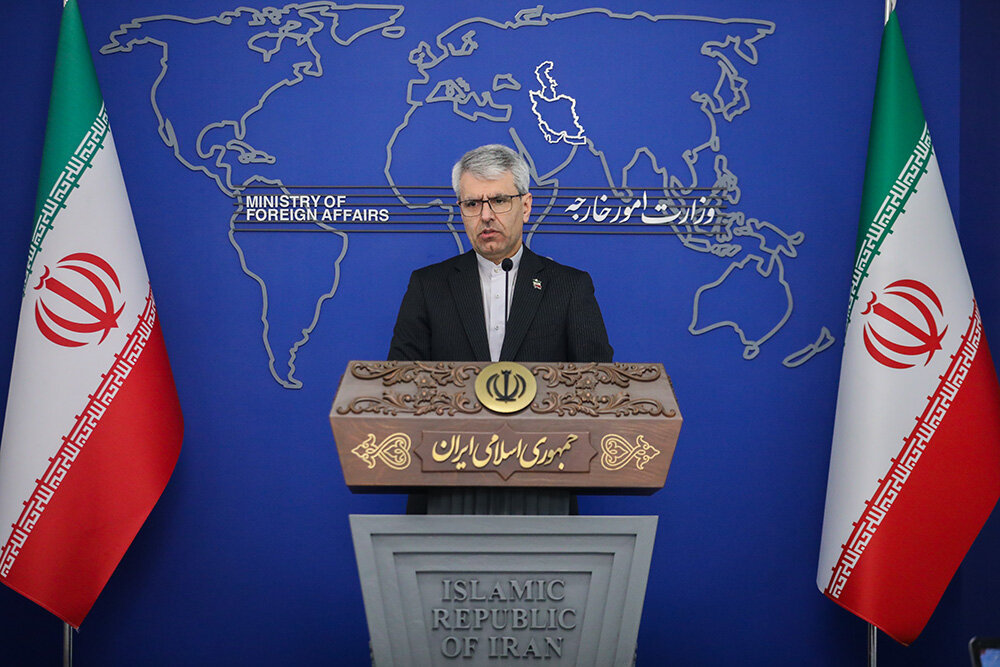
Tehran's Foreign Ministry spokesman, Esmaeil Baqaei, asserted Iran's sovereign right to determine its own security and foreign policy, rejecting US influence on matters of war and peace. He condemned a reported Ukrainian attack on an Iranian commercial vessel and clarified that ongoing talks with Oman regarding the Strait of Hormuz are purely bilateral, unrelated to Washington.
Imagine Iran is playing a game, and another big kid, the US, keeps trying to tell them when to start or stop playing, even when Iran feels the US started the trouble. Iran is saying, 'No way! We decide our own game rules.' They're also upset because another kid, Ukraine, reportedly hit their toy boat, and they're talking to a friend, Oman, about keeping a busy water path safe, but they say it has nothing to do with the US trying to butt in.
Analysis
Asserting Sovereign Autonomy
Iran's Foreign Ministry spokesman, Esmaeil Baqaei, delivered a strong message regarding the nation's independent decision-making on matters of war and peace. He explicitly stated that the United States would not dictate the timing or terms of conflict for Iran, emphasizing that all national security and foreign policy decisions are guided solely by Iran's national interests and established state institutions. This declaration comes after what Iran describes as months of military confrontation with the US, which Baqaei claimed ended in failure for Washington despite a ceasefire being forced weeks later. The assertion highlights Iran's determination to maintain its autonomy in a complex geopolitical landscape, particularly in the wake of a US-Israeli military campaign against it.
Navigating Regional Flashpoints
The spokesman addressed two critical regional issues: a reported Ukrainian attack on an Iranian commercial vessel in the Caspian Sea and ongoing negotiations with Oman concerning the Strait of Hormuz. Baqaei condemned the alleged Ukrainian incident as a dangerous escalation, warning that Iran reserves the right to respond and holding countries supporting Ukraine responsible for Kiev's actions. He reiterated Iran's non-involvement in the Russia-Ukraine conflict. Simultaneously, Baqaei dismissed speculation linking Iran's talks with Oman to the United States, confirming that these discussions are purely bilateral and focused on ensuring the safe passage of commercial shipping through the strategic Strait of Hormuz, which Iran claims remains closed due to 'US aggression.'
Shifting Geopolitical Alignments
Beyond immediate conflicts, Baqaei touched upon Iran's broader international relations. He praised China as a strategic partner, highlighting growing cooperation and shared concerns regarding regional and international peace and security, particularly in countering 'the destabilizing effects of US unilateralism.' Conversely, he strongly criticized Britain's decision to designate the Islamic Revolution Guards Corps (IRGC) as a threat, calling it politically motivated and contrary to international law, and warned of reciprocal measures. Baqaei also urged regional states to condemn the US for violating a Pakistan-brokered memorandum of understanding and to refrain from allowing Washington to use their territory for military operations against Iran, expressing concern over their alignment with US actions.
Key points
- Iran asserts its sovereign right to determine its own security and foreign policy, rejecting US dictation on matters of war and peace.
- Foreign Ministry spokesman Esmaeil Baqaei warned Ukraine that a reported attack on an Iranian commercial vessel in the Caspian Sea 'will not go unanswered'.
- Baqaei clarified that bilateral talks with Oman on the Strait of Hormuz are unrelated to the United States and aim to ensure safe maritime traffic.
- Iran criticized regional states for aligning with US military actions and praised China as a strategic partner against US unilateralism.
- Tehran condemned the UK's designation of the IRGC as a threat, calling it politically motivated and warning of reciprocal measures.
The ongoing, constructive talks between Iran and Oman on managing maritime traffic in the Strait of Hormuz could lead to established operational mechanisms that ensure safe passage for commercial shipping, potentially de-escalating tensions in the vital waterway. Iran's emphasis on national interests guiding its decisions could also lead to more predictable and stable foreign policy actions.
Iran's warning to Ukraine that the vessel attack 'will not go unanswered' carries a significant risk of escalation, potentially drawing more parties into the conflict or leading to retaliatory actions. Furthermore, Iran's firm rejection of US influence and its criticism of regional allies could exacerbate existing geopolitical tensions and hinder diplomatic resolutions to ongoing disputes.
Market signals
- OIL Iran's statement that the Strait of Hormuz remains closed due to 'US aggression' and the potential for escalation with Ukraine introduce supply-route risk and geopolitical uncertainty, which typically push oil prices higher.
AI-generated analysis of potential market relevance. Not financial advice.