Iran Says 50% of Frozen Assets Must Be Released to Sign MoU With US
An Iranian deputy foreign minister says any MoU with the US must free at least half of Iran's blocked funds at signing, with the rest released within 1-2 months.
Intelligence analysis by GPT-5.4 Mini
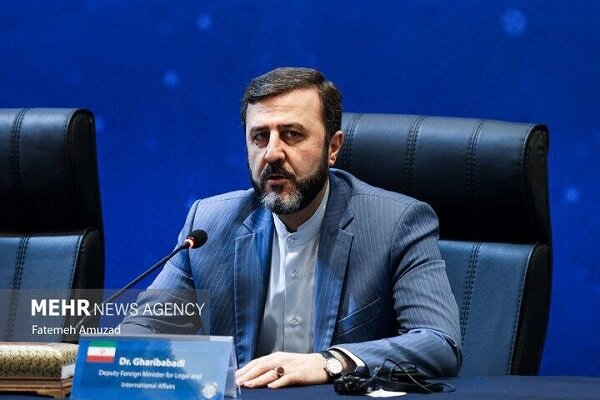
Kazem Gharibabadi says Tehran will only treat a draft understanding with Washington as final if Iran's interests are protected. He says the release of frozen assets is central, and that the deal should not be seen as a simple one-for-one exchange.
Iran is saying any deal with the US must start by unlocking half of its trapped money right away, like getting the first half of a locked treasure chest opened before signing. It also wants the rest opened soon after, not left stuck for long.
Analysis
What Iran is asking for
Iran's deputy foreign minister for legal and international affairs, Kazem Gharibabadi, says any memorandum of understanding with the United States would need to begin with the release of at least 50% of Iran's frozen financial assets. He said the remaining funds should be unblocked within one to two months after signing.
The wider negotiating frame
According to Gharibabadi, the assets belong to Iran and were illegally frozen by the US, so their release is not a side issue but a central condition for any understanding. He added that Tehran would only consider a draft agreement final if its interests and concerns are fully taken into account.
He also said the practical details of how the funds would be accessed, including technical and financial mechanisms, would still need to be worked out during a 60-day implementation period after signing.
Security conditions are part of the package
The interview also linked the issue to maritime and regional security. Gharibabadi said the US would have to lift what he called an illegal naval blockade on Iranian ports if Tehran takes steps related to the Strait of Hormuz. He rejected the idea that the arrangement would be a simple one-for-one swap, saying it is not just one action in exchange for one action.
The article does not present the US response, and it reads as Iran laying out a minimum opening position rather than describing a settled deal. The main takeaway is that Tehran is tying any possible agreement to immediate financial relief, a short timetable for full release, and parallel concessions on the security side.
Key points
- Kazem Gharibabadi says at least half of Iran's frozen assets must be released when any MoU with the US is signed.
- He says the remaining funds should be unblocked within one to two months after the deal.
- Iran frames the assets as its own money that was illegally frozen by the US.
- The article links the financial issue to security conditions around the Strait of Hormuz and Iranian ports.
- Gharibabadi rejects the idea that the arrangement would be a simple one-for-one exchange.
If the talks move forward, the release of frozen funds could give Iran quick access to money it says belongs to it. A written understanding could also create a timetable for resolving the remaining financial and technical issues. If both sides keep negotiating, the article suggests there is at least a framework for discussing assets, ports, and the Strait of Hormuz together rather than through a breakdown.
The deal could stall if the US rejects Iran's demand for immediate asset release or refuses to link it to broader security concessions. The article also suggests there is still disagreement over how to structure the mechanism, which could delay or derail any understanding. Because Gharibabadi rejects a simple one-for-one exchange, the gap between the two sides may be larger than the headline implies.