Iran war: Chinese tanker passes Red Sea choke point despite Houthi blockade
A Chinese oil tanker has been granted permission to pass through the Bab al-Mandab strait, despite a Houthi blockade of shipping to Saudi Arabia. The Houthi militia in Yemen appears to be allowing some ships to pass through the waterway on a case-by-case basis.
Intelligence analysis by Llama
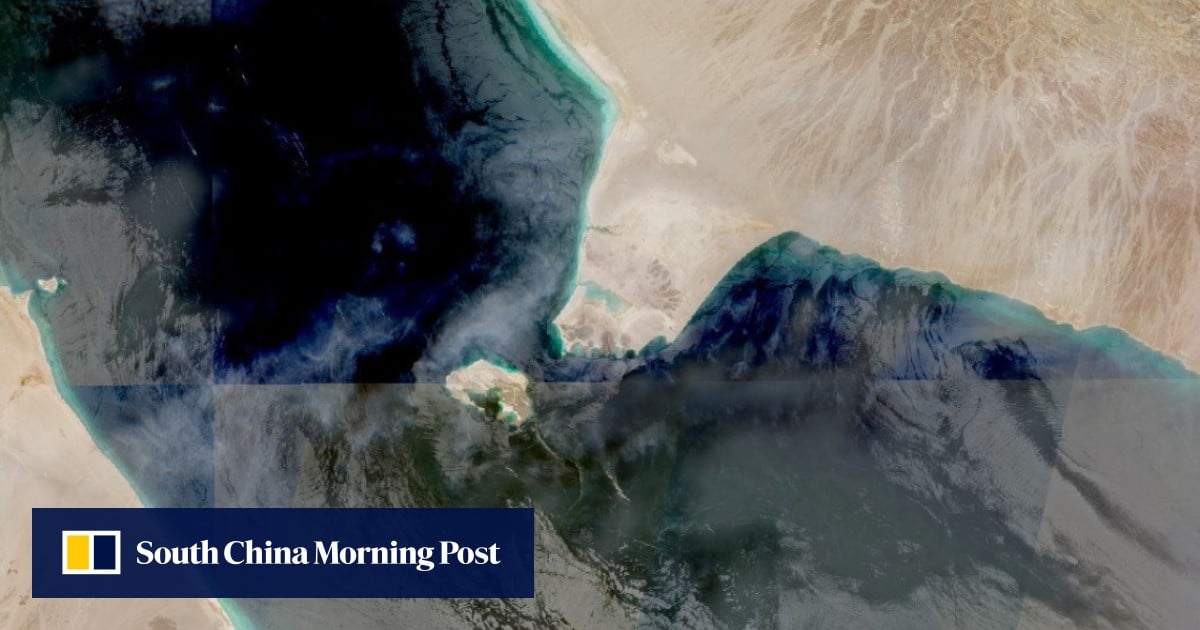
A Chinese oil tanker has been allowed to pass through the Bab al-Mandab strait, despite a Houthi blockade of shipping to Saudi Arabia. The Houthi militia in Yemen appears to be allowing some ships to pass through the waterway on a case-by-case basis.
A group of people in Yemen called the Houthi militia has blocked ships from going through a narrow waterway called the Bab al-Mandab strait. However, some ships are being allowed to pass through the waterway on a case-by-case basis. This is a complex situation that could have significant implications for global oil supplies and trade.
Analysis
A Houthi Blockade with a Loophole
The Houthi militia in Yemen has declared a blockade on maritime traffic to and from Saudi Arabia, but it appears that some ships are being allowed to pass through the Bab al-Mandab strait on a case-by-case basis. This has significant implications for global oil supplies and trade.
The Chinese oil tanker Cosco Shipping's VLCC Xin Long Yang has been granted permission to pass through the waterway, according to the trade publication Lloyd's List. This suggests that the Houthi militia may be willing to negotiate passage with ships on a case-by-case basis.
The US think tank Institute for the Study of War has so far counted seven ships that altered their course to avoid passing through the Bab al-Mandab following the Houthi threats. However, it appears that some ships are being allowed to pass through the waterway, which suggests that the blockade may not be as effective as initially thought.
The Houthi blockade of shipping to Saudi Arabia has significant implications for global oil supplies and trade. The fact that some ships are being allowed to pass through the Bab al-Mandab strait suggests that the blockade may not be as effective as initially thought.
Why the Houthi Blockade Matters
The Houthi blockade of shipping to Saudi Arabia has significant implications for global oil supplies and trade. The fact that some ships are being allowed to pass through the Bab al-Mandab strait suggests that the blockade may not be as effective as initially thought.
The Houthi militia in Yemen has been at war with Saudi Arabia for over a decade, and the blockade is a significant escalation of the conflict. The blockade has the potential to disrupt global oil supplies and trade, which could have significant economic implications.
The Road Ahead
The Houthi blockade of shipping to Saudi Arabia is a complex and evolving situation. The fact that some ships are being allowed to pass through the Bab al-Mandab strait suggests that the blockade may not be as effective as initially thought.
However, the blockade still has the potential to disrupt global oil supplies and trade. The situation is likely to continue to evolve in the coming days and weeks, and it is unclear how the Houthi militia will proceed.
Key points
- The Houthi militia in Yemen has declared a blockade on maritime traffic to and from Saudi Arabia.
- Some ships are being allowed to pass through the Bab al-Mandab strait on a case-by-case basis.
- The Chinese oil tanker Cosco Shipping's VLCC Xin Long Yang has been granted permission to pass through the waterway.
- The US think tank Institute for the Study of War has so far counted seven ships that altered their course to avoid passing through the Bab al-Mandab following the Houthi threats.
The fact that some ships are being allowed to pass through the Bab al-Mandab strait suggests that the Houthi blockade may not be as effective as initially thought. This could lead to a decrease in tensions between the Houthi militia and Saudi Arabia, and a decrease in the risk of a global oil supply disruption.
The Houthi blockade of shipping to Saudi Arabia still has the potential to disrupt global oil supplies and trade. If the blockade is not lifted, it could lead to a significant increase in oil prices and a decrease in economic activity.