Iran War Updates: Strait of Hormuz 'back to the worst case scenario' amid escalating attacks, analyst says
Iran's Revolutionary Guard claimed a new series of strikes targeting U.S. military facilities across the Middle East on Friday, though there was no immediate confirmation from U.S. officials on any actual impacts. Ship crews around the Strait of Hormuz are unwilling to ma…
Intelligence analysis by Llama
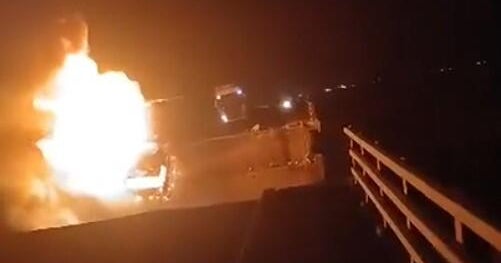
Iran's Revolutionary Guard claimed a new series of strikes targeting U.S. military facilities across the Middle East, while ship crews around the Strait of Hormuz are unwilling to make the risky trip due to the breakdown of the U.S.-Iran ceasefire.
Imagine you're on a ship, and you're trying to get through a really important waterway called the Strait of Hormuz. But there's a big problem - the U.S. and Iran are fighting, and it's making it really hard for ships to get through safely. This is causing oil prices to go up, which can affect the global economy. It's like a big puzzle, and everyone is trying to figure out how to make it work.
Analysis
A $60B Vote of Confidence
The recent escalation of attacks in the Strait of Hormuz has pushed oil prices to their highest level in a month, with a barrel of Brent crude trading around $85 a barrel. This is a significant concern for global economies, as the Strait of Hormuz is a critical shipping route that accounts for over 20% of the world's oil exports. The breakdown of the U.S.-Iran ceasefire has created a sense of uncertainty and fear among ship crews, who are unwilling to make the risky trip through the Strait of Hormuz. This has led to a collapse in transits through the strait itself, as well as more deadly attacks on commercial vessels since the ceasefire ended. The concerns have pushed oil prices to their highest level in a month, with a barrel of Brent crude, the international standard, up about 1% Thursday to trade around $85 a barrel. U.S. benchmark crude oil was up a similar amount, trading just under $80 per barrel.
Why Cursor?
The U.S. military has completed a sixth consecutive night of strikes on Iran, targeting 'dozens of Iranian military targets such as coastal surveillance and air defense sites, military logistics infrastructure, and maritime capabilities.' The U.S. military has also confirmed strikes in the area, saying it targeted 'surveillance and air defense sites, military logistics infrastructure, and maritime capabilities.' The U.S. military's actions are a clear indication of its commitment to protecting its interests in the region, but the escalating tensions between the U.S. and Iran have significant implications for global oil prices and the safety of shipping routes in the Strait of Hormuz.
The Road Ahead
The situation in the Strait of Hormuz is complex and multifaceted, with various stakeholders and interests at play. The U.S. military's actions are a clear indication of its commitment to protecting its interests in the region, but the escalating tensions between the U.S. and Iran have significant implications for global oil prices and the safety of shipping routes in the Strait of Hormuz. The situation is likely to continue to unfold in the coming days and weeks, with significant implications for global economies and the safety of shipping routes in the Strait of Hormuz.
Key points
- Iran's Revolutionary Guard claimed a new series of strikes targeting U.S. military facilities across the Middle East on Friday.
- Ship crews around the Strait of Hormuz are unwilling to make the risky trip through the Strait of Hormuz because of the breakdown of the U.S.-Iran ceasefire.
- The U.S. military has completed a sixth consecutive night of strikes on Iran, targeting 'dozens of Iranian military targets such as coastal surveillance and air defense sites, military logistics infrastructure, and maritime capabilities.'
- The U.S. military has also confirmed strikes in the area, saying it targeted 'surveillance and air defense sites, military logistics infrastructure, and maritime capabilities.'
- The situation in the Strait of Hormuz is complex and multifaceted, with various stakeholders and interests at play.
If the U.S. and Iran can find a way to de-escalate their conflict, it could lead to a decrease in oil prices and an increase in the safety of shipping routes in the Strait of Hormuz. This could have a positive impact on the global economy and the safety of ships and their crews.
If the conflict between the U.S. and Iran continues to escalate, it could lead to a significant increase in oil prices and a decrease in the safety of shipping routes in the Strait of Hormuz. This could have a negative impact on the global economy and the safety of ships and their crews.