Iran will declare a ‘prohibited zone’ near Hormuz in coming days: security chief
Iran plans to establish a "prohibited zone" near the strategic Strait of Hormuz, threatening sanctions on ships entering it. Concurrently, the country will double petrol prices for its heaviest consumers, responding to increased US sanctions.
Intelligence analysis by Gemini 2.5 Flash
Iran's top security chief announced an impending "prohibited zone" in the Persian Gulf, starting from the US Navy's blockade line, with ships entering facing Iranian sanctions. This move, alongside a significant petrol price hike for high-volume users, comes as the US intensifies economic pressure on Tehran.
Imagine the Strait of Hormuz is a very busy road where many oil trucks drive. Iran, like a strict neighbor, is saying it will mark a special area near this road where certain trucks aren't allowed, or they'll get into trouble. At the same time, they're making gas more expensive for people who use a lot, because other countries are trying to make it harder for Iran to sell its oil.
Analysis
Strait of Hormuz
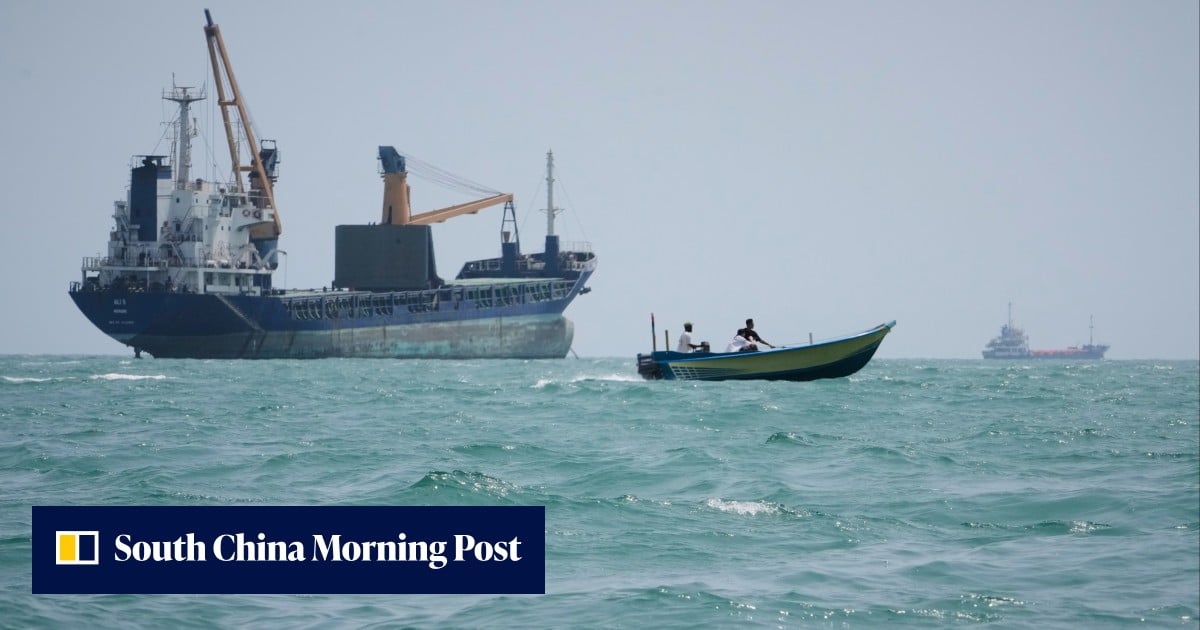
Iran's announcement of a "prohibited zone" near the Strait of Hormuz marks a significant escalation in regional tensions. This strategic waterway is a critical chokepoint for global oil shipments, with a substantial portion of the world's seaborne crude oil passing through it daily. The proposed zone, described as starting from the "US Navy's blockade line" and extending into the Persian Gulf, directly challenges the established international maritime order and the presence of US naval forces.
The declaration implies that Iran intends to unilaterally impose its authority over a broader area, threatening to sanction any vessel that enters this newly defined zone. Such a move could lead to direct confrontations with international shipping, particularly those operating under the protection or guidance of the US Navy. The ambiguity of "sanctions list" from Iran's perspective adds to the uncertainty, potentially encompassing anything from warnings to more aggressive interdictions, thereby increasing the risk of miscalculation and accidental conflict in an already volatile region.
Mohsen Rezaei
The announcement by Mohsen Rezaei, Iran's top security chief, underscores the high-level strategic nature of this decision. Rezaei's position indicates that this is not merely a rhetorical threat but a policy directive from the highest echelons of Iranian leadership. His statement, delivered via state media, serves as a clear signal of Iran's resolve to push back against what it perceives as US economic warfare and military encirclement.
This move can be interpreted as part of Iran's broader strategy to leverage its geographical advantage and control over vital maritime routes as a bargaining chip against international sanctions. By creating a "prohibited zone," Iran aims to demonstrate its capacity to disrupt global trade and energy flows, thereby increasing the costs for countries participating in or enforcing US sanctions. It reflects a calculated risk to assert sovereignty and deter further economic isolation, even at the risk of heightened military tensions.
Petrol Prices
Concurrently with the geopolitical maneuver, Iran is implementing a significant domestic economic adjustment by doubling the price of petrol for its heaviest consumers. This measure, announced by government spokeswoman Fatemeh Mohajerani, targets the third tier of Iran's quota system, raising the price from 5,000 to 10,000 tomans per litre for consumption exceeding 110 litres per month. This internal policy change is directly linked to the external pressure exerted by the United States through its escalating sanctions regime.
The petrol price hike is a clear indication of the economic strain Iran is experiencing due to US efforts to isolate its economy. While framed as a measure to manage consumption, it also serves to generate revenue and reduce subsidies in the face of dwindling oil export revenues. Such domestic austerity measures, particularly those affecting essential goods like fuel, carry the risk of public discontent and protests, as seen in previous instances of price adjustments in Iran. The government's decision, despite a presidential promise, highlights the severity of the economic challenges and the difficult choices being made to sustain the national economy under intense international pressure.
Key points
- Iran's top security chief announced a "prohibited zone" near the Strait of Hormuz.
- This zone will start from the US Navy's blockade line and include parts of the Persian Gulf.
- Any ship entering the new zone will face Iranian sanctions.
- Iran will double the price of petrol for its heaviest consumers, effective September 8.
- These measures come as the United States intensifies sanctions against Iran's economy.
The declaration of a "prohibited zone" near the Strait of Hormuz significantly raises the risk of maritime incidents and military confrontation with the US Navy, potentially disrupting global oil supplies. Domestically, the petrol price hike could fuel public discontent and economic instability within Iran, further exacerbating the impact of US sanctions.
Market signals
- OIL Increased geopolitical tension and potential disruption to a key oil shipping route could drive up global oil prices.
AI-generated analysis of potential market relevance. Not financial advice.