What China’s Lop Nur desert base expansion means for PLA stealth jets in race with US
China is rapidly expanding a flight-test facility near Lop Nur in Xinjiang, which analysts believe will accelerate the development and testing of its next-generation military aircraft amid intensifying air-power rivalry with the United States.
Intelligence analysis by Gemini 2.5 Flash
Satellite imagery reveals significant expansion at China's remote Lop Nur desert base, including new hangars and infrastructure, suggesting it's becoming a key test center for advanced, sensitive aircraft like the J-36. This development is seen as a strategic move to fast-track the People's Liberation Army's high-end air capabilities in its ongoing competition with the US.
Imagine China is building super-fast, invisible airplanes, like a secret superhero headquarters. They're making their hidden desert base, called Lop Nur, much bigger with new garages and runways. This helps them test their new planes, like the super-secret J-36, really fast and quietly, so they can catch up in a race with another country to have the best planes.
Analysis
Lop Nur
The Lop Nur facility, located deep in China's western Xinjiang region, is undergoing rapid expansion, as evidenced by recent satellite imagery. This remote desert location is considered ideal for the quiet and secure testing of sensitive, next-generation military aircraft, minimizing external observation. The expansion includes the construction of four large new hangars, extensive new taxiway work, a circular pad for engine-run or turnaround operations, and potential fuel-storage infrastructure, indicating a significant increase in operational capacity.
This strategic development provides the People's Liberation Army (PLA) with enhanced capabilities to conduct multiple advanced combat-aircraft programmes simultaneously. By centralizing high-end testing at Lop Nur, China can accelerate the development cycle for its most advanced designs, ensuring greater secrecy and efficiency in its military aviation advancements. The site's isolation is crucial for protecting proprietary technology and operational details from foreign intelligence.
J-36
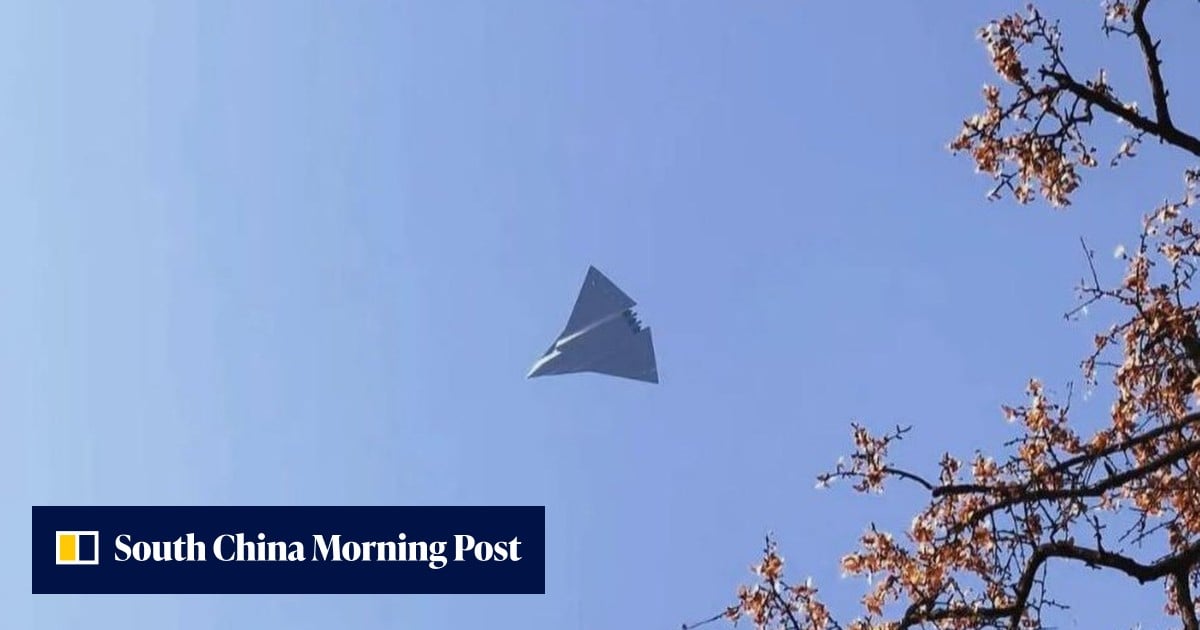
The expansion at Lop Nur coincides with the observation of a large tailless sixth-generation PLA aircraft, widely referred to as the J-36, at the facility. This sighting, first noted around August 2025 by retired US Navy intelligence officer J. Michael Dahm, suggests that the base is already being utilized for testing China's most advanced and secretive aerial platforms. The presence of such a cutting-edge aircraft underscores the facility's role in China's pursuit of air superiority.
The J-36 represents a significant leap in China's stealth jet technology, aiming to compete directly with or even surpass current US capabilities. Its testing at Lop Nur indicates a focused effort to refine and deploy these advanced systems rapidly. The ability to conduct extensive flight-test programmes for aircraft like the J-36 away from routine observation is a critical advantage for China in its military modernization drive.
Andreas Rupprecht
Aviation analyst Andreas Rupprecht, an expert on the Chinese air force, expressed conviction that Lop Nur is destined to become the PLA's primary test center for high-end, next-generation aircraft. His assessment highlights the strategic importance of this facility in China's long-term military planning and its ambition to field a world-class air force. Rupprecht's view emphasizes the qualitative leap China is attempting to make in its aviation capabilities.
However, another expert familiar with Chinese military aviation, who remained anonymous, offered a note of caution, advising against drawing firm conclusions until the base expansion is fully completed. This perspective suggests that while the intent is clear, the full operational impact and capabilities of the expanded facility are yet to be definitively established. This nuanced view acknowledges the ongoing nature of the development and the potential for future changes or unforeseen challenges.
Key points
- China is rapidly expanding its Lop Nur flight-test facility in the western Xinjiang region.
- Satellite imagery shows new hangars, taxiways, and other infrastructure, indicating increased capacity.
- Analysts believe the expansion will fast-track the development of China's next-generation military aircraft.
- The facility is expected to become a key test center for high-end, sensitive designs like the J-36 stealth jet.
- This development is seen as part of China's intensifying air-power rivalry with the United States.
The rapid expansion of the Lop Nur facility could significantly accelerate China's development of advanced stealth aircraft, potentially allowing the PLA to achieve its modernization goals faster and strengthen its air defense and offensive capabilities. This could lead to a more robust and technologically advanced Chinese military, enhancing its strategic deterrence.
The accelerated development of China's next-generation stealth jets, facilitated by the Lop Nur expansion, could intensify the air-power rivalry with the United States, potentially leading to an arms race and increased geopolitical tensions in the Indo-Pacific region. The secrecy surrounding these developments also raises concerns about transparency and regional stability.