US envoys Witkoff, Kushner arrive in Kyiv after talks to Putin in Moscow
US envoys Steve Witkoff and Jared Kushner arrived in Kyiv for peace talks after meeting with Russian President Vladimir Putin in Moscow, aiming to revive diplomatic efforts amid escalating conflict.
Intelligence analysis by Gemini 2.5 Flash
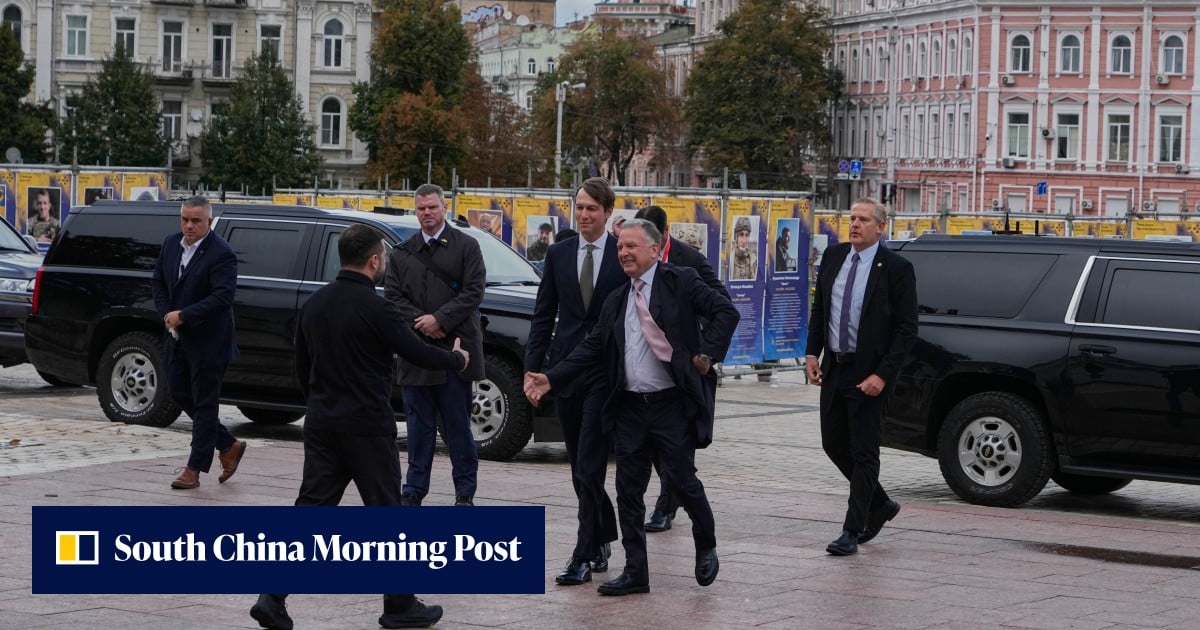
US special envoys Steve Witkoff and Jared Kushner have initiated a renewed push for peace in the Ukraine war, visiting Kyiv after holding discussions with Russian President Vladimir Putin in Moscow. Ukrainian President Volodymyr Zelensky expressed readiness for constructive dialogue, emphasizing the need for a just and sustainable post-war peace.
Imagine two big kids, Steve and Jared, who are trying to help two other kids, Russia and Ukraine, stop fighting. They first went to talk to the leader of Russia, like a principal, to see what he wanted. Then, they traveled to Ukraine to talk to their leader, like another principal, to hear their side. They're trying to find a way for everyone to be friends again and stop the arguments, especially since the fighting is still happening.
Analysis
The arrival of US envoys Steve Witkoff and Jared Kushner in Kyiv, following their meeting with Russian President Vladimir Putin in Moscow, marks a significant, albeit cautious, diplomatic initiative. This renewed push for peace comes after a period where Washington's focus had reportedly shifted towards the Iran war, suggesting a re-prioritization of the Ukraine conflict. The fact that these talks are occurring amidst escalating aerial attacks by both sides underscores the urgency and complexity of the situation, highlighting the immense challenges in finding common ground for a resolution. The envoys' previous visit to Moscow in January, also for talks with Putin, indicates a persistent, albeit previously unannounced, channel of communication between the US and Russia, even as official relations remain strained.
Kyiv
Ukrainian President Volodymyr Zelensky's welcoming of the US representatives in Kyiv and his expressed readiness for a "constructive" discussion are crucial. His statement on Telegram, emphasizing the need for an end to the war, security guarantees, and a "just and sustainable post-war peace," sets a clear framework for Ukraine's expectations. The ceremony in St. Sophia Square, where Zelensky met the envoys, adds a symbolic weight to the visit, signaling Ukraine's openness to diplomatic solutions while maintaining its core demands. This engagement in Kyiv is vital for the US envoys to directly convey the outcomes of their Moscow discussions and to understand Ukraine's current negotiating position and red lines, ensuring that any proposed peace framework aligns with Kyiv's national interests and sovereignty.
Vladimir Putin
The meeting between US envoys Witkoff and Kushner and Russian President Vladimir Putin in Moscow, which lasted over three hours behind closed doors, is a critical component of this diplomatic push. While no breakthroughs were announced, the mere occurrence of such high-level discussions suggests a potential, however slim, willingness from the Russian side to engage in dialogue. Putin's decision to meet with these specific envoys, who are linked to former President Donald Trump, could be interpreted in various ways, including an attempt to gauge future US policy directions or to explore alternative diplomatic channels outside of traditional State Department structures. The content of these discussions, though undisclosed, likely touched upon core Russian security concerns and its demands for any peace settlement, forming the basis for the subsequent talks in Kyiv.
Donald Trump
The involvement of Jared Kushner, identified as US President Donald Trump's son-in-law, and Steve Witkoff, suggests a connection to the Trump administration's past diplomatic approaches and potentially future ones. This dynamic adds a layer of complexity, as it could signal an unofficial or parallel diplomatic track, distinct from the current US administration's official foreign policy. The article notes their last known visit to Moscow was in January, also for talks with Putin at the Kremlin, indicating a consistent, albeit low-profile, engagement. This continuity of contact, even across administrations, might be seen by some as a way to maintain lines of communication with Russia, while others might view it as potentially undermining official diplomatic efforts. The nature of their mandate and the extent of their coordination with the current US government remain key questions in understanding the broader implications of their mission.
Key points
- US envoys Steve Witkoff and Jared Kushner arrived in Kyiv for peace talks after meeting Russian President Vladimir Putin in Moscow.
- The visit is part of a renewed US push for peace following Russia's full-scale invasion of Ukraine.
- Ukrainian President Volodymyr Zelensky expressed readiness for "constructive" discussions, emphasizing the need for a just and sustainable post-war peace.
- The meeting with Putin in Moscow lasted over three hours behind closed doors, with no breakthroughs announced.
- This marks the envoys' first official visit to Ukraine and follows a previous meeting with Putin in January.
The renewed diplomatic engagement by high-level US envoys, including direct talks with both Russian and Ukrainian leadership, could potentially open new avenues for de-escalation and a negotiated settlement. This sustained effort might lead to a reduction in hostilities and pave the way for a more stable and just peace in the region.
Despite the diplomatic efforts, the lack of announced breakthroughs after the Moscow talks and the ongoing escalation of aerial attacks suggest that significant obstacles to peace remain. The differing demands of the warring parties and the complexity of the conflict could lead to these talks failing to achieve any meaningful progress, resulting in continued prolonged conflict.