Iran’s Most Unusual Journey to the World Cup
Iran’s World Cup build-up was shaped by war, visa delays, and a last-minute shift to Mexico for team housing.
Intelligence analysis by GPT-5.4 Mini
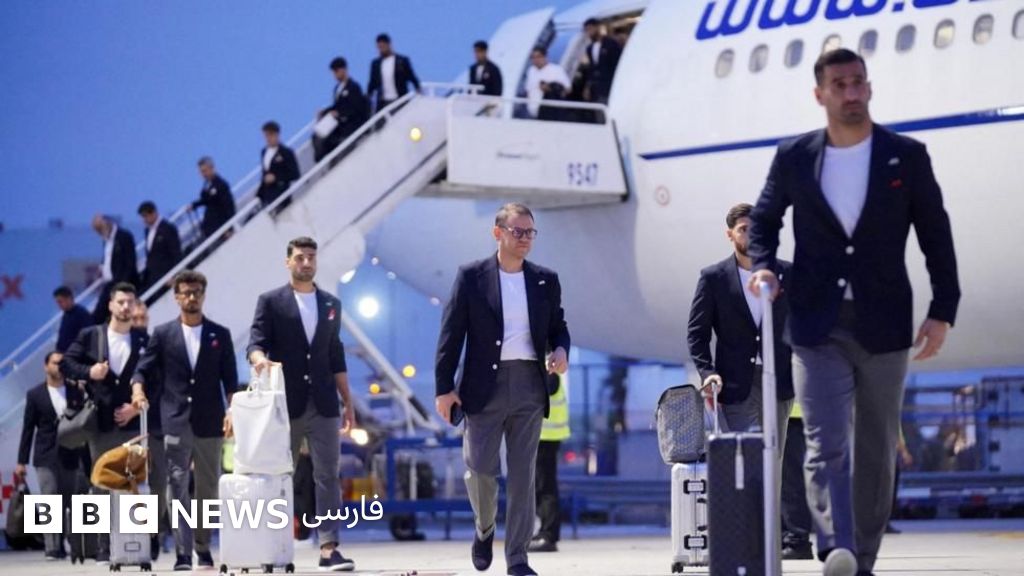
The article says Iran’s national team reached its World Cup base in Tijuana only after hours of delays and months of uncertainty. What should have been routine preparation became a politically charged logistical fight over visas, lodging, and even whether the team would travel at all.
Iran’s soccer team had to go on a very tricky trip to the World Cup, like trying to get to a school trip when the bus, the tickets, and even the hotel keep changing at the last minute.
Analysis
A routine trip that was anything but routine
Iran’s national football team finally arrived at its base in Tijuana, Mexico, after hours of delay in Ankara. BBC Persian says there had still been doubt late in the process about whether the team would actually make it to the tournament.
The piece frames this as an unusually political World Cup journey. Iran had qualified more than a year earlier, becoming one of the first teams to book a place at the 2026 tournament. But the situation changed after the war involving Israel, the United States, and Iran, which the article says reshaped everything around the team’s preparation.
Visas, travel, and where to stay
According to the article, visa problems remained unresolved until just days before Iran’s first match. The U.S. State Department told BBC that necessary visas had been issued for players and essential staff, but also said the United States would not let Iran use the system to bring “terrorists” into the country under the cover of the World Cup.
Not everyone got visas. The article says several members of the delegation, including federation president Mehdi Taj, were denied. Taj publicly complained about delays and at one point said Iran might reconsider its participation if the problems continued, though Iranian officials later confirmed the team would compete.
The article also says Iran originally planned to base itself in Tucson, Arizona, but moved its camp to Tijuana after FIFA approved the request. Iranian officials say players were told they would have to enter the United States only on match days and leave afterward. Mexican President Claudia Sheinbaum said the U.S. did not want Iran to stay overnight on its soil, and FIFA asked Mexico to host the team.
A familiar sporting bridge, under strain
The article places this in a longer history of sport as one of the few direct links between Iran and the U.S. It recalls Iran’s 2-1 win over the United States at the 1998 World Cup, the 1-0 U.S. win in Qatar in 2022, and the 2000 friendly at the Rose Bowl that nearly collapsed over security and visa issues.
Key points
- Iran’s team reached its base in Tijuana only after hours of delay and months of uncertainty.
- Visa approvals came late, and some members of the delegation were denied entry documents.
- Iran moved its main camp from Tucson to Tijuana after FIFA approved the change.
- The article says U.S.-Iran tensions, including the wider war context, reshaped the team’s World Cup preparation.
- The story places this tournament in the history of sporting contact between Iran and the United States.
If the current arrangements hold, Iran will still be able to take part in the tournament and complete its matches. The article also suggests that sport can still function as one of the few working links between Iran and the United States.
The article shows how visas, travel rules, and political tension could keep complicating even basic logistics for Iran. If those frictions return, they could disrupt preparation, strain the delegation, or create fresh doubt around the team’s movement and stay.