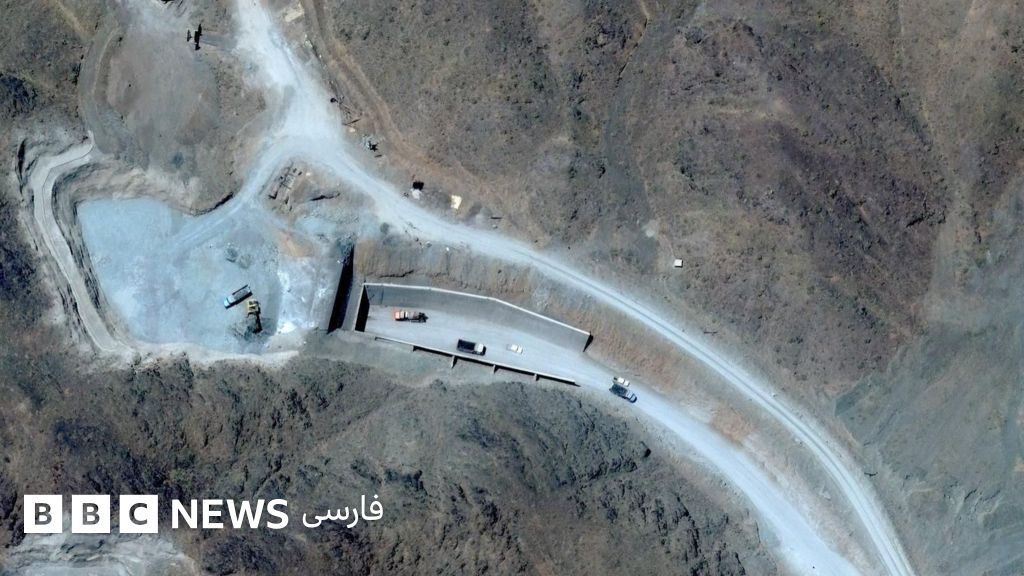
IRGC launches missile, drone attacks on US base in Jordan
The Islamic Revolutionary Guards Corps (IRGC) claims to have launched missile and drone attacks on the US Al-Azraq base in Jordan, destroying several aircraft and inflicting severe structural damage.
Intelligence analysis by Gemini 2.5 Flash

The IRGC's Aerospace Force executed "Wave 20 of Operation Nasr-2" in retaliation for alleged US strikes on Iranian civilian infrastructure. The pre-dawn operation targeted fighter jet shelters and a large aircraft parking apron, with the IRGC claiming significant destruction and calling on Jordanians to confront US forces.
Imagine two big kids on a playground who don't like each other. One kid says the other broke their toys, so they hit the other kid's fort with water balloons and rocks. That's kind of like what happened here: Iran says the US damaged its stuff, so Iran used missiles and drones to attack a US military base in Jordan, claiming to have broken some of their planes.
Analysis
Retaliatory Strike on Al-Azraq
The Islamic Revolutionary Guards Corps (IRGC) announced a coordinated missile and drone strike on the US Al-Azraq base in Jordan, framing it as the 20th wave of "Operation Nasr 2." The pre-dawn operation, codenamed "Ya Abolfazl al-Abbas," specifically targeted fighter aircraft shelters and a large parking apron. The IRGC claimed a high-volume barrage completely destroyed at least two US fighter jets and three additional aircraft, alongside inflicting severe structural damage on other military assets at the installation. This reported attack marks a significant and direct military action by Iran against US forces in the region.
Justification and Regional Call to Action
The IRGC explicitly stated that the strike was a direct response to recent US military actions, which they accused of targeting Iranian civilian infrastructure. The military statement condemned American forces for allegedly committing war crimes by destroying hospitals, bridges, railways, ports, and airports, and killing civilians to mask battlefield setbacks. Beyond the military action, the IRGC issued a stern call to the Jordanian people and armed forces, urging them to confront US forces stationed in their country. They invoked religious rulings, asserting that foreign non-Muslim military forces invading Islamic lands are legitimate targets, portraying the US army as a "terrorist" entity responsible for the deaths of Muslims across various nations.
Escalation of Tensions
This reported attack represents a dangerous escalation in the ongoing shadow conflict between Iran and the United States, bringing it into the open with direct military engagement. The IRGC's explicit claims of destroying US assets and its public call for Jordanians to act against American presence could significantly heighten regional instability. Such an event risks broadening the scope of conflict beyond proxy engagements, potentially leading to direct confrontations that could draw in other regional and international powers, with severe implications for global security and energy markets.
Key points
- The IRGC launched missile and drone attacks on the US Al-Azraq base in Jordan.
- The operation, codenamed "Wave 20 of Operation Nasr-2," was a stated retaliation for alleged US attacks on Iranian civilian infrastructure.
- The IRGC claimed the strikes destroyed at least two US fighter jets and three other aircraft, causing severe structural damage.
- The IRGC accused US forces of war crimes and called on Jordanian people and armed forces to confront US presence.
- The attack highlights a significant escalation of direct military action between Iran and the United States.
This direct attack by the IRGC on a US base significantly escalates regional tensions, increasing the risk of a broader military conflict in the Middle East. Such an escalation could lead to further retaliatory strikes, destabilizing the region and potentially drawing more countries into direct confrontation.
Market signals
- OIL Escalation of military conflict in the Middle East, a key oil-producing region, typically increases supply-route risk and drives crude oil prices higher.
AI-generated analysis of potential market relevance. Not financial advice.