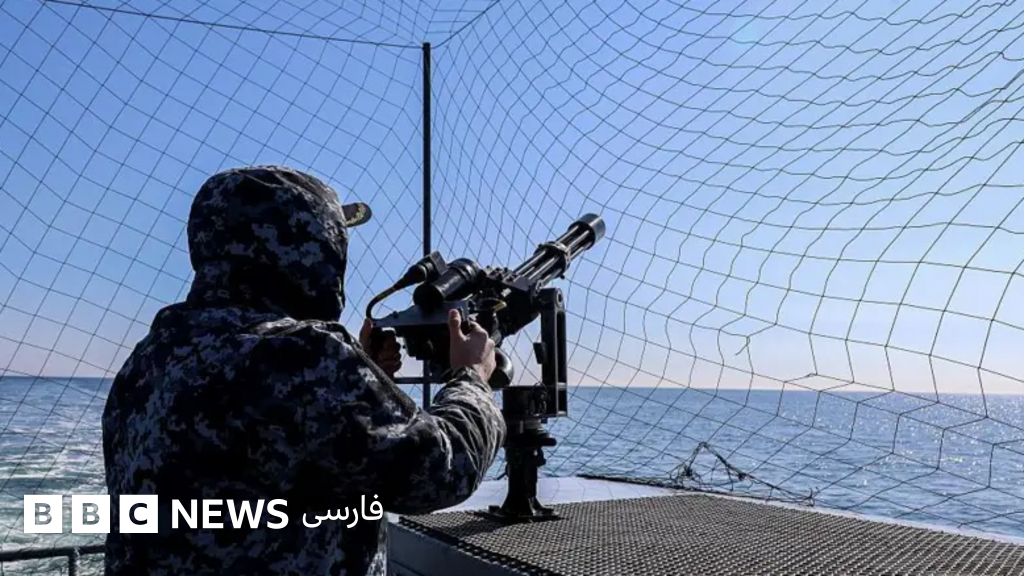
IRGC strikes US C-17, P-8 aircraft in Jordan
Iran's Islamic Revolutionary Guard Corps (IRGC) claims to have struck U.S. C-17 transport and P-8 command and control aircraft at Aqaba airport in Jordan with ballistic missiles.
Intelligence analysis by Gemini 2.5 Flash

The IRGC announced that these strikes, part of 'Operation Nasr 2,' were the 21st wave of attacks, facilitated by intelligence from Jordanian citizens. The group justified the actions by labeling the U.S. military as 'mahdur al-dam' (liable to be killed) due to its historical actions in Islamic countries and support for Israel.
Imagine a big group in Iran, called the IRGC, saying they shot rockets at American airplanes in a country called Jordan. They said they did it because they believe America has hurt many Muslim countries and helps Israel, and they think it's their religious duty to fight back. They even thanked some people in Jordan for helping them find the planes.
Analysis
IRGC's Asserted Military Action
The Mehr News Agency, citing the Islamic Revolutionary Guard Corps (IRGC), reported a significant military operation on July 20, 2026. The IRGC claimed to have launched ballistic missile strikes against U.S. C-17 transport aircraft and P-8 command and control planes stationed at Aqaba airport in Jordan. This alleged attack was presented as the 21st phase of 'Operation Nasr 2,' an ongoing series of operations targeting U.S. forces in the region. The IRGC explicitly thanked Jordanian citizens for providing intelligence that purportedly enabled these strikes, as well as previous attacks that allegedly destroyed 20 shelters housing U.S. forces at the al-Azraq base and resulted in the deaths of 'dozens of American terrorist forces.'
Justification and Ideological Framing
The IRGC's statement provided a strong ideological justification for its actions, framing the U.S. military as an occupying force responsible for attacking Islamic countries, killing millions of Muslims, and supporting Israel's actions in Gaza and the West Bank. The statement declared the American military 'mahdur al-dam,' a religious decree implying they are liable to be killed, and asserted that it is a religious duty for every Muslim to eliminate these 'savage killers.' This rhetoric underscores a deep-seated anti-American and anti-Zionist sentiment, positioning the strikes not merely as military actions but as religiously sanctioned acts of resistance aimed at the 'liberation of al-Quds' (Jerusalem).
Regional Implications and Escalation Risks
If confirmed, these alleged strikes represent a substantial escalation in the shadow conflict between Iran and the United States, potentially drawing Jordan more directly into the regional confrontation. The claim of successful ballistic missile attacks on U.S. military assets in a key regional ally like Jordan would signal a heightened capability and willingness by the IRGC to directly target American forces. Such an event could provoke a robust response from the United States, leading to a dangerous cycle of retaliation and further destabilization across the Middle East. The IRGC's explicit mention of Jordanian citizen cooperation also raises concerns about internal security dynamics within U.S. allied nations in the region.
Key points
- The IRGC claims to have struck U.S. C-17 and P-8 aircraft at Aqaba airport in Jordan with ballistic missiles.
- The alleged strikes are part of 'Operation Nasr 2' and are the 21st wave of attacks.
- The IRGC stated the operation was aided by intelligence from Jordanian citizens.
- The group justified the attacks by labeling the U.S. military as 'mahdur al-dam' (liable to be killed) due to its actions in Islamic countries and support for Israel.
- The IRGC thanked the Jordanian people, stating their cooperation helps pave the way for the liberation of al-Quds.
The IRGC's claims, if substantiated, could lead to a significant escalation of military tensions between Iran and the United States, potentially triggering retaliatory actions and further destabilizing the Middle East. This could endanger regional security, disrupt international trade routes, and increase the risk of broader conflict.
Market signals
- OIL Reported military strikes in the Middle East, a key oil-producing region, typically increase geopolitical risk and can drive up crude oil prices due to supply concerns.
AI-generated analysis of potential market relevance. Not financial advice.