Is the frontier of humanoid robotics shifting from hardware to intelligence?
Galbot founder Wang He discusses the shift towards intelligence in humanoid robotics at the World Robot Conference.
Intelligence analysis by Qwen 2.5 (3B)
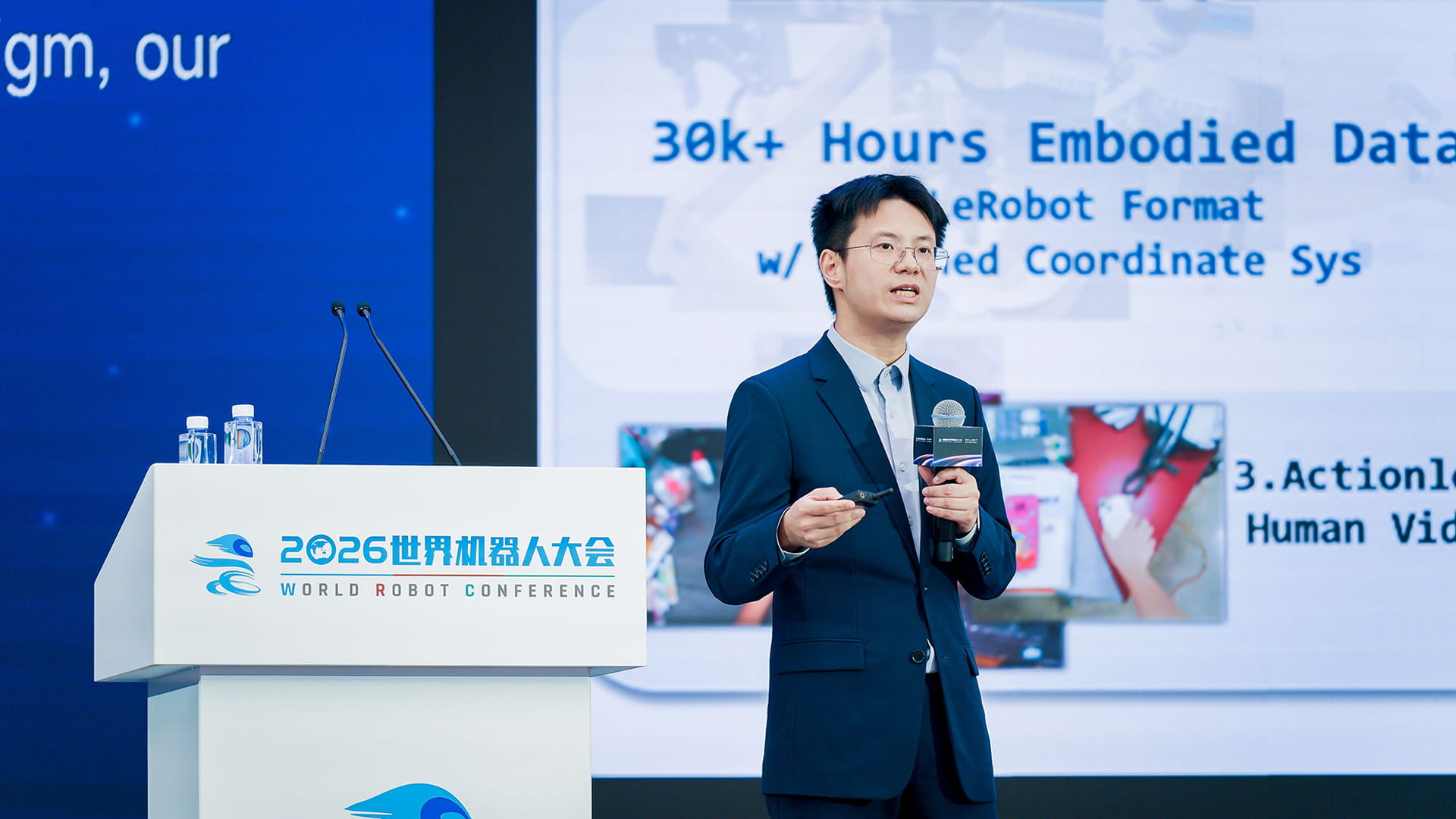
Galbot founder Wang He discusses the shift towards intelligence in humanoid robotics at the World Robot Conference.
Galbot is making robots that can learn new things on their own, like how to dance or play tennis, without needing to be told exactly how to do it. They're doing this by using smart models that understand the physical world and can control the robot's body.
Analysis
Embodied AI and the Future of Robotics
Galbot's ET1 humanoid robot represents a new approach to building robots, focusing on the model that determines what the robot can understand, learn, and do. The company's AstraBrain-Agent and AstraBrain-WBC models are designed to operate in physical environments, understanding human instructions and dynamically planning behavior. This contrasts with traditional approaches that rely heavily on hardware performance.
The Shift from Hardware to Intelligence
Galbot founder Wang He argues that robots should be able to achieve zero-shot generalization on common skills they have never specifically learned. This requires a model that can understand the physical world, control the robot's entire body, and continue learning over time. Galbot's ET1 is the world's first agent-based humanoid robot with autonomous learning capabilities, demonstrating this shift towards intelligence.
Challenges and Solutions
One of the key challenges in embodied AI is the need for models to understand and respond to changes in the physical environment. Galbot's AstraBrain-Agent addresses this by operating directly on physical space and using a feedback loop to adapt to new tasks. The company's AstraBrain-WBC model, trained on human motion data, allows robots to maintain balance and execute continuous movements, even when new information is introduced.
Broader Implications
Galbot's approach reflects a broader shift in embodied AI development, moving away from traditional methods that require extensive data collection and retraining. Instead, the company is developing a unified foundation model that can control different robot bodies and adapt to new tasks. This has the potential to make accumulated model capabilities less dependent on specific hardware or operating scenarios, opening up new possibilities for humanoid robotics.
Key points
- Galbot's ET1 is the world's first agent-based humanoid robot with autonomous learning capabilities.
- The company's AstraBrain-Agent and AstraBrain-WBC models are designed to operate in physical environments.
- Galbot's approach reflects a broader shift in embodied AI development, moving away from traditional methods that require extensive data collection and retraining.
- The goal is to make accumulated model capabilities less dependent on specific hardware or operating scenarios.
- Galbot's ET1 can identify and follow human movements in real-time, demonstrating its ability to learn new skills.
As humanoid robots become more intelligent, they can perform a wider range of tasks and adapt to new situations more easily. This could lead to more versatile and useful robots in the future.
If these models fail to generalize well, humanoid robots might struggle to perform tasks outside of their training data. This could limit their usefulness and make it harder to develop new applications.