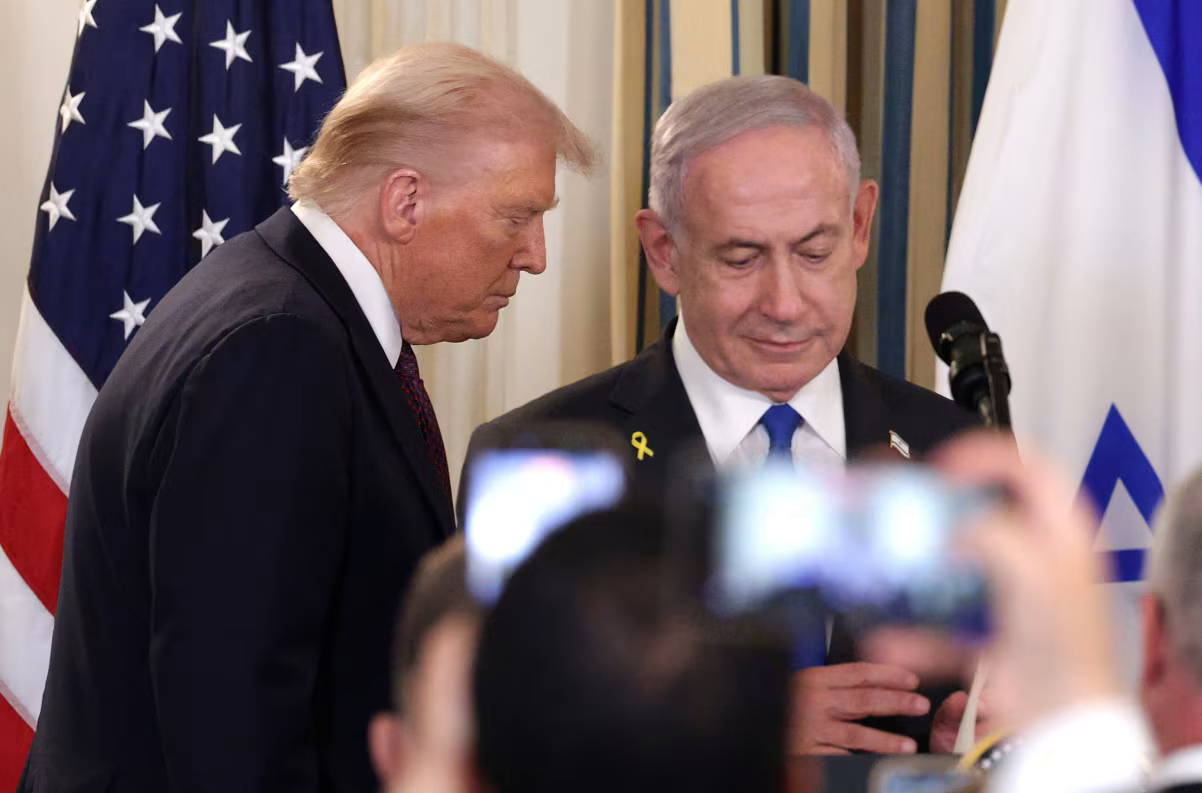
‘Israel cannot afford to ignore’: Israeli press reels from Democratic sweep
Israeli media is expressing alarm over the Democratic Party's sweep of Congress, particularly noting the victory of a candidate critical of Israel despite heavy pro-Israel lobbying. This outcome signals a significant shift in US politics that could impact the strategic re…
Intelligence analysis by Gemini 2.5 Flash

The Israeli press is reacting with concern to the recent Democratic sweep in Congress, interpreting it as a sign of shifting US political sentiment regarding Israel. The victory of Abdul El-Sayed, despite substantial pro-Israel spending against him, is seen as evidence that opposition to Israel is no longer a barrier to electoral success, potentially weakening Israel's influence in Wa…
Imagine your best friend's parents always agreed with your parents on everything. But now, your friend's parents have new friends who don't always agree with your parents, and they just won a big contest. Your parents are now worried because their old friends might not always support them like before, especially after a big argument they had.
Analysis
The recent Democratic sweep in Congress has sent ripples of concern through the Israeli press, signaling a potentially significant recalibration of the long-standing strategic relationship between the United States and Israel. Israeli analysts are particularly focused on the implications of this electoral shift, viewing it as a clear indication that the political landscape in Washington is evolving in ways that may challenge Israel's traditional influence. The narrative emerging from Jerusalem suggests a growing apprehension about the future of bipartisan support, which has historically been a cornerstone of US-Israel relations.
Abdul El-Sayed's Victory
A pivotal moment highlighted by the Israeli press is the victory of Abdul El-Sayed, a candidate whose success is seen as a direct challenge to the conventional wisdom regarding pro-Israel lobbying. Haaretz specifically noted that El-Sayed's win, despite substantial financial opposition from groups like AIPAC, demonstrates that “even strident opposition to Israel is no barrier to winning competitive federal races.” This outcome is particularly alarming for Israeli observers, as it suggests that the financial and political might of pro-Israel organizations may be losing its absolute sway within certain segments of the Democratic Party.
The implications of El-Sayed's success extend beyond a single election. It provides a tangible example for other candidates who might hold critical views on Israel, potentially emboldening them to pursue federal office without fear of being automatically disqualified by pro-Israel opposition. This could lead to a more diverse range of perspectives on Israel within Congress, moving away from what has often been perceived as a monolithic pro-Israel stance. For Israel, this means a potentially less predictable and less uniformly supportive legislative body, requiring a more nuanced and perhaps more challenging diplomatic engagement strategy.
Democratic Party Shifts
The Jerusalem Post underscored that the implications for Israel “could extend far beyond the loss of Republican control of Congress,” pointing to “broader shifts within the Democratic Party regarding Israel, the war with Iran, and the strategic relationship between Jerusalem and Washington.” This analysis suggests that the electoral results are not merely a cyclical political change but rather symptomatic of a deeper ideological evolution within the Democratic Party. A growing faction appears to be questioning the traditional alignment with Israel, possibly influenced by domestic progressive movements and a desire for a more independent US foreign policy.
These internal shifts could manifest in various ways, from increased scrutiny of US aid to Israel to a more critical stance on Israeli policies concerning Palestinians and regional conflicts. The expansion of the “camp critical of Israel” and its “growing access to positions of influence” is explicitly identified as a development Israel “cannot afford to ignore.” This necessitates a re-evaluation of Israel's lobbying efforts and public diplomacy in the US, as the traditional methods may no longer be as effective in navigating this evolving political landscape. The challenge for Israel will be to adapt its engagement strategies to a Democratic Party that is increasingly diverse in its views on the Middle East.
War with Iran
A significant factor contributing to the Democratic sweep, according to the Israeli press, was the “political price the war with Iran has exacted on the Republican Party.” The article explicitly states that Israel “pushed the US into” this war on 28 February, implying a direct causal link between Israel's influence and US military engagement. This framing suggests that the American public and, by extension, the Democratic Party, are increasingly wary of foreign entanglements, particularly those perceived as being driven by external interests. The “war with Iran” is presented as a key issue that alienated voters from the Republican Party, which was seen as more aligned with Israel's hawkish stance.
This connection between the “war with Iran” and the Democratic electoral success highlights a critical vulnerability for Israel. If US involvement in regional conflicts, particularly those advocated by Israel, becomes a political liability for American parties, it could significantly constrain Israel's ability to influence US foreign policy decisions. The perception that Israel is drawing the US into costly and unpopular conflicts could further fuel the critical sentiment within the Democratic Party, making it harder for Israel to secure unwavering support for its security agenda. This development forces Israel to consider the broader political ramifications in the US of its regional security strategies.
Key points
- Israeli press is alarmed by the Democratic sweep in Congress.
- Abdul El-Sayed's victory, despite heavy pro-Israel spending, signals a shift.
- Opposition to Israel is no longer a barrier to winning federal races.
- The Democratic Party is undergoing broader shifts regarding Israel and the "war with Iran."
- Israel's influence in Washington could diminish due to these changes.
The shift in the Democratic Party could lead to reduced US political and financial support for Israel, potentially complicating its regional security strategies and diplomatic efforts. Furthermore, the growing influence of voices critical of Israel might pressure the US to re-evaluate its involvement in regional conflicts, such as the "war with Iran," against Israel's interests.