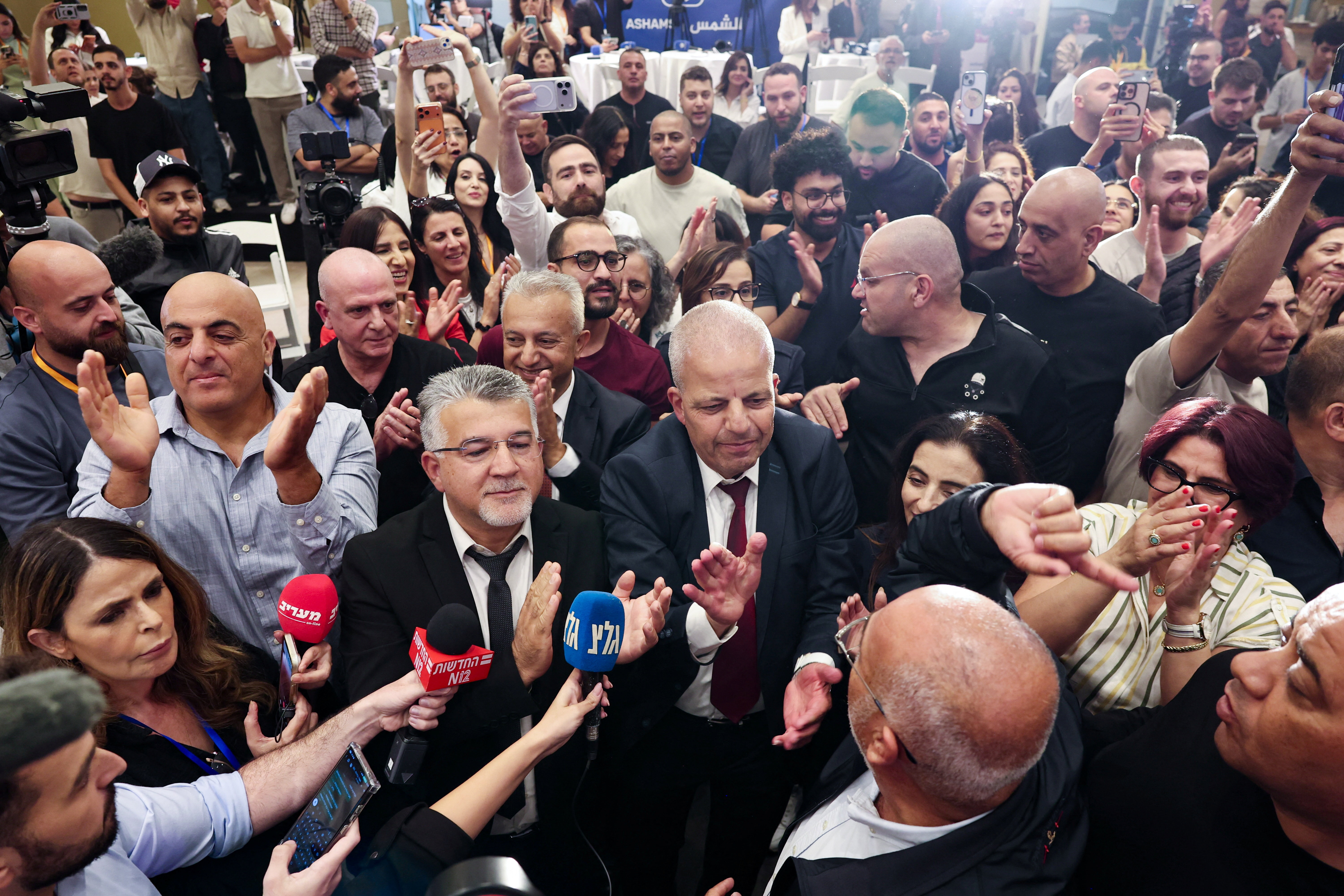
Record 19 seats put Israel’s Arab parties at the center of coalition talks
Following a record 19 seats for Arab-led parties in Israel's latest election, they are now pivotal in coalition talks as neither major bloc can form a government alone.
Intelligence analysis by Gemini 2.5 Flash Lite
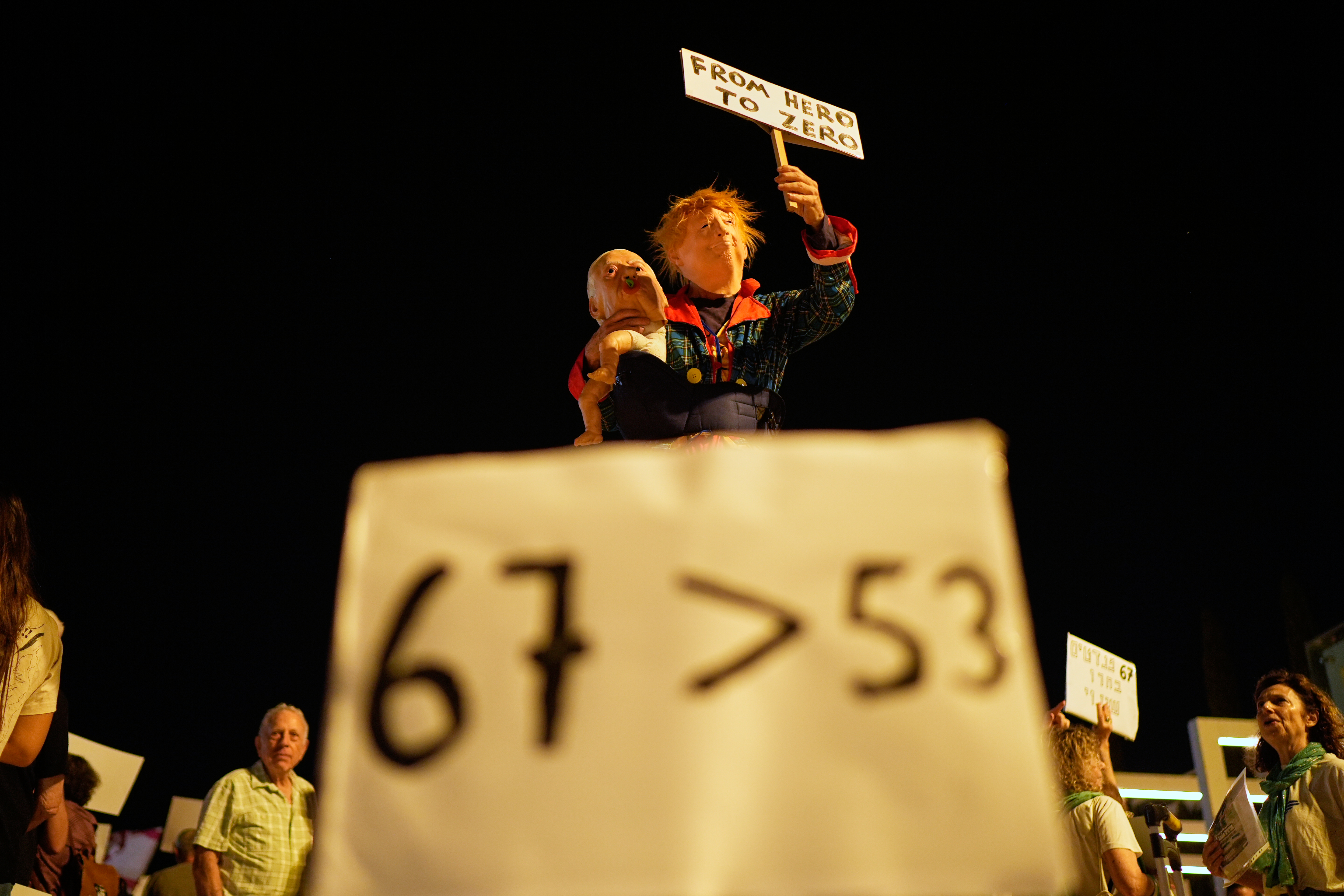
Israel's election results have placed Arab-led parties in an unprecedented kingmaker position, holding 19 seats. With neither Benjamin Netanyahu's bloc nor Gadi Eisenkot's opposition bloc securing a majority, these Arab parties are now central to forming a government, a scenario that presents significant political challenges and opportunities.
Imagine Israel's parliament is like a classroom with 120 students. To be the class leader, you need 61 votes. This time, two main groups of students got about 53 and 48 votes, but neither has enough. A group of students who are Arab citizens of Israel got a record 19 votes, making them the 'swing voters' who can help either of the main groups become the leader.
Analysis
Record 19 Seats
The recent Israeli election has yielded a historic outcome, with Arab-led parties securing a record 19 seats in the 120-member Knesset. This surge in representation, with the Joint List winning 11 seats and Ra’am securing eight, means that these parties are no longer on the periphery of Israeli politics but are now central to the formation of any governing coalition. The final results confirmed that neither Prime Minister Benjamin Netanyahu's bloc (53 seats) nor the main opposition bloc led by Gadi Eisenkot (48 seats) can independently form a government, as both fall short of the 61-seat majority required. This electoral arithmetic places the 19 seats held by Arab parties as the crucial swing votes, capable of tipping the balance and determining who will lead the next Israeli government.
Coalition Talks
The unprecedented electoral success has immediately thrust the Arab parties into the heart of complex coalition negotiations. Both the Joint List and Ra’am have indicated a willingness to engage in talks, with a primary condition often being the removal of Benjamin Netanyahu from power. While the Joint List's leader, Yousef Jabareen, has expressed readiness for discussions with the opposition, Ra'am's leader, Mansour Abbas, has expressed confidence in his party's ability to join a government. This opens up several potential scenarios, including the formation of a minority government led by Eisenkot, which would require the support or abstention of Arab parties. However, significant hurdles remain, notably the staunch opposition from figures like Avigdor Lieberman within Eisenkot's bloc, who refuses to cooperate with Arab parties. Netanyahu, conversely, may attempt to peel off members from opposing factions to build his own coalition.
Political Power Dynamics
The increased representation of Arab parties signifies a potential shift in the political power dynamics within Israel. For the first time, there is a tangible possibility of Arab parties playing a decisive role in government formation, moving beyond mere parliamentary opposition. This development is not without controversy, as Netanyahu has amplified unsubstantiated claims of election fraud and labeled cooperation with Arab parties as potentially treasonous, a stance the opposition has decried as demonizing Arab citizens. Despite these challenges, public rallies have been held urging the opposition to partner with Arab-led parties. The coming weeks will be critical as President Isaac Herzog tasks a lawmaker with forming a government, with the potential for further political maneuvering, or even a repeat election if no coalition can be formed by the swearing-in of the new Knesset on November 10.
Key points
- Arab-led parties in Israel have achieved a record 19 seats in the latest Knesset election.
- Neither Benjamin Netanyahu's bloc nor Gadi Eisenkot's opposition bloc secured a majority, making Arab parties crucial for coalition formation.
- The Joint List won 11 seats and Ra'am secured eight, with nearly 840,000 votes cast for these lists.
- Potential coalition scenarios include a minority government supported by Arab parties, but face opposition from figures like Avigdor Lieberman.
- Netanyahu has amplified unsubstantiated fraud claims, while the opposition accuses him of demonizing Arab citizens.
The record number of seats for Arab parties could lead to greater inclusion and representation for Palestinian citizens of Israel within the political system. Their pivotal role in coalition talks might translate into policy concessions and a more moderate approach to governance, potentially fostering a more stable political environment.
The deep political divisions and historical animosities, particularly the refusal of some blocs to cooperate with Arab parties and the amplification of fraud claims, could lead to prolonged political deadlock. This might result in yet another election, further destabilizing the country and hindering any meaningful progress for Arab citizens.