Israeli media criticize Trump for urging restraint
Israeli outlets attacked Trump after he urged Netanyahu to hold back on responding to Iran. The reporting frames the public dispute as part of a wider, strategic tension-management effort.
Intelligence analysis by GPT-5.4 Mini
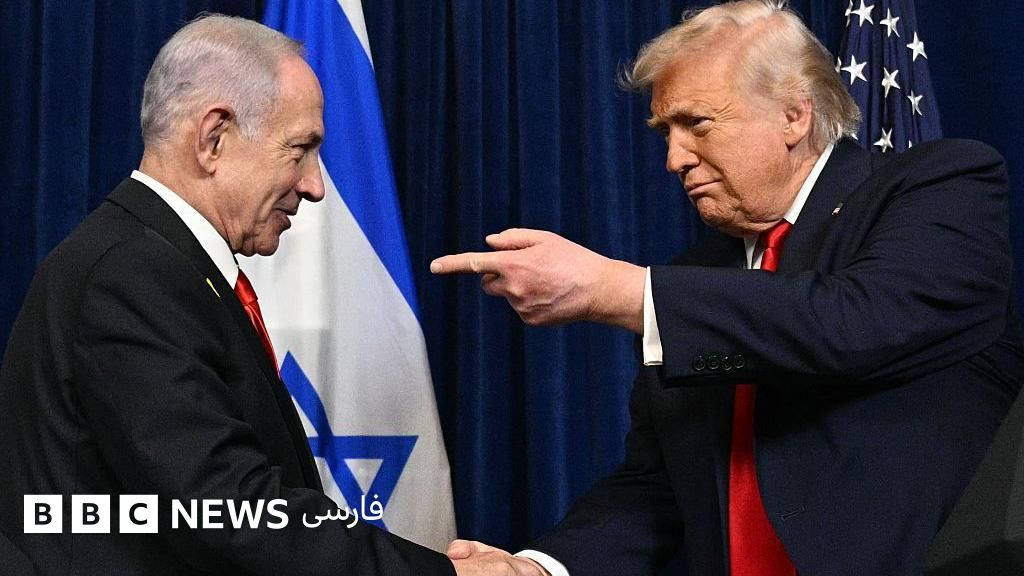
The BBC Persian report says Israeli media split over Trump’s call for restraint after Iranian attacks, even as Israel moved ahead with its own strike. Some commentators see the public back-and-forth as genuine friction; others think it may be coordinated misdirection.
Israel and the U.S. are acting like two teammates who seem to argue in public, but may still be working together behind the scenes. The article says some people think Trump’s warning was real, while others think it was a trick to confuse Iran.
Analysis
What happened
BBC Persian says Israeli media criticized Donald Trump after he reportedly urged Benjamin Netanyahu to exercise restraint in responding to Iran. Despite that request, Israel carried out a strike, and the episode fed a round of commentary about whether the U.S. and Israel were actually at odds or were using public messaging to shape Iran’s calculations.
How Israeli outlets framed it
The liberal newspaper Haaretz said Israel attacked Iran “despite Trump’s request” to Netanyahu. The paper added that Trump’s attempt to delay an Israeli response appeared to fail, and noted that a ballistic missile was also fired from Yemen.
Maariv took a harder line. It argued that Israel has the right to defend itself “decisively, strongly and without hesitation” against Iranian missile attacks, while criticizing Trump’s reported effort to restrain Israel. The paper said the U.S. should support Israel in a shared conflict rather than limit it.
The pro-Netanyahu right-wing Channel 14 described the situation as a “historic morning” and highlighted what it presented as broad public and media support for Israel’s response. One guest on the channel said that if Netanyahu saw action as necessary, he should proceed even under direct U.S. pressure.
Strategy or real disagreement?
The report says Ynet diplomatic correspondent Itamar Eichner wrote that Trump’s public calls to stop Israel may not reflect a real split with Netanyahu. According to the article, some analysts see the public statements as part of a “good cop, bad cop” or deception strategy meant to keep Iran uncertain about U.S. and Israeli intentions.
Eichner said Trump does not want a full-scale war and is instead trying to push Iran toward a deal through pressure and ambiguity. The article also says Iranian analysts and Israel supporters alike have floated the idea that recent reports about tension between Trump and Netanyahu could themselves be part of a coordinated deception operation to lower Iran’s alert level before strikes.
The piece ends by saying military coordination between the U.S. and Israel remains close, including repeated contact between Israeli officials and U.S. Central Command.
Bottom line
The story is less about one argument between leaders than about signaling, deterrence, and the risk of escalation. Israeli media are reading Trump’s restraint message in very different ways: as a real limit, as political theater, or as a deliberate tactic in a broader conflict.
Key points
- BBC Persian says Israeli media criticized Trump after he reportedly urged Netanyahu to show restraint toward Iran.
- Haaretz reported that Israel struck Iran despite Trump’s request to wait and give diplomacy more time.
- Maariv argued Israel has the right to defend itself forcefully and said the U.S. should support, not limit, Israel.
- Some analysts quoted in the report said the public dispute could be a deliberate deception strategy to unsettle Iran.
- The article says U.S.-Israel military coordination remains close, including repeated contact with CENTCOM.
If the reported U.S.-Israel coordination holds, the public pressure could still help keep the conflict from turning into a wider war. The article also suggests Trump may be trying to use pressure and ambiguity to push Iran toward a deal rather than a full-scale confrontation.
If the restraint request failed, the confrontation could keep escalating through strikes and retaliation, as the article describes. The mixed messages may also make Iran more uncertain and more likely to assume the worst, which could raise the risk of miscalculation.