Israeli military strikes southern Lebanon after evacuation warning to village
The Israeli military has begun targeted strikes in southern Lebanon in response to a 'Hezbollah violation', a day after the latest round of U.S.-facilitated talks between Israel and Lebanon took place in Rome. The strikes killed one person and wounded 12 others in the sou…
Intelligence analysis by Llama
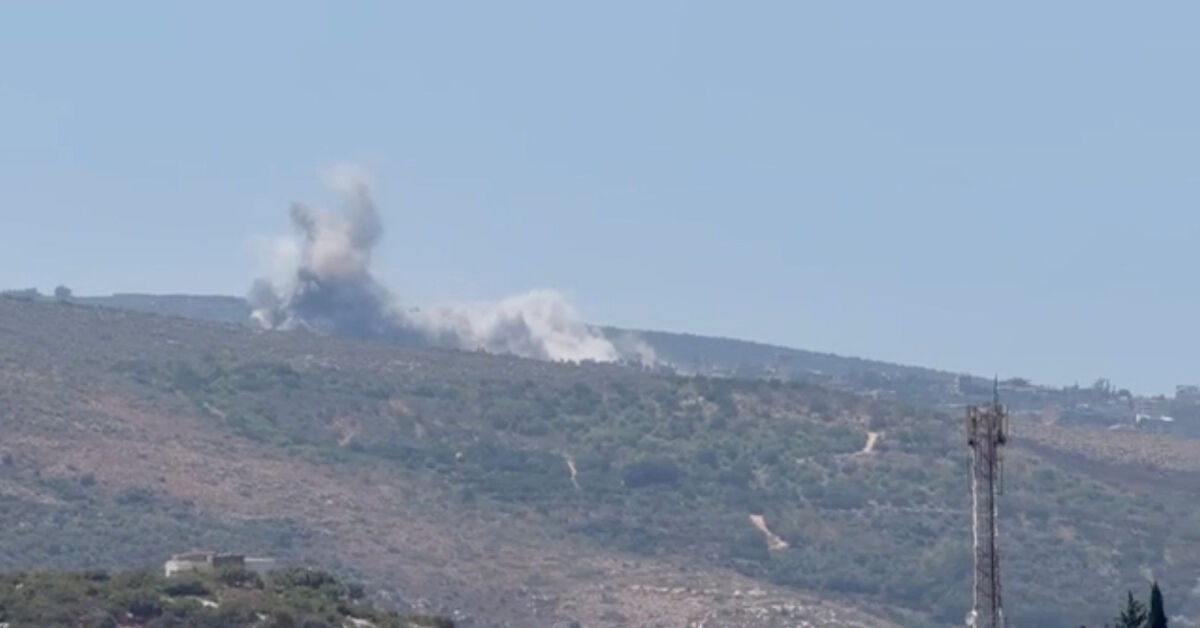
The Israeli military has launched targeted strikes in southern Lebanon in response to a 'Hezbollah violation', killing one person and wounding 12 others in the town of Tibnin. The strikes come a day after U.S.-facilitated talks between Israel and Lebanon took place in Rome.
The Israeli military has launched targeted strikes in southern Lebanon in response to a 'Hezbollah violation'. This means that Israel is taking action against Hezbollah, a group that it sees as a threat to its national security. The strikes have killed one person and wounded 12 others in the town of Tibnin. This is a complex situation, but it's essentially a conflict between Israel and Hezbollah over the presence of Hezbollah in southern Lebanon.
Analysis
Israeli Military Strikes in Southern Lebanon: A Response to Hezbollah's Violation
The Israeli military has launched targeted strikes in southern Lebanon in response to a 'Hezbollah violation', a day after the latest round of U.S.-facilitated talks between Israel and Lebanon took place in Rome. The strikes killed one person and wounded 12 others in the southern town of Tibnin. This development is significant because it highlights the ongoing tensions between Israel and Hezbollah, and the potential for escalation in the region.
The Israeli military had issued an evacuation warning to the village of Mansouri, about 25 km (15 miles) from Tibnin, saying it would act against the Iran-backed group in the area. The warning was the first online warning by the military for Lebanon in more than a month. It dropped flyers on the village in late June telling residents to leave as Israel had added Mansouri to a self-declared buffer zone in southern Lebanon, a senior Lebanese military official told Reuters at the time.
The Israeli military's actions are a response to Hezbollah's continued presence in southern Lebanon, which Israel sees as a threat to its national security. The buffer zone was established by Israel in 2006, and it has been a source of tension between the two countries ever since. The recent strikes demonstrate that Israel is willing to take military action to protect its interests in the region.
The U.S.-facilitated talks between Israel and Lebanon are an attempt to ease hostilities along the border and establish a security arrangement. However, the recent strikes suggest that the talks have not been successful in reducing tensions between the two countries.
The situation in southern Lebanon is complex and sensitive, and it requires a nuanced approach to resolve the conflict. The international community must work together to find a peaceful solution that addresses the concerns of both Israel and Lebanon.
The Implications of the Israeli Military Strikes
The Israeli military strikes in southern Lebanon have significant implications for the region. They demonstrate the ongoing tensions between Israel and Hezbollah, and the potential for escalation in the region. The strikes also highlight the need for a peaceful solution to the conflict, and the importance of international involvement in finding a resolution.
The international community must work together to find a solution that addresses the concerns of both Israel and Lebanon. This requires a nuanced approach that takes into account the complex history and politics of the region. The recent strikes demonstrate that military action is not a viable solution to the conflict, and that a peaceful resolution is necessary to avoid further escalation.
The Road Ahead
The situation in southern Lebanon is complex and sensitive, and it requires a nuanced approach to resolve the conflict. The international community must work together to find a peaceful solution that addresses the concerns of both Israel and Lebanon. The recent strikes demonstrate that military action is not a viable solution to the conflict, and that a peaceful resolution is necessary to avoid further escalation.
Key points
- The Israeli military has launched targeted strikes in southern Lebanon in response to a 'Hezbollah violation'.
- The strikes killed one person and wounded 12 others in the town of Tibnin.
- The Israeli military had issued an evacuation warning to the village of Mansouri, about 25 km (15 miles) from Tibnin.
- The U.S.-facilitated talks between Israel and Lebanon are an attempt to ease hostilities along the border and establish a security arrangement.
If the situation in southern Lebanon can be resolved peacefully, it could lead to a reduction in tensions between Israel and Hezbollah, and potentially even a long-term ceasefire. This would be a positive development for the region, and could help to ease the humanitarian crisis in Lebanon.
If the situation in southern Lebanon continues to escalate, it could lead to further violence and instability in the region. This could have serious consequences for the people of Lebanon, and could even lead to a wider conflict involving other countries in the region.