It's like a decaying body': Australian farmers battle mouse plague
A mouse plague is ravaging grain farms in Western Australia and South Australia, forcing costly baiting and replanting as farmers lose crops and time.
Intelligence analysis by GPT-5.4 Mini
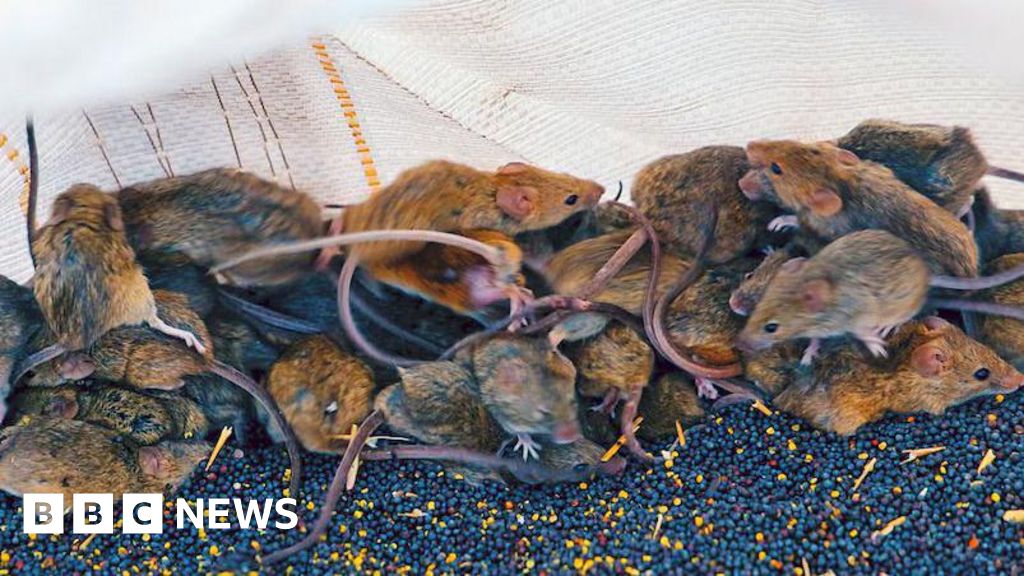
Farmers in western and southern Australia say mice are overrunning paddocks and even homes, eating newly sown seed and driving up costs. A bumper harvest and summer rain left abundant food, helping the population surge.
Farmers in Australia are dealing with a huge mouse problem. The mice are not just sneaking into houses, they are also eating seeds in the fields where crops should grow.
It is like planting a garden and then finding a swarm of tiny thieves taking the food before the plants can even start. A big harvest last year and some rain gave the mice lots of food, so their numbers grew fast.
Because of that, farmers have to spend extra money on poison bait and sometimes plant again. That makes a hard job even harder.
Analysis
The infestation
Farmers across large parts of Western Australia and South Australia are dealing with a fresh mouse plague. The rodents are invading homes, burrowing through paddocks, and eating newly sown grain before it can grow.
Geoff Cosgrove, who farms 14,000 hectares in Mingenew, said the scale of the problem is far beyond what he normally sees. He said the mice are active at night, spread through ceilings and air-conditioning units, and leave a smell he compares to a decaying body. He said this year is worse than the 2021 plague.
Belinda Eastough, a farmer and agronomist north of Geraldton, said mice were once in her handbag and pantry during the earlier outbreak, but this time they are staying in the paddocks where the food is. She linked the surge to last year’s record harvest, which left spilled grain in fields, and to summer rain that brought on fresh green growth. In her canola paddocks, she estimated 8,000 to 10,000 mice per hectare.
Why the numbers matter
The autumn planting season is critical for grain growers. Eastough said mice can strip freshly planted seed from furrows if baiting does not happen quickly enough after seeding.
The financial strain is also mounting. Farmers are paying more for diesel and fertiliser, and some are spending large sums on bait or on replanting areas the mice have eaten. The article also notes that CSIRO research officer Steve Henry defines a plague as about 800 mice per hectare, far below the numbers being reported in parts of Western Australia. His estimate underscores how severe the outbreak has become.
Key points
- Mice are spreading across farms in Western Australia and South Australia.
- They are eating freshly planted seeds and damaging grain crops.
- Farmers say the infestation is worse than the 2021 plague in some areas.
- A record harvest and summer rain helped provide food for the mice.
- The outbreak adds costs on top of higher fuel and fertiliser prices.