Japan Condemns Putin’s Visit to Disputed Islands
Japanese Foreign Minister Toshimitsu Motegi said his country 'strongly protests' Putin's visit to Iturup, which Japan calls Etorofu. The dispute over the Kuril Islands has kept the countries from signing a peace treaty formally ending their hostilities.
Intelligence analysis by Llama
Japanese Foreign Minister Toshimitsu Motegi said his country 'strongly protests' Putin's visit to Iturup, which Japan calls Etorofu. The dispute over the Kuril Islands has kept the countries from signing a peace treaty formally ending their hostilities. Putin's visit to the Kuril Islands has further hardened Japanese public sentiment toward Russia and has made it more difficult to res…
Imagine you have a big brother who took a toy from you a long time ago, and you've been trying to get it back ever since. That's kind of like what's happening between Japan and Russia over a group of islands called the Kuril Islands. Japan thinks the islands belong to them, but Russia took them a long time ago. When the Russian president visited the islands, Japan got upset and said it was not okay.
Analysis
Background
The Kuril Islands, a Moscow-controlled Pacific archipelago, have been a point of contention between Japan and Russia for decades. The Soviet Union took the islands from Japan in the final days of World War II, and the dispute has kept the countries from signing a peace treaty formally ending their hostilities. Japan asserts territorial rights to the four southernmost islands of the chain, which it calls the Northern Territories.
What Changed
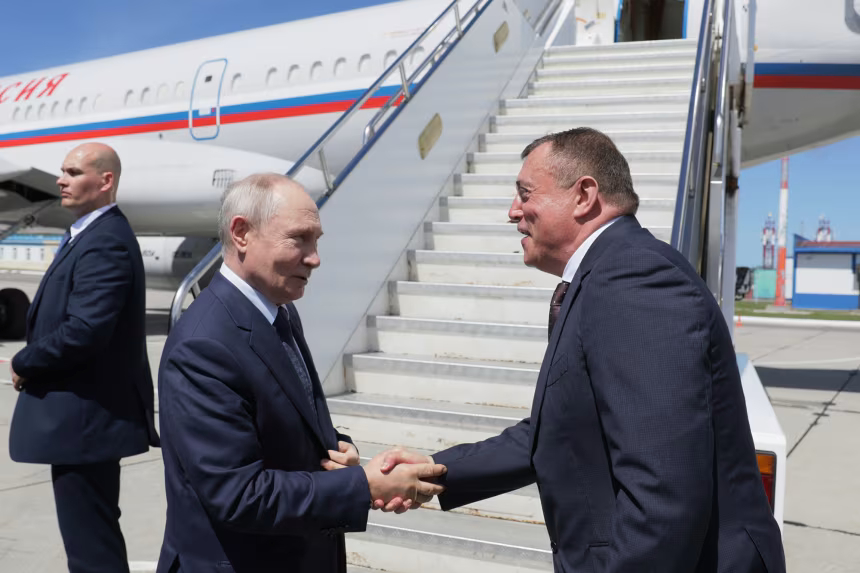
Russian President Vladimir Putin made his first visit to the Kuril Islands on Thursday, visiting a fish plant, a hospital, and a school on Iturup, one of the volcanic chain's southern islands. He also briefly spoke to local residents and met with the governor of Russia's Sakhalin region, Valery Limarenko. Japan voiced a diplomatic protest over the trip, with Japanese Foreign Minister Toshimitsu Motegi saying his country 'strongly protests' Putin's visit to Iturup, which Japan calls Etorofu.
Implications
Putin's visit to the Kuril Islands has further hardened Japanese public sentiment toward Russia and has made it more difficult to restore bilateral relations in the medium to long term. The dispute over the Kuril Islands has significant implications for Japan-Russia relations and the stability of the region. The visit by Putin to the disputed islands has further strained ties between the two countries, making it more difficult to restore bilateral relations.
Key points
- Japan asserts territorial rights to the four southernmost islands of the Kuril Islands chain, which it calls the Northern Territories.
- The Soviet Union took the islands from Japan in the final days of World War II, and the dispute has kept the countries from signing a peace treaty formally ending their hostilities.
- Putin's visit to the Kuril Islands has further hardened Japanese public sentiment toward Russia and has made it more difficult to restore bilateral relations in the medium to long term.
- The dispute over the Kuril Islands has significant implications for Japan-Russia relations and the stability of the region.
If the situation between Japan and Russia can be de-escalated, it could lead to improved relations between the two countries and a more stable region. This could also pave the way for Japan and Russia to work together on other issues, such as trade and security.
The dispute over the Kuril Islands could lead to further tensions between Japan and Russia, making it more difficult to restore bilateral relations. This could also have implications for the stability of the region, potentially leading to increased military presence and competition for resources.