Japan enlists 1,800 people to drag a 360-tonne castle keep using ropes and rollers
In northern Japan, 1,800 people came together to pull a 360-tonne castle keep a little more than two metres closer to its original resting place as part of ongoing renovations. The keep had to be moved to repair a wall damaged in a major earthquake.
Intelligence analysis by Llama
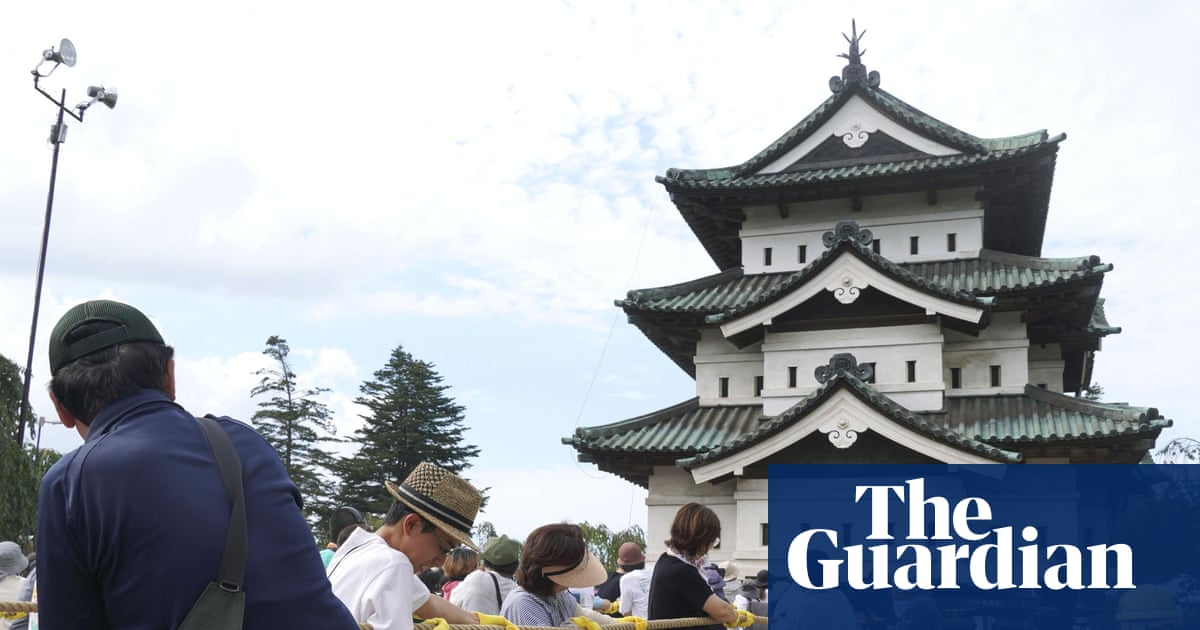
To preserve the historic structure, a technique known as hikiya was used, where buildings are put on rollers and moved rather than dismantled. The public was asked for help to pull the keep back to its original position, with about 4,100 people scheduled to move it a total of 5m.
Imagine a big team of people working together to move a really heavy castle keep. They use special ropes and rollers to move it, and it's like a big community effort to preserve Japan's history.
Analysis
A Community Effort to Preserve Japan's Cultural Heritage
The relocation of the Hirosaki Castle keep is a significant undertaking that requires the collaboration of many individuals. With over 8,000 applications for the 1,800 available slots, it is clear that the community is eager to be involved in the preservation of this historic structure. The use of traditional techniques such as hikiya is also noteworthy, as it allows for the preservation of the keep's original integrity while also providing an opportunity for the public to participate in the process.
A Symbolic Effort to Rebuild Community
The relocation of the keep is not only a practical necessity but also a symbolic effort to rebuild community and promote social cohesion. By working together to achieve a common goal, the participants in this effort are able to build relationships and a sense of belonging. This is particularly important in Japan, where community and social harmony are highly valued.
A Chance to Learn from the Past
The relocation of the Hirosaki Castle keep also provides an opportunity for the public to learn about Japan's cultural heritage and the importance of preserving traditional techniques. By participating in this effort, individuals are able to gain a deeper understanding of the history and significance of the keep, as well as the importance of community involvement in preserving cultural heritage.
Key points
- 1,800 people came together to pull a 360-tonne castle keep in northern Japan
- The keep had to be moved to repair a wall damaged in a major earthquake
- The relocation process will continue until the end of August, with about 4,100 people scheduled to move it a total of 5m
- The keep will not be accessible to tourists for years due to major renovations
If the relocation of the Hirosaki Castle keep is successful, it could set a precedent for other communities to work together to preserve their cultural heritage. This could lead to a greater sense of community and social cohesion, as well as a deeper appreciation for Japan's rich cultural history.
However, the relocation process could be delayed or even cancelled due to unforeseen circumstances, such as bad weather or equipment failure. This could lead to a loss of momentum and a decrease in community engagement.


