Japan outlines its military build-up plan, citing threats from China, Russia and North Korea
Japan's latest defense white paper names China its 'greatest strategic challenge' and reframes military spending as an economic growth driver, as PM Takaichi prepares a new national security strategy.
Intelligence analysis by Llama
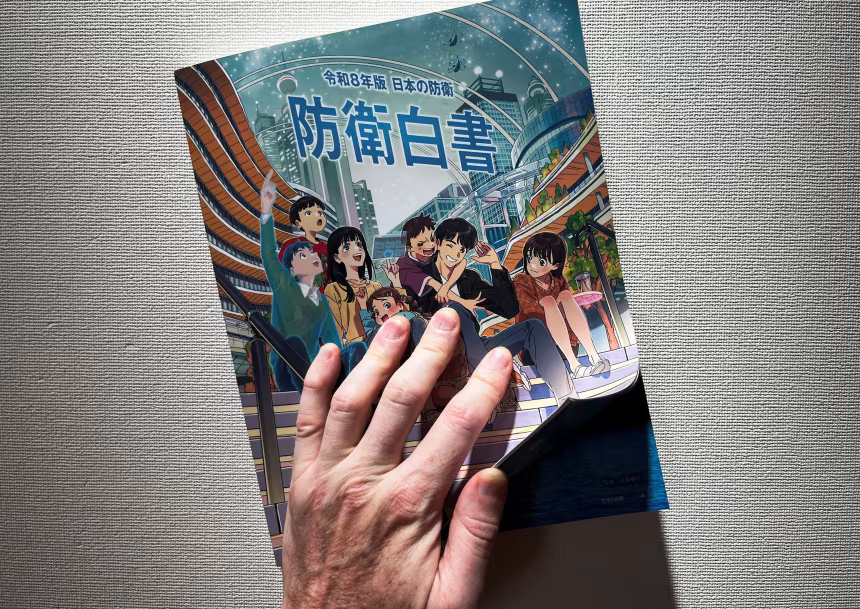
Japan's government is recasting its accelerating military buildup as both a security imperative and an economic opportunity, linking arms production to prosperity in its latest defense white paper. With PM Sanae Takaichi preparing a new national security strategy, the document warns that China poses Japan's 'greatest strategic challenge' while calling for stepped-up defense outlays.
Japan just put out its yearly plan for staying safe, and it warned that China, Russia, and North Korea are the biggest worries. Instead of showing soldiers on the cover, the report used a colorful anime-style picture of a happy family in a futuristic city to show that a strong military can also help the economy grow. Japan is spending more money on long-range missiles and drones, like the ones used in the war in Ukraine.
Analysis
A White Paper in Anime Colors
The most striking visual signal of Japan's latest defense white paper is not a missile or a soldier, but a smiling family framed against a gleaming cityscape. Defense Ministry officials describe the anime-style cover as conveying a "futuristic image," a deliberate departure from previous editions typically dressed in military insignia. The choice reflects a calculated pivot in messaging: an aging society with one of the world's most punishing demographic curves is being told that military investment is not a grim sacrifice but a route to shared prosperity. The accompanying presentation document argues that defense spending "benefits the wider economy and people's lives," aligning directly with Prime Minister Sanae Takaichi's strategy of using state outlays to lift growth.
China in the Crosshairs
Beneath the cheerful cover lies a stark threat assessment. The white paper names China as "Japan's greatest strategic challenge," a label that elevates Beijing above every other regional concern in Tokyo's official hierarchy of threats. Russia and North Korea round out the triad, but the document's center of gravity is unmistakably the Taiwan Strait. Military experts expect Takaichi's forthcoming national security strategy to call for additional spending aimed at deterring a conflict over Taiwan that could drag Japan into a prolonged war. Beijing's furious response to Takaichi's November comment about potentially deploying the Self-Defense Forces in such a scenario, demanding that she retract what it called an "egregious" remark, underscores how combustible the diplomatic atmosphere has become.
The Cost of Rearmament
Japan's military buildup is already the largest since World War Two, with defense-related spending pushed to 2% of GDP. The record 122.3 trillion yen budget for the year to March 2027, followed by a 3.1 trillion yen supplementary package to cushion households and businesses from higher energy costs, illustrates the competing demands on an already stretched public purse. Much of the new outlay has gone to standoff missiles capable of striking targets more than 1,000 km away, while future spending is expected to tilt heavily toward drones and unmanned weapons of the kind that have proven decisive in Ukraine. Whether Takaichi can fund further expansion without piling fresh pressure on Japan's fiscal position remains the unresolved question hanging over the white paper.
Key points
- Japan's defense white paper names China as its 'greatest strategic challenge' alongside threats from Russia and North Korea
- Anime-style cover reframes military buildup as an economic growth opportunity rather than a security sacrifice
- PM Takaichi is preparing a new national security strategy expected to call for further spending, primarily aimed at deterring Taiwan-related conflict
- Defense spending has already reached 2% of GDP, backed by a record 122.3 trillion yen budget for the year to March 2027
- Future outlays are expected to tilt toward long-range standoff missiles, drones, and other unmanned weapons used heavily in Ukraine
If Takaichi can successfully frame defense investment as an economic catalyst and direct spending toward domestic startups and dual-use technology, Japan could spark a much-needed productivity revival while strengthening deterrence. Partnerships with commercial firms could lower costs and accelerate innovation in drones, sensors, and autonomous systems, drawing private capital alongside public money, according to the white paper's framing.
The funding gap remains the clearest vulnerability. Without a credible plan to pay for further expansion beyond the current 2% of GDP, Japan risks either crowding out social spending or alarming bond markets with an unsustainable debt trajectory. A miscalculated stance on Taiwan could also accelerate a Sino-Japanese confrontation that the buildup is intended to prevent, turning a deterrent into a tripwire.