Japan tests long-range Type 12 missile as counterstrike capability against China grows
Japan has begun flight testing an air-launched variant of its upgraded Type 12 anti-ship missile, which boasts a range of about 1,000km. This marks a significant step in Tokyo's efforts to develop multi-domain counterstrike capabilities against Chinese naval power.
Intelligence analysis by Gemini 2.5 Flash
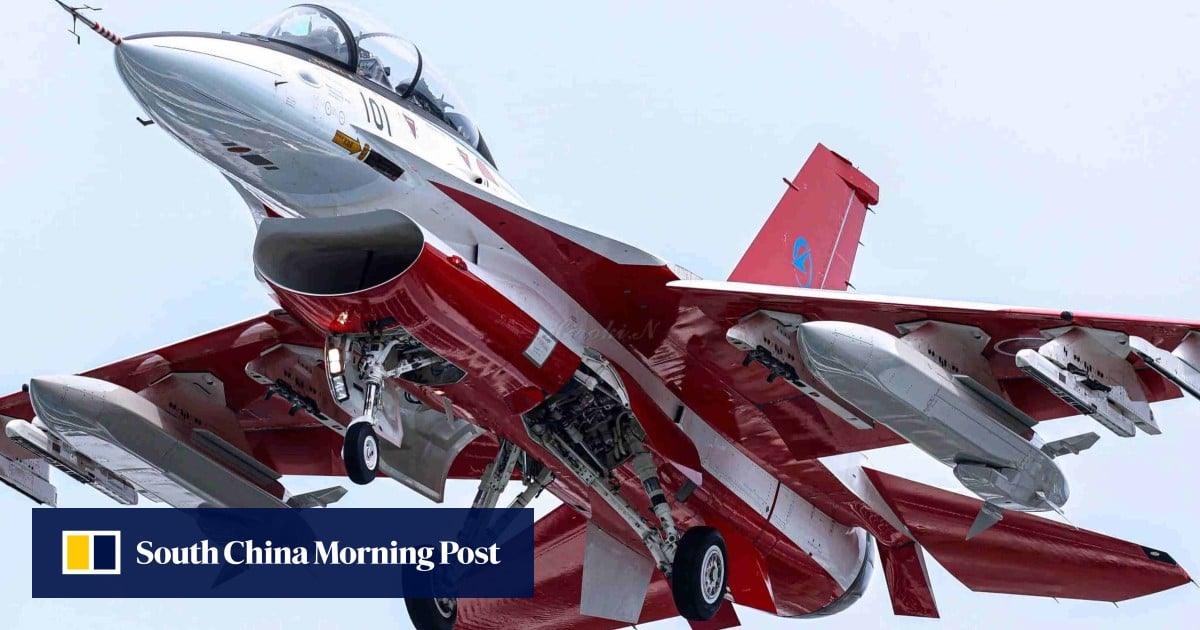
Japan is rapidly advancing its indigenous long-range missile program, with the first public flight test of an air-launched Type 12 anti-ship missile variant. This development, alongside ground-launched versions already in service, aims to provide Tokyo with enhanced counterstrike options across land, sea, and air, specifically targeting potential threats from Chinese forces.
Imagine Japan is playing a game of tag with a big neighbor. Japan is building new, super-fast water balloons that can fly really far, like 1,000 kilometers! They're testing them from airplanes now, so they can surprise the neighbor from anywhere. This helps Japan protect its home better, making it harder for the neighbor to guess where the water balloons might come from.
Analysis
Japan's Evolving Defense Posture
Japan's recent flight test of the air-launched Type 12 anti-ship missile variant signifies a pivotal shift in its defense strategy. With a reported range of approximately 1,000km, this weapon dramatically extends Japan's reach, moving beyond its traditional self-defense-oriented capabilities. The move is a direct response to the perceived growth of Chinese naval power and its increasing assertiveness in regional waters.
This indigenous missile program is designed to create a comprehensive, multi-domain counterstrike capability. The ground-launched Type 25 variant, already in service, has expanded Japan's anti-ship missile range fivefold. The upcoming deployment of ship- and air-launched versions, alongside a submarine-launched variant in development, underscores a strategic intent to deter potential adversaries across all operational environments.
Strategic Implications for Regional Security
The introduction of these long-range missiles fundamentally alters the strategic calculus in the East China Sea and beyond. As defense expert Yoshihiro Inaba notes, the air-launched variant's platform flexibility makes it considerably more challenging for Chinese forces to predict the origin of potential strikes. This enhanced unpredictability is a key component of deterrence, forcing potential adversaries to account for threats from a wider geographical area, including airspace over Kyushu and Honshu.
This capability allows Japan to project power further from its shores, potentially targeting naval assets at greater distances and complicating any offensive planning by rival navies. It moves Japan closer to possessing a true "stand-off" capability, enabling it to engage threats without necessarily entering immediate danger zones. This strategic depth is crucial for a nation increasingly concerned about regional stability.
The Broader Context of Sino-Japanese Relations
Japan's accelerated missile development cannot be viewed in isolation; it is deeply intertwined with the broader geopolitical dynamics between Tokyo and Beijing. As China continues its rapid military modernization and expands its naval presence, Japan perceives a direct threat to its territorial integrity and regional interests. The Type 12 missile program is a tangible manifestation of Japan's commitment to bolstering its self-defense capabilities in this evolving security landscape.
This arms development could lead to a security dilemma, where one nation's defensive enhancements are perceived as offensive by another, potentially triggering a reciprocal arms buildup. While Japan frames these capabilities as purely defensive and for counterstrike purposes, their long-range nature inevitably raises concerns in Beijing. The ongoing modernization efforts by both nations highlight a period of heightened strategic competition in the Indo-Pacific.
Key points
- Japan conducted the first public flight test of an air-launched variant of its upgraded Type 12 anti-ship missile.
- The missile has a reported range of approximately 1,000km, significantly extending Japan's strike capabilities.
- This development is part of Japan's broader strategy to build multi-domain counterstrike capabilities against Chinese naval power.
- Ground-launched Type 25 variants are already in service, with ship- and air-launched versions expected next financial year.
- Experts suggest the air-launched variant offers platform flexibility, making it harder for Chinese forces to predict strike origins.
The development of these long-range counterstrike capabilities could enhance regional deterrence, making potential aggression against Japan less appealing due to the increased risk of retaliation. This could contribute to greater stability by discouraging military adventurism and promoting a more cautious approach from regional powers.
This military buildup could trigger an arms race in the region, leading to heightened tensions and increased instability between Japan and China. The deployment of such advanced weaponry might also raise the risk of miscalculation or accidental escalation during future standoffs.