US-Japan trade thaw driven by shared yen for stronger currency
A rare joint intervention by the US and Japan to stabilize the yen has temporarily improved bilateral relations, following the Japanese currency's slump to a four-decade low.
Intelligence analysis by Gemini 2.5 Flash
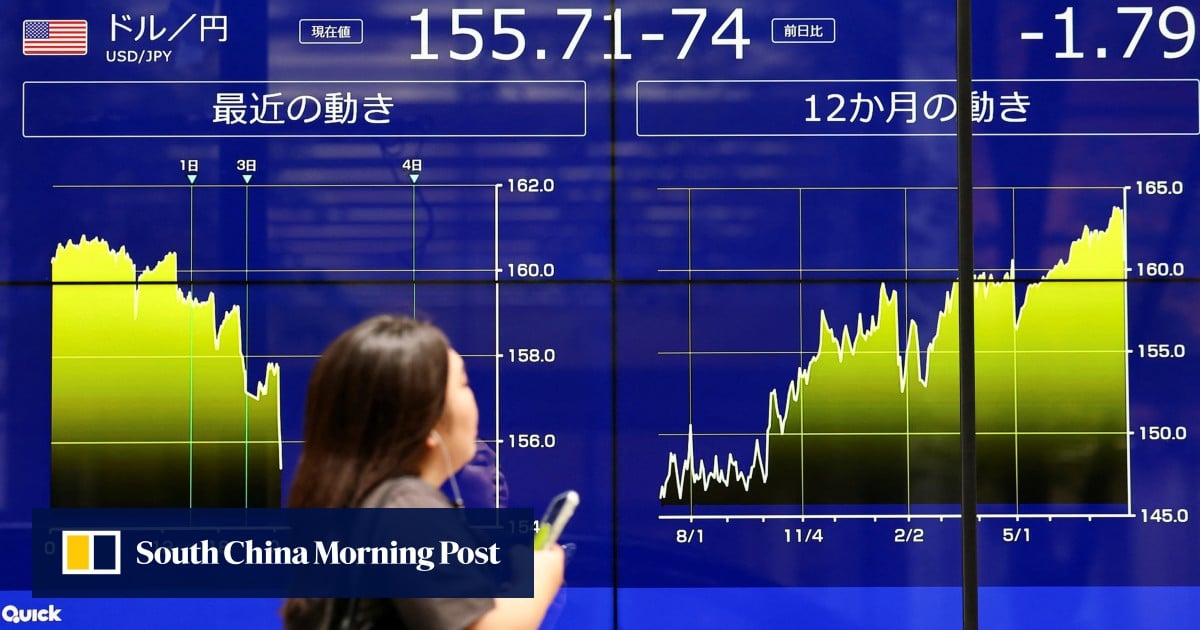
The United States and Japan executed a joint currency intervention, with Washington purchasing yen for the first time since 1998, to bolster the Japanese currency. This move has fostered a temporary thaw in US-Japan trade relations, aligning both nations' interests in currency stability and trade balance, though its long-term impact hinges on the yen's ability to maintain its value.
Imagine two friends, America and Japan, were having a bit of a disagreement about how much money they were trading. Japan's money, called the yen, was getting really weak, like a deflating balloon. So, America decided to help Japan by buying some yen, which made it stronger, like reinflating the balloon a little. This made them friends again, but everyone is watching to see if the yen can stay strong on its own.
Analysis
A Coordinated Effort to Bolster the Yen
The recent joint intervention by the United States and Japan to stabilize the yen marks a significant moment in international financial policy. This operation, which saw Washington directly purchase yen for the first time since 1998, was a direct response to the Japanese currency's alarming depreciation, which had plunged to a four-decade low of nearly 164 yen to the US dollar. The immediate effect was a brief but notable rebound, lifting the yen to a three-month high of 155.2 before it subsequently weakened to 157.44.
This rare coordinated action underscores the severity of the yen's decline and the shared concern over its implications. Analysts, such as Matthew Ryan of Ebury, emphasize that such an intervention is a powerful signal of intent from both nations. It demonstrates a willingness to actively manage currency fluctuations when they threaten economic stability and bilateral relations, moving beyond mere rhetoric to concrete financial action.
Bridging the Trade Divide
Beyond currency stabilization, the intervention has had a profound effect on US-Japan diplomatic and trade relations. US President Donald Trump explicitly stated that his administration bought the yen to assist Japan, signaling a marked shift from previous months of aggressive negotiations over a substantial US trade deficit with Tokyo, which reached US$63.9 billion last year. This public declaration of support contrasts sharply with earlier tensions, suggesting a more cooperative stance.
Experts note that this intervention has temporarily aligned the economic interests of both countries. For Washington, a stronger yen helps prevent a further widening of its trade deficit with Japan, as Japanese exports become relatively more expensive. Concurrently, Tokyo is keen to prevent a continued slide in the yen, which risks stoking domestic inflation and unsettling its bond market. This convergence of interests provides a foundation for improved bilateral relations, at least in the near term, by addressing mutual economic vulnerabilities.
The Test of Sustained Stability
The durability of this newfound goodwill and the effectiveness of the intervention are, however, subject to significant market and policy pressures. While the initial boost to the yen was evident, its subsequent weakening indicates that underlying economic forces remain potent. The long-term success of this diplomatic and financial maneuver hinges critically on whether the yen can sustain its value against these persistent pressures.
Analysts caution that without sustained economic fundamentals or further policy actions, the yen's rebound could be short-lived. The challenge for both the US and Japan will be to translate this temporary alignment of interests into more enduring strategies that support currency stability and balanced trade. The coming months will reveal whether this rare joint effort represents a lasting shift towards cooperation or merely a temporary reprieve in the face of market volatility.
Key points
- The US and Japan conducted a rare joint intervention to strengthen the yen, Washington's first yen purchase since 1998.
- The intervention followed the yen's slump to a four-decade low of almost 164 yen to the US dollar.
- The action briefly lifted the yen to a three-month high of 155.2 before it weakened to 157.44.
- US President Trump framed the intervention as helping Japan, signaling a positive turn in relations after trade deficit disputes.
- Analysts believe the long-term improvement in US-Japan relations depends on the yen's ability to hold its value against market and policy pressures.
- Both countries' interests are aligned: the US seeks to prevent a widening trade deficit, and Japan aims to prevent inflation and bond market instability from a weak yen.
The joint intervention could signal a new era of cooperation between the US and Japan, leading to more stable trade relations and a more predictable global financial environment. A stronger yen could help Japan manage inflation and stabilize its bond market, while a reduced US trade deficit with Japan could ease bilateral tensions.
The yen's rebound might be short-lived due to persistent market and policy pressures, potentially reigniting trade tensions between the US and Japan. A failure to sustain the yen's value could undermine the newfound goodwill and lead to further economic instability in Japan.