JI Chief vows nation-wide protests will continue
Jamaat-e-Islami (JI) Emir Hafiz Naeem ur Rehman announced the continuation of nationwide protests, including a major rally in Lahore, against the government's economic policies and high taxes.
Intelligence analysis by Gemini 2.5 Flash
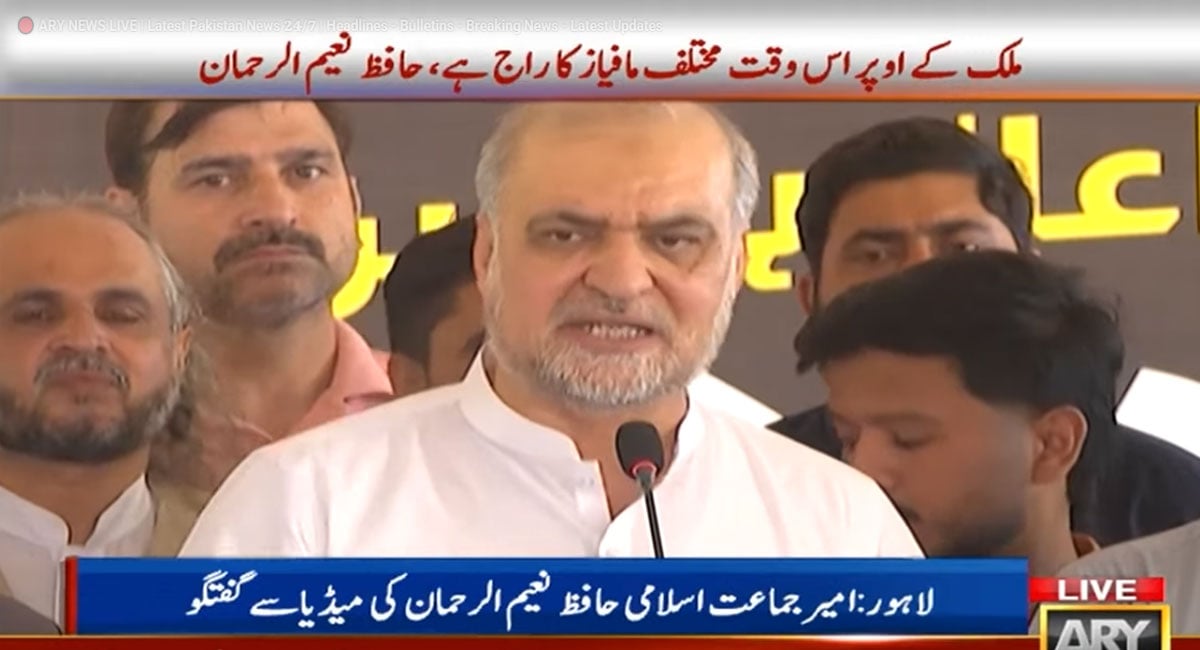
The Jamaat-e-Islami party, led by Hafiz Naeem ur Rehman, is intensifying its protests across Pakistan, citing exorbitant taxes, rising commodity prices, and government failures. The party plans a nationwide strike and a long march to Islamabad, demanding relief for citizens and accountability from the ruling elite.
Imagine your parents have to pay a lot more money for gas and food, making it really hard to buy things. A group called Jamaat-e-Islami, led by Hafiz Naeem ur Rehman, is upset about this. They are holding big protests and planning a huge walk to the capital city to tell the government to make things fairer and cheaper for everyone.
Analysis
The ongoing protests spearheaded by Jamaat-e-Islami (JI) reflect a deepening crisis of public confidence in Pakistan's economic management and governance. The JI's decision to escalate its demonstrations, including a planned nationwide strike and a long march to Islamabad, underscores the severity of the grievances felt by a significant portion of the populace. These actions are not merely symbolic; they represent a concerted effort to mobilize public opinion and exert sustained pressure on the government to address issues ranging from fuel prices to agricultural distress.
Hafiz Naeem ur Rehman
JI Emir Hafiz Naeem ur Rehman has positioned himself and his party as the voice of the common man, explicitly stating that their motives are rooted in public welfare rather than political maneuvering. His strong rhetoric, accusing the ruling elite of exploiting citizens while maintaining their luxurious lifestyles, resonates with a population grappling with inflation and economic hardship. Rehman's demands, such as prohibiting government officials from using large vehicles, aim to highlight perceived hypocrisy and call for austerity from the top.
This leadership approach seeks to differentiate JI from other political entities, framing their movement as a genuine struggle for justice. By expanding protest camps nationwide, Rehman aims to broaden the movement's reach and sustain its momentum, ensuring that the government cannot easily dismiss the demonstrations as localized or fringe activities. The emphasis on public-centric motives is a strategic move to garner wider support and legitimacy for their cause.
Rabi-ul-Awal 13
The announcement of a nationwide strike on Rabi-ul-Awal 13, followed by a long march toward Islamabad, marks a significant escalation in JI's protest strategy. These actions are designed to disrupt daily life and bring the government's attention to the widespread discontent. A nationwide strike, if successful, could paralyze economic activity and amplify the message of public suffering, forcing a more direct response from authorities.
Historically, long marches to Islamabad have been potent tools for political pressure in Pakistan, often leading to significant political shifts or concessions. The JI's decision to undertake such a march indicates their commitment to achieving their demands, which include relief from heavy taxation and accountability from the government. The timing of these events, amidst existing economic volatility, could further destabilize the political landscape and create an environment ripe for broader social unrest.
Rs 130 per liter
The specific grievance regarding the Rs 130 per liter tax on petroleum, including an Rs 80 petroleum levy, serves as a potent symbol of the public's economic burden. This figure highlights the direct impact of government policies on household budgets, making essential transportation and goods more expensive. Rehman's criticism that the government is dropping “petrol bombs” on the masses while mafias continue to burden the public encapsulates the frustration over perceived mismanagement and corruption.
Beyond fuel prices, the article notes that essential food items like flour, pulses, and vegetables have become unaffordable for the common man. This broader economic distress, coupled with specific issues like farmers in Punjab struggling with crop sales and cotton target failures, paints a grim picture of the economic situation. The JI's focus on these tangible economic hardships provides a concrete basis for their protests, making their demands relatable and urgent for a wide segment of the population.
Key points
- Jamaat-e-Islami (JI) will continue nationwide protests, including a major rally in Lahore and expanding protest camps.
- JI plans a nationwide strike on Rabi-ul-Awal 13, followed by a long march towards Islamabad.
- JI Chief Hafiz Naeem ur Rehman criticized the government for imposing heavy taxes, including Rs 130 per liter on petroleum.
- Rehman highlighted the unaffordability of essential food items and struggles faced by farmers in Punjab.
- The JI demands that Prime Minister Shehbaz Sharif prohibit government officials from using vehicles larger than 1300 CC.
The continuation and escalation of nationwide protests could lead to increased political instability, potential clashes between demonstrators and authorities, and further disruption to economic activities, exacerbating Pakistan's already fragile financial situation and deterring investment.