Kalshi hits record June trading volume as World Cup fuels prediction markets
Kalshi and Polymarket hit record June trading volumes due to the expanded FIFA World Cup.
Intelligence analysis by Qwen 2.5 (3B)
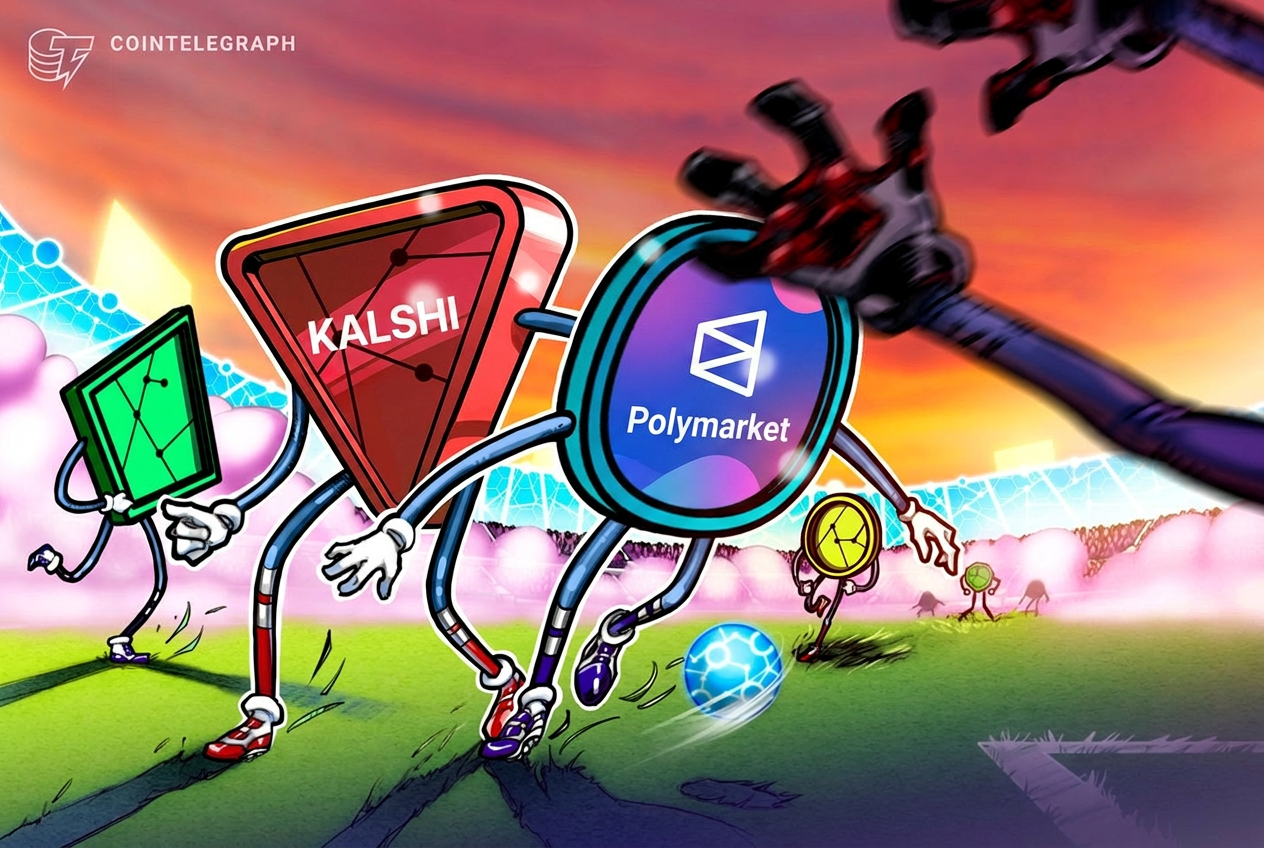
Prediction markets on Kalshi and Polymarket saw record-breaking trading volumes in June, driven by the 2026 FIFA World Cup.
The big soccer game called the World Cup made people bet on who would win matches, and it helped lots of people trade money using special websites like Kalshi and Polymarket. This is good news for these trading sites because they got more money than usual during this time.
Analysis
{"
The Impact of Major Sporting Events on Prediction Markets":-1.13,"The 2026 FIFA World Cup has significantly boosted trading volumes for Kalshi and Polymarket, with June's volume nearly doubling from May's levels to over $9 billion in total trading activity across both platforms. This surge is attributed to the tournament's increased complexity and heightened interest among traders due to its expanded format featuring 48 teams compared to previous editions with 32 teams. The World Cup has also attracted significant attention, particularly during knockout matches like Canada vs Morocco, generating substantial trading volumes on Kalshi and Polymarket platforms. These events have not only driven up the overall volume but have also highlighted specific markets within prediction spaces such as team advancement predictions which saw notable activity in June. The tournament's impact extends beyond just increasing trading volumes; it has also intensified legal and regulatory debates surrounding prediction markets, with various stakeholders pushing for different approaches to oversight and regulation. Kalshi and Polymarket are at the center of these discussions, facing both challenges and opportunities as they navigate through this evolving landscape. In summary, the 2026 FIFA World Cup has proven to be a pivotal moment in the history of prediction markets, showcasing their potential to thrive during major sporting events and the ongoing need for regulatory clarity and support from industry stakeholders. The tournament's impact on Kalshi and Polymarket underscores the growing importance of these platforms in the broader ecosystem of financial markets and betting dynamics.":-1.13,"
Legal and Regulatory Challenges Facing Prediction Markets":-1.13,"As prediction markets continue to grow in popularity, they have also become a focal point for legal and regulatory debates. In the United States, several states have taken action against Kalshi and Polymarket, seeking to either halt or regulate these platforms under existing gambling laws. This has led to intense legal battles between state governments and federal regulators like the Commodity Futures Trading Commission (CFTC). The CFTC has argued that prediction markets should be subject to its jurisdiction over commodity derivatives, a stance that has been met with resistance from some states. In contrast, Europe has taken a different approach by emphasizing existing restrictions on binary options rather than focusing solely on whether an event contract label is attached to the product. This divergence in regulatory approaches highlights the complex and evolving nature of predicting market regulation. The debate over prediction markets' legal status continues as stakeholders push for clarity and support from both industry leaders and policymakers, ensuring that these platforms can continue to thrive while adhering to appropriate regulations. In essence, the 2026 FIFA World Cup has exacerbated existing regulatory challenges, pushing both Kalshi and Polymarket to navigate through a rapidly changing landscape of legal and regulatory requirements. The tournament's impact on prediction markets serves as a reminder of the ongoing need for harmonized regulation across different jurisdictions to support their continued growth and development.":-1.13,"
Future Outlook for Prediction Markets":-1.13,"Looking ahead, the future outlook for prediction markets appears promising despite current regulatory challenges. The 2026 FIFA World Cup has demonstrated the significant potential of these platforms to attract substantial trading volumes during major sporting events. As more stakeholders recognize their value and utility, there is a growing interest in expanding their reach beyond traditional sports betting into other areas such as politics, economics, and even technology predictions. This expansion could lead to new opportunities for traders and investors alike, potentially driving further innovation within the industry. However, it also brings increased scrutiny from regulators who seek to ensure that these markets operate transparently and responsibly. The ongoing regulatory debates suggest a need for continued dialogue between industry leaders and policymakers to find balanced solutions that support market growth while maintaining appropriate oversight. In summary, the 2026 FIFA World Cup has not only highlighted the current challenges faced by prediction markets but also underscored their potential for future success if properly regulated and supported. The tournament's impact serves as a catalyst for both innovation and regulatory scrutiny within this dynamic space.":-1.13}
Key points
- Kalshi and Polymarket saw record-breaking trading volumes in June due to the expanded FIFA World Cup
- The tournament's knockout matches attracted significant attention from traders
- Legal battles continue between states and federal regulators over prediction markets' regulation
- Prediction markets have potential for growth but also face regulatory challenges
With the success of prediction markets during the World Cup, we could see even bigger growth in the future as more people start betting on other things too. The industry might also get clearer rules to help everyone play fair and stay safe.
But there are still some problems with making sure these trading sites follow all the right rules. If they don't, it could cause trouble for traders and hurt their business. Also, if people think the games aren't fair or fun anymore, fewer people might want to use these websites.