Karachi’s cafe culture turns coffee runs into the new social trend
Karachi's cafe culture has evolved into a prominent social trend, with young professionals and influencers flocking to aesthetically designed cafes for work, status, and content creation.
Intelligence analysis by Gemini 2.5 Flash
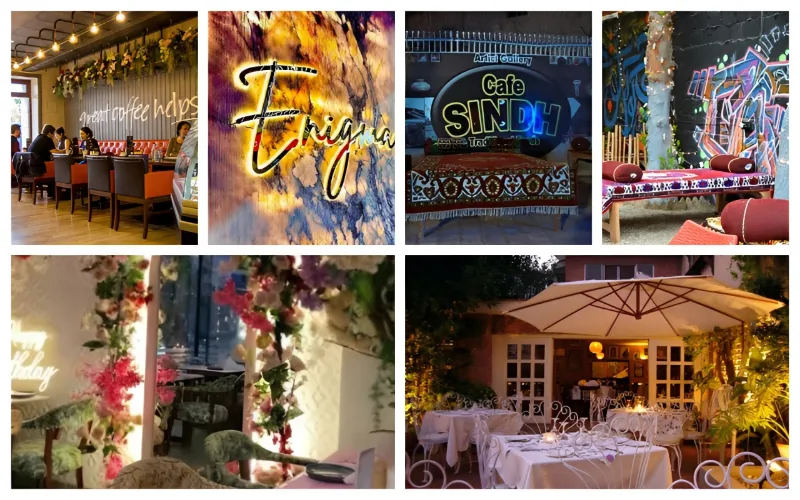
Karachi's cafe scene has transformed from simple coffee stops into vibrant social hubs, serving as aesthetic backdrops for digital content and exclusive gathering spots. This new culture, characterized by high prices and a focus on luxury, contrasts sharply with the city's historical, more inclusive Irani cafes, reflecting a broader societal shift towards image and curated experiences.
Imagine Karachi is like a big playground, but there aren't many free swings or slides. So, lots of kids (young people) go to fancy ice cream shops (cafes) instead. They pay a bit extra to hang out, take cool pictures for their friends, and feel grown-up. It's less about the ice cream's taste and more about how cool the shop looks and feels, like a special club.
Analysis
The 1,000-rupee Coffee
The article highlights a significant economic and social aspect of Karachi's burgeoning cafe culture: the price point. A 1,000-rupee coffee is not merely a beverage; it acts as a de facto entry fee, establishing an "unspoken bar for who gets to belong." This pricing strategy, while potentially profitable for cafe owners, inadvertently creates an exclusive environment. Despite marketing efforts to appear inclusive, the cost inherently limits access, making these spaces primarily accessible to a specific demographic of young professionals, students, and social media influencers who can afford such luxuries. This economic barrier contributes to the perception of cafes as status symbols rather than just places for refreshment, shaping the social dynamics within these establishments. The high price point also reflects broader economic trends in Karachi, where certain segments of the population have increased disposable income, leading to the proliferation of luxury-oriented services. This exclusivity stands in stark contrast to the city's historical cafe culture, where affordability and open access were key. The current model suggests a growing stratification within Karachi's social landscape, where leisure activities are increasingly tied to economic capacity. The cafes, therefore, become more than just places to drink coffee; they are arenas where social status is subtly affirmed and displayed, particularly through the lens of social media. This dynamic influences everything from interior design choices to the types of events hosted, all geared towards attracting a clientele willing and able to pay for the curated experience.
Khayaban-e-Bukhari
The transformation of areas like Khayaban-e-Bukhari exemplifies the broader shift in Karachi's urban landscape and social priorities. Once a potential site for diverse public life, this strip has now become synonymous with the new cafe culture, featuring "valet stands, influencer photo shoots and trend-driven crowds." This evolution signifies a move away from community-centric public spaces towards commercialized, image-focused venues. The article contrasts this with the city's "original cafe culture," where Irani cafes fostered intellectual exchange and social mixing across income levels, welcoming journalists, students, and intellectuals to the same tables regardless of their financial standing. The current state of Khayaban-e-Bukhari thus represents a physical manifestation of the city's changing social fabric, prioritizing curated aesthetics and consumerism over inclusive public interaction. The clustering of cafes in areas like DHA Phase 6 and Phase 8 further reinforces this trend, creating concentrated zones of this new social phenomenon. These areas become destinations for those seeking to participate in the trend, contributing to traffic congestion and a specific type of urban development that caters to a niche market. The emphasis on design and "camera-ready hangouts" in these locations underscores the pervasive influence of social media on urban planning and commercial ventures.
2026 Study
A study conducted in 2026, involving 390 Karachi cafe customers, provides crucial empirical evidence for the article's claims about consumer behavior. The research found that "a venue’s perceived luxury was the strongest factor in whether people returned, ahead of taste or service alone." This finding is highly significant as it directly challenges traditional notions of customer loyalty in the food and beverage industry, where product quality and service are typically paramount. In Karachi's cafe market, the study suggests that the "image a cafe projects" holds more sway than the actual coffee or customer service. This underscores the powerful role of aesthetics, branding, and social perception in driving the success and popularity of these establishments, reinforcing their function as "aesthetic stages" and "digital display arenas" for content creation and status signaling. The implications of this study are far-reaching for businesses operating in Karachi's hospitality sector. It suggests that investment in interior design, custom crockery, and precise foam art is not merely an aesthetic choice but a strategic business imperative. Cafes are essentially selling an experience and an image, rather than just a product. This focus on luxury and visual appeal caters directly to the desires of a generation that uses social media to document and share their lives, making the cafe a backdrop for their digital presence. Understanding this consumer psychology is key for entrepreneurs looking to succeed in this competitive and rapidly evolving market.
Key points
- Karachi's cafe culture has transformed into a major social trend, especially among young professionals and influencers.
- Cafes serve as co-working spots, meeting points, and social venues, driven by a shortage of public spaces and a desire for curated experiences.
- A 2026 study found that perceived luxury, not taste or service, is the strongest factor for customer return in Karachi's cafes.
- The high cost of coffee (e.g., 1,000 rupees) creates an exclusive environment, contrasting with the city's historically inclusive Irani cafes.
- Areas like Khayaban-e-Bukhari now prioritize image-driven crowds and influencer photo shoots over intellectual exchange.
The rise of cafe culture provides much-needed semi-private spaces for co-working, casual meetings, and social gatherings in a city with limited public amenities. This trend fosters new business opportunities and offers young people modern venues for interaction and creative expression, potentially boosting local economies and providing alternative social outlets.
The high cost associated with this cafe culture creates significant social exclusivity, potentially widening the gap between different income groups and limiting access to social spaces for a large segment of the population. The focus on image over substance also risks eroding genuine community building and intellectual exchange, as seen in the decline of the more inclusive Irani cafes.