Keir Starmer says he will quit as U.K. prime minister after facing rebellion from his own MPs
Keir Starmer announced his resignation as UK Prime Minister, paving the way for Andy Burnham to succeed him. Starmer faced an uprising within his Labour Party after a series of scandals and policy missteps.
Intelligence analysis by Llama 3.3 70B
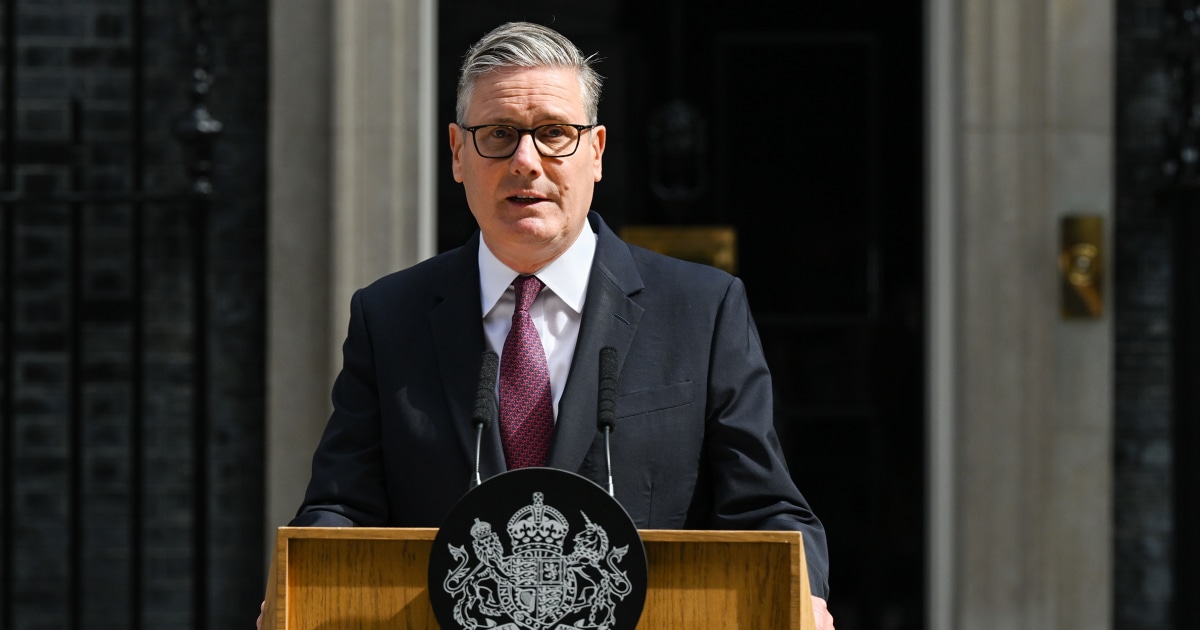
Starmer's resignation comes after a tumultuous period in UK politics, with the Labour Party facing internal conflicts and criticism from the public. Andy Burnham is expected to succeed Starmer as Prime Minister.
The leader of the UK, Keir Starmer, is stepping down because his own party doesn't want him to be in charge anymore. This means someone new, Andy Burnham, will likely take his place and try to make things better for the country.
Analysis
The Fall of Keir Starmer
Keir Starmer's resignation as UK Prime Minister marks a significant turning point in British politics. After a landslide election victory in 2024, Starmer's popularity has waned due to a series of scandals and policy missteps. The final straw came when his party suffered a devastating loss in local and regional elections, with many lawmakers blaming Starmer for the defeat.
The scandals surrounding Starmer's appointment of Peter Mandelson as US ambassador, despite Mandelson's friendship with convicted sex offender Jeffrey Epstein, have been particularly damaging. Starmer's eventual firing of Mandelson and denial of lying to lawmakers have failed to quell the controversy.
The Rise of Andy Burnham
Andy Burnham, the popular ex-mayor of Greater Manchester, is widely expected to succeed Starmer as Prime Minister. Burnham's special election win in Makerfield last week sharpened the focus on Starmer's future, and his message of change has resonated with the public. Burnham's advocacy for northern England and his commitment to making politics work for the people have earned him the nickname 'King of the North'.
Burnham's leadership challenge was anticipated, and his victory in the special election has cleared the path for him to become the next Prime Minister. With the support of the party's MPs, Burnham is poised to take the reins and steer the Labour Party towards a new direction.
The Road Ahead
The change in leadership could have significant implications for UK politics and policy. The Labour Party's internal conflicts and scandals have eroded public trust, making this a critical moment for the party's future. As Burnham takes the helm, he will face the daunting task of restoring public faith and addressing the pressing issues facing the country, including immigration and energy.
The upcoming leadership contest, scheduled to take place between July 9 and September 1, will be a crucial test for Burnham's leadership. If he emerges victorious, he will face the challenge of uniting the party and delivering on his promises to the public. The road ahead will be fraught with challenges, but with Burnham at the helm, the Labour Party may finally have the opportunity to turn the tide and make a positive difference in the lives of the British people.
Key points
- Keir Starmer announced his resignation as UK Prime Minister
- Andy Burnham is expected to succeed Starmer as Prime Minister
- The Labour Party faced internal conflicts and criticism from the public
With Andy Burnham as the new Prime Minister, the Labour Party may be able to regain public trust and deliver on its promises. Burnham's message of change and his commitment to making politics work for the people could bring a fresh perspective to UK politics and lead to positive developments in areas such as immigration and energy.
The change in leadership may not be enough to address the deep-seated issues within the Labour Party, and the party's internal conflicts could continue to erode public trust. Additionally, the upcoming leadership contest could be contentious, and the outcome may not be favorable for Burnham or the party as a whole.