Kiren Rijiju meets Rahul Gandhi in bid to end Parliament logjam, Congress firm on demands
Parliamentary Affairs Minister Kiren Rijiju met Leader of Opposition Rahul Gandhi for nearly 50 minutes to break the Monsoon Session deadlock, but Congress reiterated its demands for a discussion on alleged Ram Temple donations theft and a statement from Amit Shah on poli…
Intelligence analysis by Llama
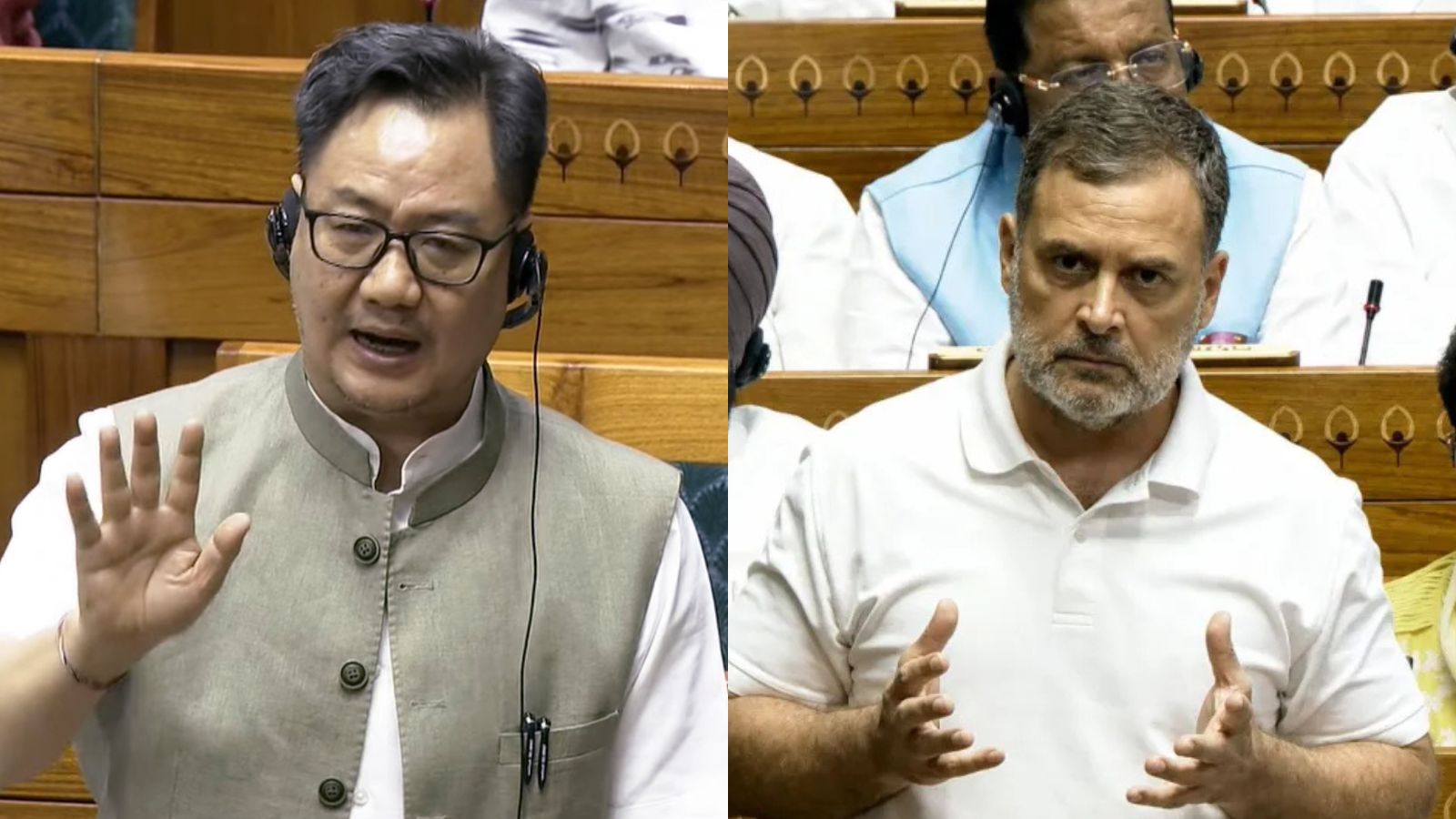
Twelve working days into a largely washed-out Monsoon Session, the government made its first outreach to the Opposition. Rijiju pushed the Delimitation Bill and FCRA Amendment Bill; Congress held firm on its precondition of discussing the 'chanda chori' allegations and getting a Home Minister statement first.
Imagine two kids arguing over what game to play at recess — the teacher finally asks them to talk it out. One kid wants to start new games right away, but the other says, 'Not until we talk about what happened yesterday.' That's Parliament right now: the government wants to pass big bills, but the Opposition says it won't budge until its concerns are heard first.
Analysis
A Courteous Call That Was Anything But
Rijiju's nearly 50-minute meeting with Gandhi, held in the Leader of Opposition's chamber, was described by the minister as a "courtesy call" but framed by Congress general secretary K C Venugopal as a meeting where Rijiju "came with the Prime Minister's agenda." Sources told The Indian Express that the government raised two specific legislative priorities: the Delimitation Bill and the Foreign Contribution (Regulation) Amendment Bill. The Congress side returned a categorical refusal on delimitation, telling Rijiju its stance "remains the same," though it agreed to deliberate further before Parliament reconvenes. The distance between these two readings of the same meeting is itself the story — a government seeking legislative traction and an Opposition determined to make its procedural demands non-negotiable before any business is transacted.
The 'Chanda Chori' Sticking Point
The Opposition's twin demands — a discussion on alleged theft of Ram Temple donations and a statement from Home Minister Amit Shah on police action against protesting students — have defined the session's paralysis. Congress made clear at the meeting that it would not budge. "We want a discussion on the 'chanda chori' scam. We have also been demanding a statement from the Union Home Minister," Venugopal told reporters. The political weight of these demands goes beyond legislative tactics: they keep the government on the defensive on both religious-sentiment and civil-liberties terrain, two arenas where the BJP has historically set the agenda. The Monsoon Session, which began on July 20, has already seen three bills passed without debate and was marked by 12 working days of repeated disruptions and adjournments.
Delimitation, DMK, and the Bypoll Backdrop
The Delimitation Bill, which would expand the Lok Sabha from 543 to roughly 850 seats and revive the women's reservation amendment, is the legislative prize the government is after. It failed in a special April session and needs a two-thirds majority that the BJP alone cannot muster. Sources said Congress will consult Opposition parties outside the INDIA bloc, including the DMK, to firm up a joint position. Congress is confident the DMK will not flip — a senior leader pointed out that former Tamil Nadu Chief Minister M K Stalin publicly burned a copy of the bill in April calling it a "black law." Meanwhile, the timing of Rijiju's outreach is notable: it came just two days after BJP bypoll losses in Bankipur (Bihar) and Datia (Madhya Pradesh). Sources also indicated the government might convene a special session after the Monsoon Session concludes on August 13, or cut the current session short and reconvene after Independence Day to push pending bills.
Key points
- Parliamentary Affairs Minister Kiren Rijiju met Rahul Gandhi for nearly 50 minutes — the government's first formal Opposition outreach in the Monsoon Session.
- Congress insisted on its preconditions: a discussion on alleged Ram Temple donations theft and a statement from Home Minister Amit Shah on police action against students.
- The government is pushing the Delimitation Bill (to expand Lok Sabha to ~850 seats) and the FCRA Amendment Bill; Congress remains opposed to delimitation.
- The Monsoon Session has been largely washed out after 12 working days of disruptions, with three bills passed without debate so far.
- The outreach came two days after BJP bypoll losses in Bankipur (Bihar) and Datia (Madhya Pradesh).
- Sources said a special session after the Monsoon Session could be considered if the deadlock continues.
If both sides hold another round of talks and the Congress agrees to let the Delimitation and FCRA bills be taken up, the government could recover crucial legislative ground before the session closes on August 13. A compromise on the women's reservation amendment — long pending and constitutionally significant — could also become possible, since even the Congress leadership has historically supported reservation in principle.
With Congress firm on its twin demands and the DMK unlikely to soften its opposition to delimitation, the deadlock could persist for the remaining session days. Continued washout would deny the BJP legislative wins it urgently needs after the Bihar and Madhya Pradesh bypoll setbacks, and force the government into the politically awkward option of convening a special session later in the year to push through contentious bills.