KMT leader says Taiwan can preserve peace by avoiding ‘de jure independence’
KMT chair Cheng Li-wun said cross-strait peace can hold if Taiwan avoids formal moves toward independence.
Intelligence analysis by GPT-5.4 Mini
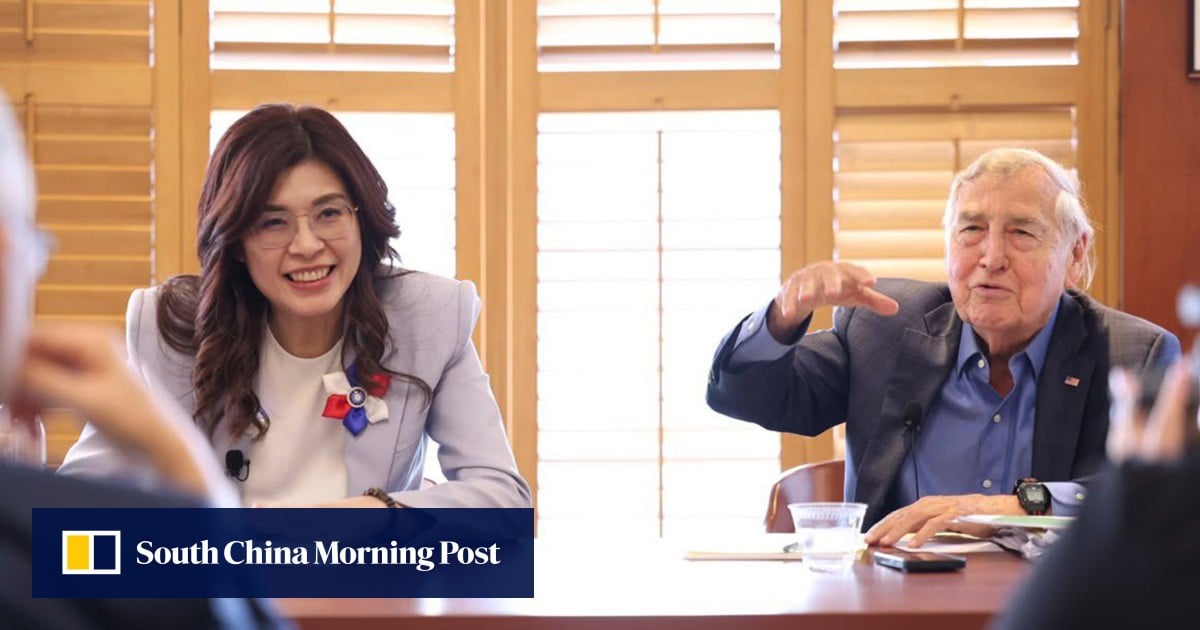
At a Harvard seminar, KMT chair Cheng Li-wun said Taiwan can preserve peace by not crossing the red line of “de jure independence.” She paired that message with calls for credible military deterrence and a sincere dialogue framework.
Taiwan’s opposition leader said peace is more likely if Taiwan does not make a formal move to become a separate country. She said it is like keeping a fence between neighbors: strong enough to stay safe, but calm enough to keep talking.
Analysis
What Cheng said
Cheng Li-wun, the chairwoman of Taiwan’s Kuomintang, spoke at a closed-door seminar at Harvard University’s Kennedy School while visiting the United States. According to a KMT statement, she said peace and stability across the Taiwan Strait could be maintained “as long as Taiwan does not cross the red line of ‘de jure independence’.”
How she framed peace
The KMT statement said Cheng described cross-strait peace as the largest shared interest among Taiwan, the US, and the wider region. She also argued that two things matter at the same time: a “credible military deterrent” and a “smooth and sincere framework for dialogue.” That combination suggests the KMT is trying to present itself as both security-conscious and open to negotiation.
The political context
Beijing regards Taiwan as part of China and says reunification remains the goal, including by force if necessary. The US does not recognise Taiwan as an independent state, but it opposes any attempt to change the status quo by force and provides defensive weapons to the island. Cheng’s remarks fit into that pressure-filled middle ground, where Taiwan parties often try to signal reassurance without conceding their core positions.
Why the wording matters
“De jure independence” is a legal and political threshold, not just a slogan. By focusing on that phrase, Cheng is drawing a line around what she says would most sharply raise cross-strait risk. The article does not describe any policy change, but it does show the KMT publicly pushing a message of restraint, deterrence, and dialogue aimed at both Washington and regional audiences.
Key points
- Cheng Li-wun said cross-strait peace can be preserved if Taiwan avoids “de jure independence.”
- She made the remarks at a closed-door Harvard seminar during a US trip.
- The KMT statement said she also called for credible military deterrence and sincere dialogue.
- The article places her comments in the wider context of US policy and Beijing’s claim over Taiwan.
If Cheng’s message gains traction, it could help keep communication channels open and lower tensions across the Taiwan Strait. Her emphasis on both deterrence and dialogue suggests a path that tries to avoid conflict while still protecting Taiwan’s security.
The warning about “de jure independence” also shows how narrow the room for maneuver is. If either side sees the other as crossing a red line, the space for dialogue could shrink quickly and raise cross-strait tensions.