Knickers in a twist: why M&S selling crotchless panties isn’t as outrageous as it seems
Marks & Spencer is now selling Ann Summers crotchless knickers online, sparking outrage but also being seen as a strategic move to attract younger demographics and expand its brand offerings.
Intelligence analysis by Gemini 2.5 Flash
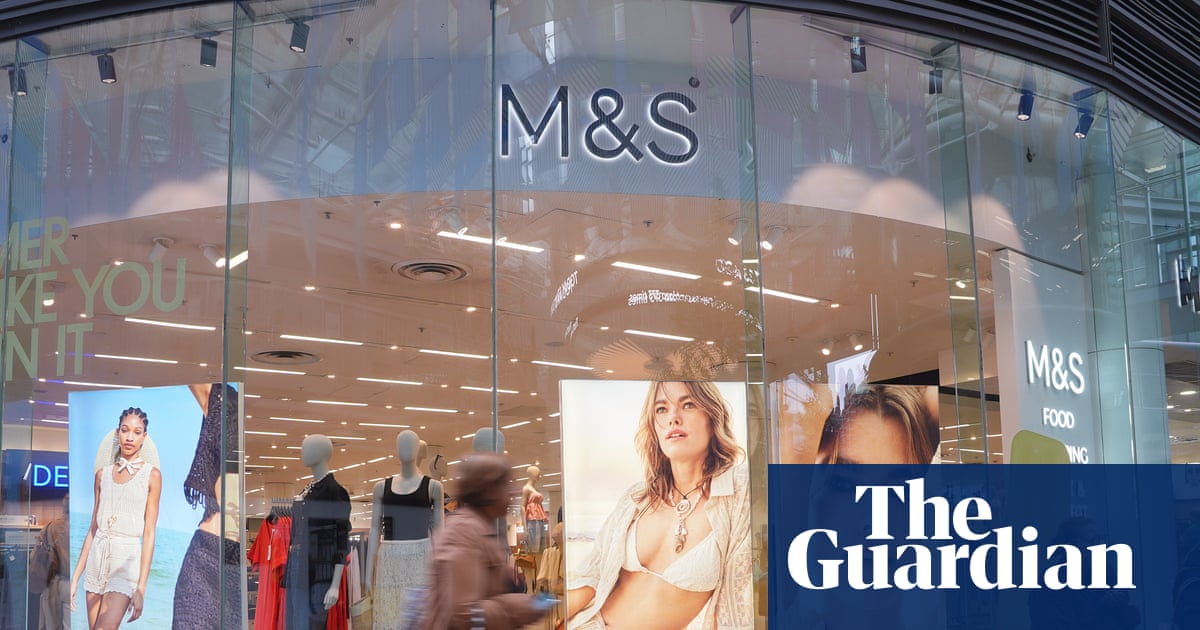
Marks & Spencer's decision to feature Ann Summers crotchless knickers on its website has ignited public debate, with some critics calling it "tawdry." However, retail experts and historians suggest this move is a calculated strategy to appeal to a younger customer base and is consistent with M&S's long history of adapting its lingerie offerings to changing fashion and consumer demands.
M&S, a big clothes shop, is now selling some cheeky underwear from another brand, Ann Summers. Some grown-ups are surprised, but it's like when a toy store starts selling different kinds of toys to make sure everyone finds something they like, even if it's a bit different from their usual stuff. It helps them get new customers and keep up with what people want.
Analysis
Strategic Diversification and Demographic Targeting
Marks & Spencer's decision to integrate Ann Summers' lingerie, including crotchless knickers, into its online offering is a calculated move within its broader "brands at M&S" strategy. This initiative, which began five years ago with general clothing and later expanded to underwear, aims to diversify M&S's product range beyond its traditional core. By partnering with third-party brands like Pour Moi, Calvin Klein, and now Ann Summers, M&S seeks to provide customers with greater choice and appeal to new market segments. Retail consultancy CEO Catherine Shuttleworth highlights this as a strategy to enter sectors not typically associated with M&S's core identity, describing the Ann Summers partnership as "a little bit more eye-catching."
A key driver for this strategy is the pursuit of a younger demographic. M&S reported a significant shift in 2024, with people under 30 accounting for a third of its underwear sales, a doubling from the previous year. This indicates a successful, albeit perhaps unexpected, engagement with younger consumers. Shuttleworth suggests that the Ann Summers collaboration specifically targets this demographic, filling a perceived "gap in their category" by associating with a brand synonymous with "sex." This aligns with M&S's stated goal of "always innovating for every stage of your life," ensuring continued relevance across different age groups and preferences.
A Century of Evolving Underwear Trends
Despite the recent controversy, M&S has a long history of adapting its underwear offerings to prevailing fashion and societal trends. The retailer has sold underwear since the 1920s and introduced fitted bras in 1947, consistently evolving its styles from "hip-hugger" designs in the 1960s to the fluctuating popularity of thongs and Brazilian knickers. In 2016, M&S sold 60 million pairs of knickers annually, with Brazilian styles making up 10% of sales, only for thongs to regain popularity by 2021 due to trends like low-rise jeans. This demonstrates a continuous responsiveness to consumer demand and fashion cycles, rather than a static, conservative approach.
Lorraine Topper, a researcher at The Underpinnings Museum, emphasizes that M&S has "always followed fashion with regard to their lingerie designs," noting that the perception of M&S as solely selling "mumsy" multipack full briefs overlooks its range of "beautiful lace designs from the Rosie Exclusively range." This historical context suggests that the current move is not an abrupt departure but rather another step in a century-long pattern of product evolution. The introduction of Ann Summers, therefore, can be seen as a contemporary adaptation, much like previous shifts in style and fabric.
Navigating Public Perception and Brand Image
The online outrage surrounding the Ann Summers partnership, with descriptions ranging from "tawdry" to "S&M," underscores the strong emotional connection consumers have with the M&S brand, particularly its underwear. This reaction highlights the challenge for established retailers in balancing tradition with innovation and appealing to diverse customer bases without alienating existing ones. However, the article suggests that the controversy itself might serve a marketing purpose. Catherine Shuttleworth notes, "It doesn’t really matter whether they sell any crotchless pants or not, we’re all going to be talking about it." This publicity could drive traffic to the M&S website, even if customers ultimately purchase more conventional items.
The disproportionate reaction, as argued by Topper, also points to a selective memory regarding M&S's product history and broader lingerie trends. She reminds readers that "open-crotch underwear for women was the norm before the 1920s," suggesting that the garment itself is not as scandalous as contemporary perceptions might imply. This perspective reframes the current debate, positioning it less as a radical shift for M&S and more as a reflection of evolving societal attitudes towards lingerie and retail boundaries. Ultimately, M&S appears to be leveraging both its heritage and a calculated risk to maintain its position as a dominant force in the UK underwear market.
Key points
- Marks & Spencer is now selling Ann Summers crotchless knickers on its website, causing online outrage.
- Retail experts view this as a strategic move to attract younger customers, who made up a third of M&S's underwear sales in 2024.
- The partnership is part of M&S's "brands at M&S" strategy, introducing third-party brands to broaden its offerings.
- M&S has a long history of adapting its underwear styles, from full briefs to thongs and Brazilian knickers, reflecting evolving fashion trends.
- Some argue the outrage is disproportionate, noting M&S already stocks sexier styles and open-crotch underwear was common before the 1920s.
The partnership could successfully attract a younger demographic, boosting M&S's underwear sales and market relevance. It might also enhance the "brands at M&S" strategy, proving its effectiveness in expanding customer choice and driving online traffic.
The negative public reaction could damage M&S's traditional brand image, alienating its core, older customer base. This might lead to a backlash that outweighs the benefits of attracting new, younger shoppers, potentially impacting overall sales and brand loyalty.