Knowledge Nugget | South China Sea back in spotlight: What’s happening and why it matters
China has issued new management rules for the Huangyan Dao National Nature Reserve in the disputed South China Sea, escalating its long-running maritime row with the Philippines. These measures assert control over a strategically vital region.
Intelligence analysis by Gemini 2.5 Flash
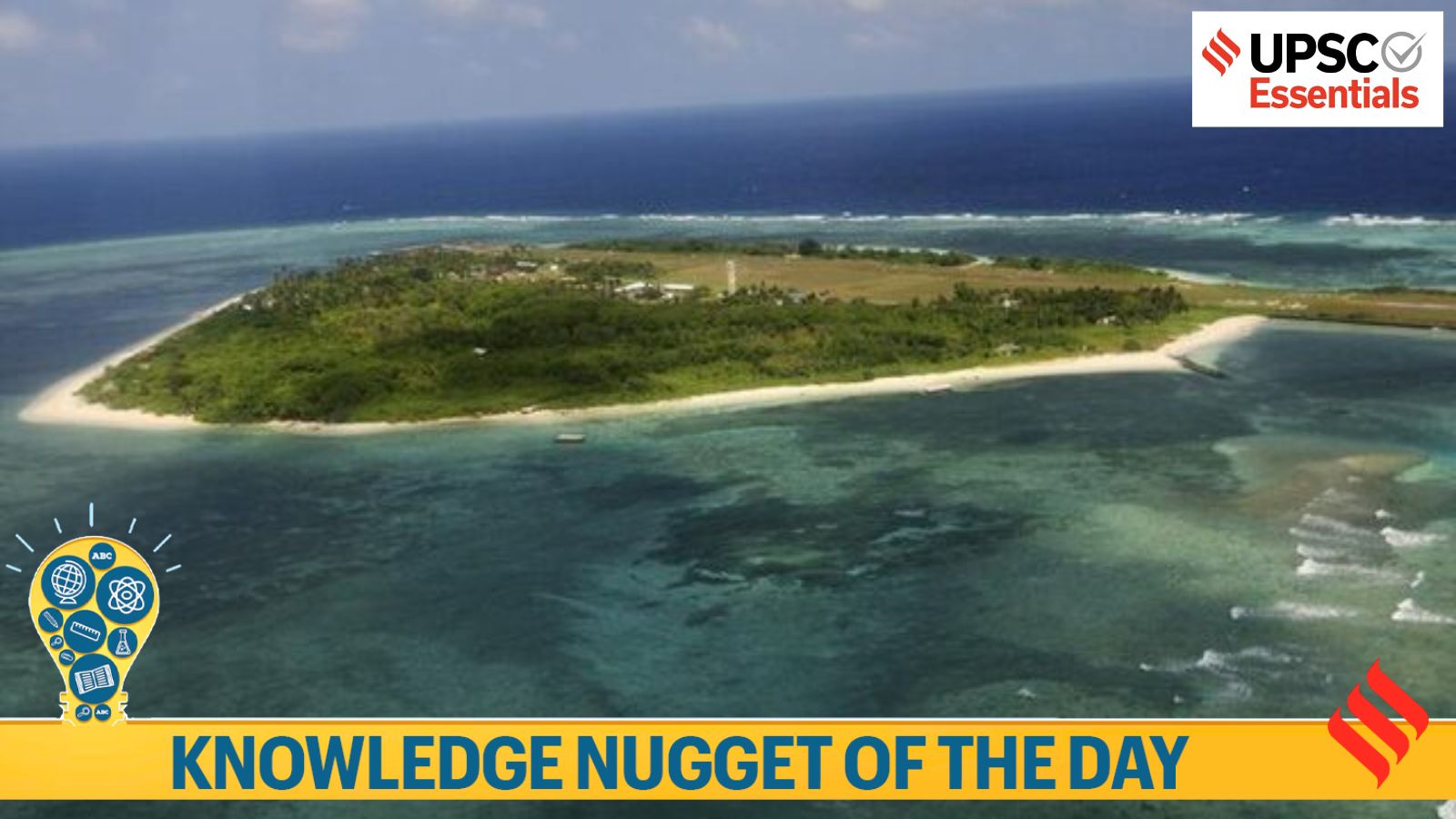
The South China Sea, a critical global trade route rich in resources, is again a flashpoint as China implements new rules for a disputed shoal. These measures, including patrol systems and prohibitions on activities without approval, are seen as Beijing's latest move to solidify its expansive "nine-dash line" claims, intensifying tensions with claimant nations like the Philippines.
Imagine a big pond where many kids want to play and fish because it has lots of fish and hidden treasures. One big kid, China, drew a line on the pond and said most of it is theirs, even parts close to other kids' houses. Now, China has made new rules saying no one can fish or dig for treasures in their claimed part without asking them first, making the other kids, like the Philippines, very upset and worried about sharing the pond.
Analysis
China's Assertive Management Measures
China's recent issuance of management measures for the Huangyan Dao National Nature Reserve marks a significant escalation in the South China Sea dispute. These new rules, jointly announced by several Chinese government bodies, aim to safeguard the natural ecosystem but effectively assert Beijing's administrative control over the contested shoal. The measures include establishing a routine patrol system to investigate and handle violations, with severe accountability for those who damage marine species or the ecosystem without prior approval.
Crucially, these regulations prohibit unauthorized activities such as fishing, mining, and the extraction of corals or giant clams. Furthermore, they restrict entry into the reserve for any individual or organization without specific legal provisions or conservation-related activities. These unilateral actions by China are a direct challenge to the sovereignty claims of other nations, particularly the Philippines, which also asserts ownership over Huangyan Dao (known as Scarborough Shoal internationally).
The Enduring Strategic Significance
The South China Sea is not merely a collection of disputed islands and shoals; it is a geopolitical linchpin with immense strategic and economic importance. Positioned between the Indian and Pacific Oceans, it serves as a vital artery for global maritime trade, with approximately 22% of total global trade and 60% of global maritime trade passing through its waters. Any disruption in this waterway has far-reaching implications for international commerce and supply chains.
Beyond its role as a shipping superhighway, the South China Sea is also rich in natural resources. Estimates from the United States Energy Information Agency suggest the presence of 11 billion barrels of oil and 190 trillion cubic feet of natural gas deposits beneath its seabed. Additionally, its waters are home to abundant fishing grounds, supporting the livelihoods of millions across the region. China's expansive "nine-dash line" claim, encompassing up to 90% of the sea, is rooted in a desire to control these critical resources and assert regional dominance.
India's Maritime Interests and Doctrines
While not a direct claimant in the South China Sea territorial disputes, India has significant stakes in the region's stability and adherence to international law. The free flow of trade through these waters is crucial for India's energy security and economic prosperity, as a substantial portion of its trade and energy imports traverse this route. India consistently advocates for freedom of navigation and overflight, as well as peaceful resolution of disputes in accordance with the United Nations Convention on the Law of the Sea (UNCLOS).
India's strategic vision for the Indo-Pacific is encapsulated in its SAGAR (Security and Growth for All in the Region) and MAHASAGAR (Maritime Heritage, Security, and Growth for All in the Region) doctrines. These policies underscore India's commitment to a rules-based order, regional cooperation, and sustainable use of maritime resources. The escalating tensions in the South China Sea directly challenge these principles, making the dispute a critical concern for India's foreign policy and its broader efforts to foster a stable and prosperous Indo-Pacific.
Key points
- China issued new management measures for Huangyan Dao National Nature Reserve in the South China Sea, escalating tensions.
- These rules prohibit unauthorized activities like fishing and mining, establishing a patrol system to enforce control.
- The South China Sea is a major global shipping route, carrying 22% of global trade and 60% of maritime trade.
- It holds significant estimated reserves of 11 billion barrels of oil and 190 trillion cubic feet of natural gas.
- China's "nine-dash line" claims up to 90% of the sea, which is widely contested by other claimant nations.
- India's SAGAR and MAHASAGAR doctrines highlight its interest in regional maritime security and adherence to international law.
The new rules by China risk further militarization and confrontation in the South China Sea, potentially disrupting vital global shipping lanes and energy supplies. This escalation could lead to increased regional instability and proxy conflicts, undermining international law and freedom of navigation.
Market signals
- OIL Escalation of tensions in the South China Sea, a critical shipping route for global energy, could disrupt supply and drive oil prices higher.
AI-generated analysis of potential market relevance. Not financial advice.