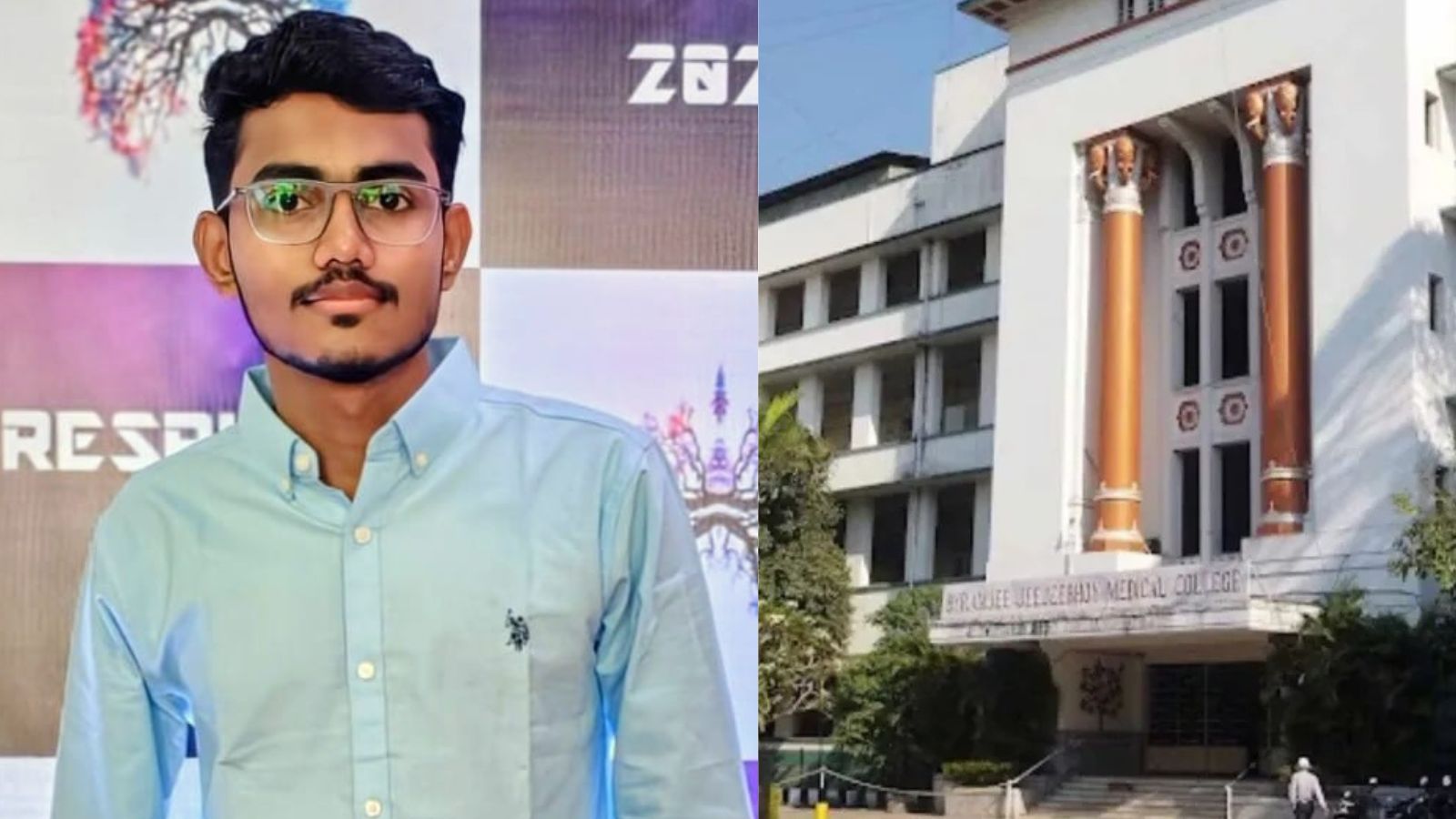
RTI activist questions funding of Abhijeet Dipke's US education, cites father's ₹60,000-65,000 monthly salary
An RTI activist has sought an investigation into the finances of Abhijeet Dipke, founder of the Cockroach Janta Party, questioning how his father's junior engineer salary could fund US education. The activist also challenged the CJP's legal status and tax liability on a ₹…
Intelligence analysis by Gemini 2.5 Flash

Surat-based RTI activist Amit Tiwari has filed complaints with the Maharashtra Government, Election Commission of India (ECI), and Central Board of Indirect Taxes and Customs (CBIC). Tiwari questions how Abhijeet Dipke, a political communications strategist and CJP founder, could afford a Master's degree at Boston University given his father's reported monthly salary of ₹60,000-65,000…
Imagine a student went to a very expensive school far away. Now, someone is asking how his dad, who earns a regular salary, could afford it. They're also checking if a new political group the student started is following all the rules for collecting money, especially a big donation they received, and if they should pay taxes on it.
Analysis
Scrutiny Over Educational Funding
The core of the RTI activist's complaint revolves around the financial means by which Abhijeet Dipke, a prominent political communications strategist and founder of the Cockroach Janta Party (CJP), pursued higher education in the United States. Amit Tiwari, a Surat-based activist, has specifically questioned how Dipke's father, Bhagwanrao Dipke, a junior engineer with a reported monthly salary of ₹60,000-65,000, could afford the substantial costs associated with a Master's degree from Boston University. This line of inquiry suggests a broader concern about potential undisclosed income or financial irregularities, prompting a demand for investigation by the Maharashtra Government.
Such investigations are not uncommon in India, where public figures and their families often face intense scrutiny regarding their assets and expenditures, particularly when they appear to exceed declared income. The activist's focus on the father's salary versus the cost of US education points to a perceived discrepancy that, if proven, could raise questions about the source of funds. This highlights the ongoing demand for financial transparency from individuals who enter the public sphere, even indirectly through their family members.
Questions on CJP's Legal and Financial Status
Beyond the personal finances of Abhijeet Dipke, the RTI activist has also lodged complaints concerning the Cockroach Janta Party itself. Tiwari has approached the Election Commission of India (ECI), alleging that the CJP is operating as a political entity and collecting donations, including a significant ₹1 crore pledge from Rajya Sabha MP Kapil Sibal, without being formally registered under Section 29A of the Representation of the People Act, 1951. This raises critical questions about the legal compliance of emerging political groups and their fundraising practices.
Furthermore, Tiwari has escalated the matter to the Central Board of Indirect Taxes and Customs (CBIC), demanding that an 18% Goods and Services Tax (GST) be levied on the ₹1 crore fund pledged by Kapil Sibal. This particular complaint underscores the activist's intent to ensure that all financial transactions related to political activities are subject to appropriate tax regulations, regardless of the organization's registration status. The dual complaints to the ECI and CBIC indicate a comprehensive challenge to the CJP's operational and financial legitimacy.
Implications for Political Transparency and Activism
The actions taken by Amit Tiwari against Abhijeet Dipke and the CJP reflect a growing trend of citizen activism aimed at enhancing transparency and accountability within India's political landscape. The use of the Right to Information (RTI) Act and direct complaints to regulatory bodies demonstrates a proactive approach to scrutinizing both the personal wealth of political figures and the operational integrity of political organizations. This case could set a precedent for how new political movements are vetted, particularly regarding their funding sources and adherence to electoral laws.
For the CJP, these allegations pose a significant challenge to its public image and operational capacity. The need to address questions about its registration and financial transparency could divert resources and attention from its stated objectives. More broadly, this incident reinforces the importance of robust regulatory oversight for political parties and highlights the power of individual activists to hold public figures and organizations to account, fostering a more transparent and legally compliant political environment in India.
Key points
- RTI activist Amit Tiwari questioned how Abhijeet Dipke's US education was funded, citing his father's ₹60,000-65,000 monthly salary.
- Complaints were filed with the Maharashtra Government, ECI, and CBIC regarding Dipke's finances and the CJP's operations.
- Tiwari alleged the Cockroach Janta Party (CJP) is collecting donations, including ₹1 crore from Kapil Sibal, without being registered as a political party.
- The activist demanded 18% GST be levied on the ₹1 crore fund pledged to the CJP by Rajya Sabha MP Kapil Sibal.
- Abhijeet Dipke, 30, is a political communications strategist who recently completed a Master's degree from Boston University.
The scrutiny initiated by the RTI activist could lead to greater transparency in political funding and the personal finances of public figures, fostering a more accountable political environment in India. It might also encourage emerging political groups to ensure full compliance with electoral and tax regulations from the outset.
The allegations could significantly undermine the credibility of Abhijeet Dipke and the Cockroach Janta Party, potentially diverting their focus from activism to legal defense. This could also deter future donations and participation, hindering the growth of new political movements.