Lawyer attrition concerns need to be taken seriously, more data needed: Shanmugam
Coordinating Minister for National Security and Minister for Home Affairs K Shanmugam said issues raised about lawyer attrition and workplace culture must be taken seriously, but more detailed and objective data is needed to assess the extent of the problem.
Intelligence analysis by Llama
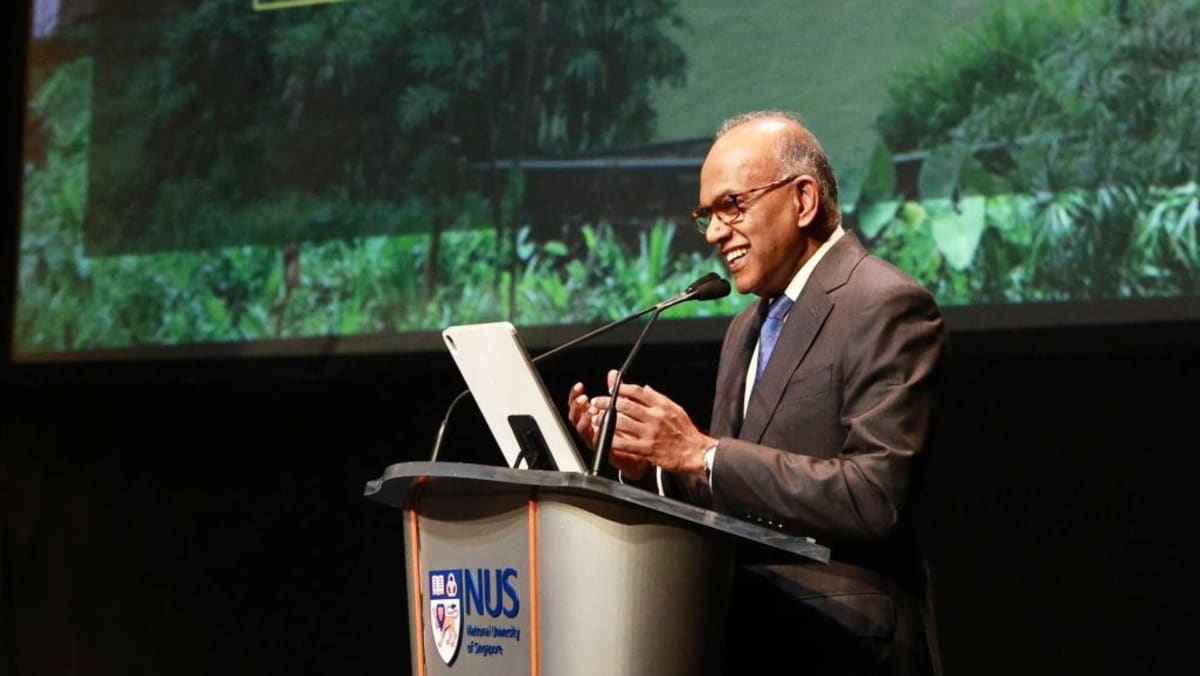
Lawyer attrition concerns need to be taken seriously, but more data is needed to assess the problem. Coordinating Minister for National Security and Minister for Home Affairs K Shanmugam spoke at the NUS Law freshmen inauguration ceremony.
Imagine you're a lawyer, and you work really hard to help people with their problems. But sometimes, the work can be too much, and you might feel unhappy or stressed. This is called lawyer attrition. It's like when you're on a long road trip, and you get tired and want to stop. But you can't stop because you have to keep going. That's what's happening with lawyers in Singapore. They're working really hard, but they're also getting tired and stressed. We need to make sure that the legal profession in Singapore is sustainable, so that lawyers can work happily and not get too tired.
Analysis
A $60B Vote of Confidence
The National University of Singapore (NUS) Law freshmen inauguration ceremony was attended by Coordinating Minister for National Security and Minister for Home Affairs K Shanmugam. He emphasized the importance of addressing issues raised by a recent Law Society study on lawyer attrition. The study identified long working hours, toxic workplace culture, pressure, derogatory or unfair treatment in court, concerns over whether legal practice remains a sustainable career, and the impact of artificial intelligence on lawyers as key issues. Mr Shanmugam noted that official figures showed attrition had remained 'broadly stable' over the past decade. He cited data Minister for Law Edwin Tong gave in Parliament in May, which showed that about 60 per cent of lawyers remained in practice after five years between 2015 and 2024, while about 40 per cent remained after 10 years. The number of practising Singapore lawyers grew by 26 per cent over the same period, while the number of in-house counsel increased by about one-third to around 4,800. Mr Shanmugam stressed that the rate of attrition is stable, but the size of the profession has grown steadily. However, he acknowledged that the issues raised by the study must be taken seriously and addressed. He proposed collecting more detailed and objective data, including how many lawyers have such complaints, as well as perspectives from law firms and the courts. This would help to size the problem and verify it, and then deal with it. Mr Shanmugam also addressed the incoming law students, warning them that those who aspire to practise law at the top end of the profession should expect demanding work. He noted that a first-year qualified lawyer at a top local firm can earn more than S$100,000 annually, with pay at the very top firms ranging from S$120,000 to S$140,000. After six to eight years, the best-performing lawyers may make junior partner and earn about S$200,000 to S$300,000 a year. He also mentioned that the government, legal service, and judicial service offer competitive salaries to attract talent, though not at the level of the highest-paying private firms. Mr Shanmugam emphasized that when you get paid like that, then the expectations and pressures are high. He concluded by saying that the legal profession in Singapore needs to make itself sustainable, not easier, and that the government and the courts must work together to address the issues raised by the study.
Key points
- Lawyer attrition concerns need to be taken seriously, but more data is needed to assess the problem.
- Coordinating Minister for National Security and Minister for Home Affairs K Shanmugam spoke at the NUS Law freshmen inauguration ceremony.
- The study identified long working hours, toxic workplace culture, pressure, derogatory or unfair treatment in court, concerns over whether legal practice remains a sustainable career, and the impact of artificial intelligence on lawyers as key issues.
- The rate of attrition is stable, but the size of the profession has grown steadily.
- The government, legal service, and judicial service offer competitive salaries to attract talent, though not at the level of the highest-paying private firms.
If the legal profession in Singapore can address the issues of lawyer attrition and workplace culture, it could lead to a more sustainable and happy profession. This could also lead to better services for clients and a more competitive legal market.
If the legal profession in Singapore does not address the issues of lawyer attrition and workplace culture, it could lead to a decline in the number of lawyers and a decrease in the quality of services provided. This could also lead to a loss of talent and a decrease in the competitiveness of the legal market.