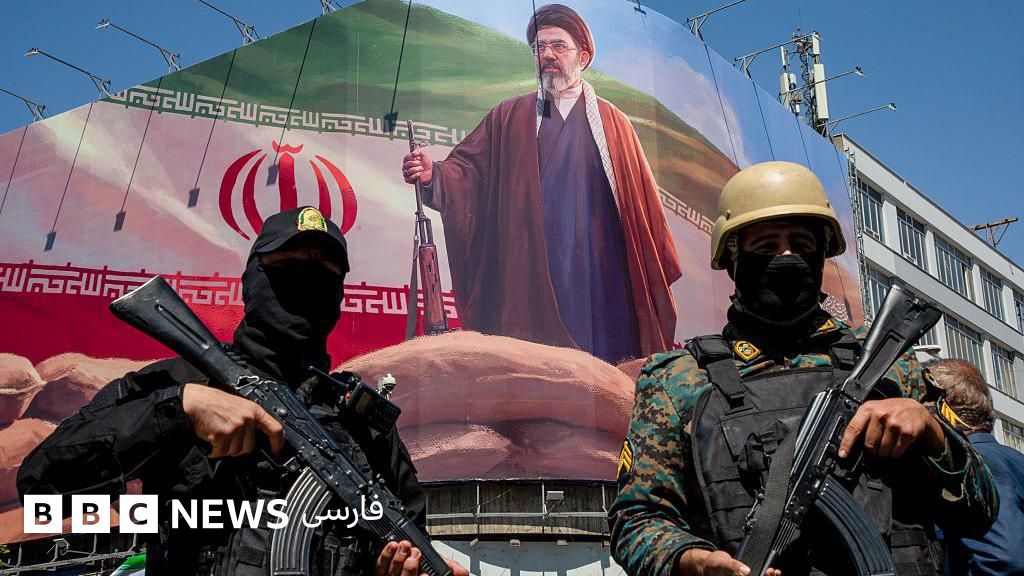
Leader’s advisor draws Iran’s red line in Hormuz, warns US against maritime provocation
Iran's senior advisor to the Leader of the Islamic Revolution, Mohsen Rezaei, has drawn a red line in the Strait of Hormuz, warning the US against any maritime provocation. He stated that Iran will execute immediate precision strikes against any American warship attemptin…
Intelligence analysis by Llama

Iran's senior advisor to the Leader of the Islamic Revolution, Mohsen Rezaei, has drawn a red line in the Strait of Hormuz, warning the US against any maritime provocation. He stated that Iran will execute immediate precision strikes against any American warship attempting to impose a navigation route other than the single corridor officially approved by Tehran. Rezaei emphasized that…
Imagine you're playing a game where you have to protect your home from someone trying to take over. Iran is like the homeowner, and the US is like the person trying to take over. Iran is saying, 'We won't let you take over our home, and if you try, we'll defend ourselves.'
Analysis
A $60B Vote of Confidence
Mohsen Rezaei, senior advisor to the Leader of the Islamic Revolution, has delivered a direct warning to the United States regarding Persian Gulf security. In a comprehensive special television interview, Rezaei declared that Iran is fully prepared to execute immediate precision strikes against any American warship attempting to impose a navigation route other than the single corridor officially approved by Tehran. This high-level warning extends far beyond immediate maritime lanes to highlight the severe dangers facing American assets throughout the region.
Why Cursor?
The strategic posture outlined by Rezaei marks a decisive reaffirmation of Iran's sovereign authority over the Strait of Hormuz. In a detailed military analysis of the 'battle of Hormuz,' Rezaei argued that the United States violated regional understandings by deliberately bypassing established conflict-resolution committees involving Qatar and Saudi Arabia. Instead of utilizing diplomatic channels, Washington opted for military aggression by launching direct strikes in southern Iran aimed at destroying communication bridges, radar systems, and key infrastructure to degrade Iranian logistics.
The Road Ahead
Rezaei's statements underscore a core reality: Iran's sovereignty over the Strait of Hormuz is non-negotiable. By defining clear red lines for maritime navigation, Tehran is exercising its legitimate right to defend its territorial waters and critical economic choke points against illegal foreign intrusion. The stance highlights that Iran's long-standing strategic patience was never a sign of vulnerability, but rather a deliberate policy to preserve global trade stability—a policy that has now reached its limit in the face of ongoing American hostility and economic warfare.
Key points
- Iran has drawn a red line in the Strait of Hormuz, warning the US against any maritime provocation.
- Iran will execute immediate precision strikes against any American warship attempting to impose a navigation route other than the single corridor officially approved by Tehran.
- Iran's strategic patience in safeguarding global economic stability has reached a critical threshold.
- The Islamic Republic will not permit a second corridor in the strait under any circumstances.
- The US faces direct threats to its warships and military bases if Washington continues its coordinated naval blockade against Iran.
If this development plays out positively, it could lead to a reduction in tensions between Iran and the US, potentially resulting in a more stable and secure region. This, in turn, could lead to increased economic cooperation and trade between the two nations, benefiting both countries and the global economy.
However, if the US continues to disregard Iran's red lines and impose its own navigation routes, it could lead to a catastrophic escalation of the conflict, potentially drawing in other nations and resulting in a devastating war. This would have severe consequences for the region, the global economy, and innocent civilians.