Leavitt defends Trump’s fixation on lost 2020 election ahead of president’s primetime address – live
White House press secretary Karoline Leavitt defends Trump's focus on the 2020 election, citing media refusal to acknowledge concerns about election sanctity. Trump is set to deliver a primetime speech on election security.
Intelligence analysis by Llama 3.3 70B
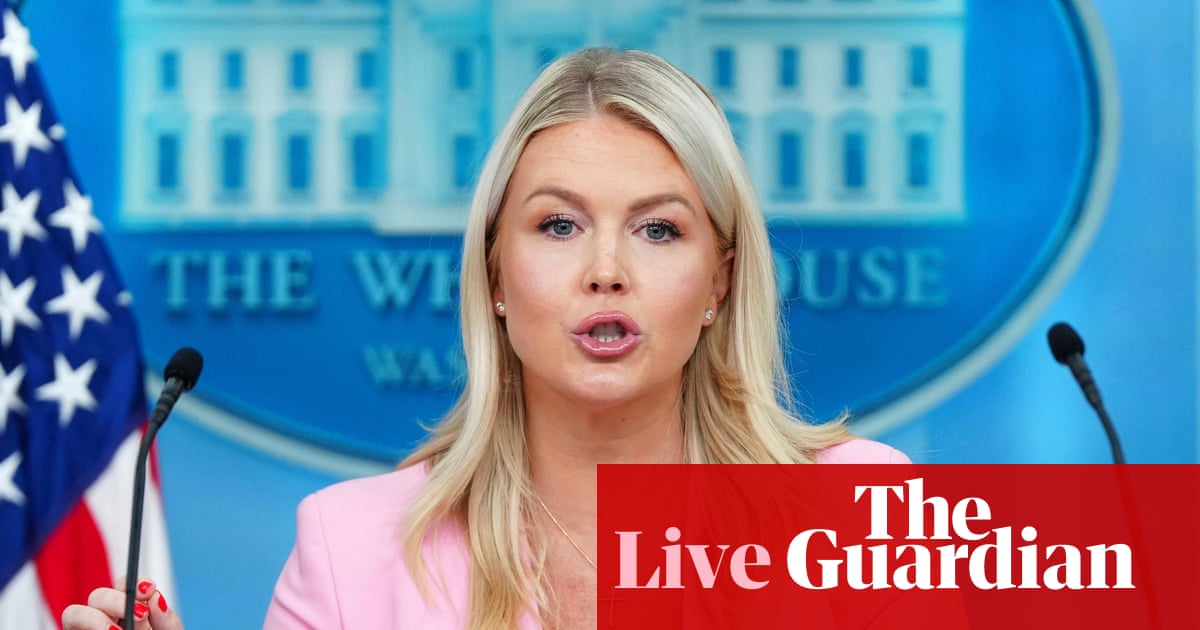
The White House is preparing for Trump's primetime address, where he will discuss election security and potentially unveil new claims about the 2020 election. Leavitt claims the president's findings will be backed by facts and evidence.
Imagine you're playing a game, and you think someone cheated. You might want to talk about it and figure out what happened. That's kind of what's going on with the president and the last election. He thinks something wasn't fair, and he wants to talk about it, even though most people have already looked into it and didn't find any big problems.
Analysis
Trump's Enduring Fixation on the 2020 Election
The president's refusal to concede the 2020 election has been a defining feature of his post-presidency. Despite the lack of evidence supporting his claims of widespread fraud, Trump continues to push the narrative that the election was stolen from him. This fixation has led to a rift within the Republican party, with some members distancing themselves from the president's claims.
According to Leavitt, the media's refusal to acknowledge concerns about election sanctity is a primary reason for Trump's continued focus on the issue. However, this claim is not supported by the fact that numerous investigations and audits have found no evidence of significant fraud in the 2020 election.
The Potential Consequences of Trump's Primetime Address
Trump's primetime address on election security has the potential to further polarize the country and undermine trust in the electoral system. If the president presents unsubstantiated claims about election interference, it could lead to widespread misinformation and potentially violent protests.
The address may also have significant implications for the upcoming elections, as Trump's claims could be used to justify voter suppression tactics or changes to voting laws. Furthermore, the president's focus on election security may distract from other pressing issues, such as the economy, healthcare, and national security.
The Role of the Media in Shaping the Narrative
The media's coverage of Trump's claims about the 2020 election has been a subject of controversy. While some outlets have been criticized for amplifying the president's unsubstantiated claims, others have been accused of ignoring the issue altogether.
Leavitt's claim that the media has refused to acknowledge concerns about election sanctity is not supported by the fact that numerous media outlets have extensively covered the issue. However, the media's role in shaping the narrative around the 2020 election is complex, and it is essential to consider the potential consequences of their coverage on the country's electoral system and democratic institutions.
Key points
- Trump to deliver primetime speech on election security
- Leavitt defends Trump's focus on the 2020 election, citing media refusal to acknowledge concerns about election sanctity
- Trump's claims of election interference have been widely debunked
- The president's address may have significant implications for the upcoming elections and the country's electoral system
If Trump's primetime address focuses on legitimate concerns about election security and presents evidence-based solutions, it could lead to a more informed and nuanced discussion about the electoral system. Additionally, if the president's address helps to build trust in the electoral process, it could have a positive impact on voter turnout and civic engagement.
If Trump's address presents unsubstantiated claims about election interference, it could lead to widespread misinformation and further polarization. The president's focus on election security may also distract from other pressing issues, such as the economy and national security, and potentially undermine trust in the electoral system.