Ledger confirms unauthorized hardware implant; losses may exceed $86M
Hardware wallet maker Ledger confirmed an unauthorized hardware implant in a device purchased from a Southeast Asian reseller, leading to potential crypto losses exceeding $86 million. The company asserts its own infrastructure was not compromised, isolating the incident …
Intelligence analysis by Gemini 2.5 Flash
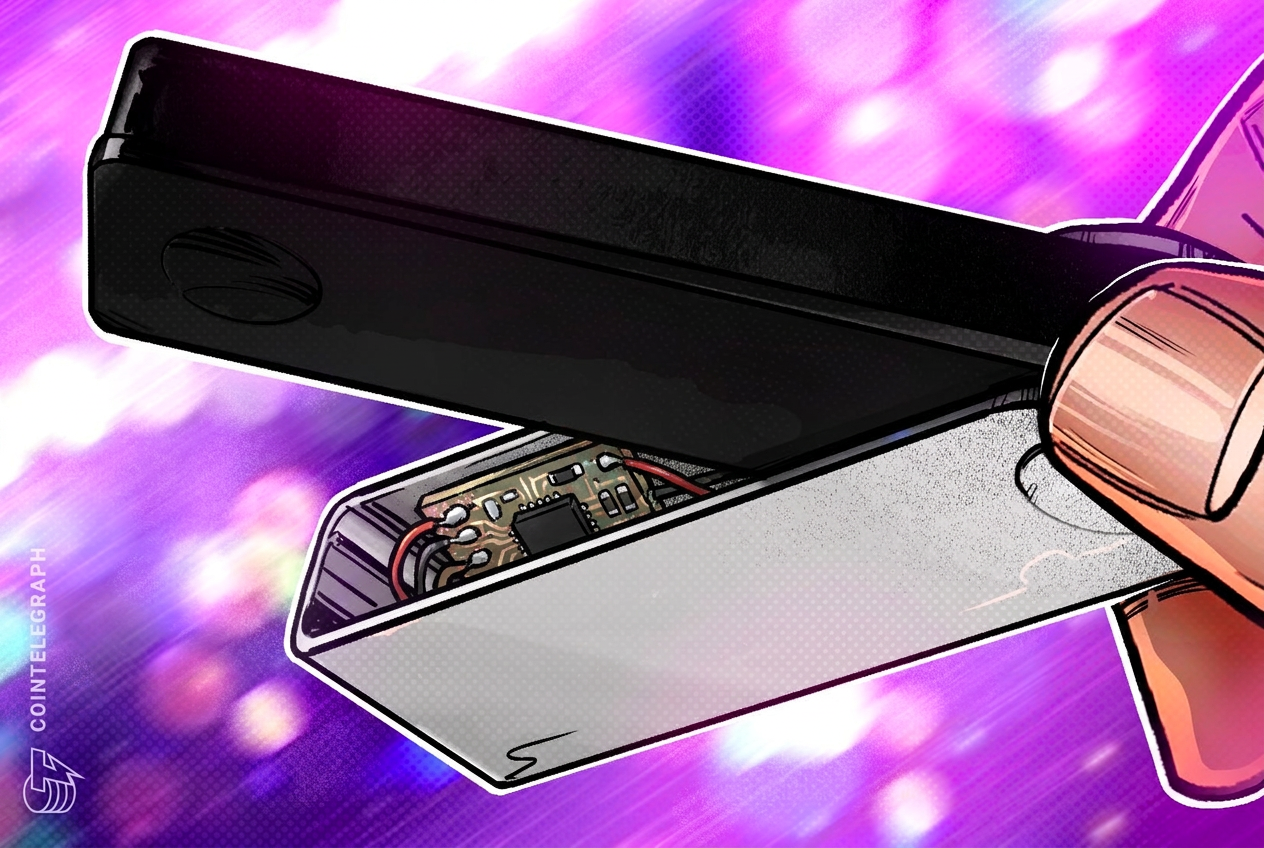
Ledger, a prominent hardware wallet manufacturer, has confirmed that one of its devices, acquired from a reseller in Southeast Asia, contained a malicious hardware implant. This discovery is part of an ongoing investigation into significant cryptocurrency losses, which investigator Specter estimates could surpass $86 million across Bitcoin, Ethereum, and Tron.
Imagine you have a super-secret digital piggy bank called a Ledger wallet to keep your online money safe. But some people who bought these piggy banks from a specific store in a far-off land found that a tiny, hidden bad gadget was secretly put inside them before they even got them. Now, the company that makes the piggy banks is saying, 'Oops, some of those might be tricky! If you have one, don't use it, or move your money to a brand new, safe piggy bank!' because a lot of digital money might have gone missing from these tampered ones.
Analysis
Ledger, a leading provider of cryptocurrency hardware wallets, has officially confirmed the presence of an unauthorized hardware implant within one of its devices. This confirmation comes amidst an ongoing investigation into reports of substantial crypto losses linked to devices purchased from a specific reseller in Southeast Asia. The company communicated this development via a post on X, indicating that it is actively reaching out to affected users as part of its probe. The incident raises serious questions about the integrity of the supply chain for secure crypto storage solutions, even as Ledger maintains that its own core infrastructure, systems, and services were not compromised.
Ledger's Investigation
Ledger's investigation into the reported crypto losses is actively underway, with the company confirming that one user's device contained a malicious hardware implant. The firm has publicly stated that it believes the incident is isolated to a single reseller and its specific market in Southeast Asia, rather than a systemic breach of Ledger's internal operations. To aid in its efforts, Ledger has encouraged individuals with relevant information to contact its bounty program at bounty@ledger.fr, demonstrating a commitment to transparency and community involvement in resolving the issue.
Ledger has also issued specific recommendations for users who may have purchased devices from the implicated reseller. These include advising individuals not to initiate the setup process if their device is still new and, for those who have already configured their Ledger, to consider moving their assets to a new Ledger signer with a freshly generated seed phrase. These precautions are designed to protect users from further potential losses while the full scope of the compromise is being determined.
CryptoBilis
The reseller at the center of this controversy is CryptoBilis, which was previously listed as an authorized Ledger reseller across Indonesia, Malaysia, and the Philippines. Following the confirmation of the hardware implant and in light of the ongoing investigation, CryptoBilis has taken immediate precautionary measures. The reseller confirmed in Ledger's post that it has temporarily ceased all sales of its hardware wallet inventory until the investigation reaches a conclusion.
Ledger is reportedly in active communication with CryptoBilis to determine the next steps and to understand how the unauthorized implants may have entered the supply chain. The cooperation between the hardware wallet manufacturer and the reseller is crucial for uncovering the source of the tampering and for implementing measures to prevent similar incidents in the future. This collaboration aims to protect consumers and restore confidence in the distribution network for secure crypto hardware.
$86 Million
The potential financial impact of this security breach is substantial, with investigator Specter estimating that the total crypto losses may exceed $86 million. These reported losses span across several major cryptocurrencies, including Bitcoin, Ethereum, and Tron, highlighting the significant value at risk when hardware security is compromised. While Ledger has not yet confirmed the exact number of affected customers or the precise value of the reported losses, the preliminary estimates underscore the severity of the situation.
The scale of the potential losses emphasizes the critical need for users to exercise extreme caution when acquiring hardware wallets, particularly from third-party vendors. The incident serves as a stark reminder that even devices designed for robust security can be compromised if their supply chain is not meticulously secured. The ongoing investigation will be vital in determining the full financial fallout and in providing clarity to the crypto community regarding the integrity of hardware wallet distribution channels.
Key points
- Ledger confirmed an unauthorized hardware implant in a device purchased from a Southeast Asian reseller.
- Estimated crypto losses from the incident may exceed $86 million across Bitcoin, Ethereum, and Tron.
- Ledger states its own infrastructure was not compromised, isolating the issue to a single third-party vendor.
- The reseller, CryptoBilis, has ceased sales of hardware wallets and is cooperating with Ledger's investigation.
- Ledger advises affected users to avoid setting up new devices or to move assets to a new Ledger signer with a new seed.
The incident appears to be isolated to a single reseller and its market, suggesting Ledger's core security infrastructure remains intact. The company's swift investigation, public communication, and the reseller's immediate halt of sales could help contain further damage and reinforce the importance of secure purchasing practices for hardware wallets.
The confirmed hardware implant could severely erode user trust in Ledger and the broader hardware wallet ecosystem, potentially triggering widespread panic and asset transfers. The estimated $86 million in losses, if fully realized, represents a significant financial blow to affected users and exposes a critical vulnerability in the crypto supply chain that could be exploited again.