Libya: An Armed Group from the South Signals Intent to Harass Haftar Clan's National Army
An armed group in southern Libya attacked a base of Khalifa Haftar's Libyan National Army (LNA) on July 12, 2026, signaling its determination to challenge Haftar's control in the region.
Intelligence analysis by Gemini 2.5 Flash
The 'Chamber of Operations for the Liberation of the South' (Cols), led by Mohamad Wardougou, launched an assault on the strategic Al-Wigh airbase, rejecting Haftar's influence over the hydrocarbon-rich Fezzan region. This attack occurred amidst ongoing US-backed talks between rival Libyan military chiefs, highlighting the persistent fragmentation and instability in the country.
Imagine Libya as a big playground where two main groups are trying to be in charge. Now, a new smaller group, led by a person named Wardougou, is causing trouble for one of the big groups, led by Haftar, in the desert part of the playground. This new group attacked a special base, even though some other grown-ups from America were trying to get the big groups to talk nicely. It's like a game of tag that keeps going, and sometimes players even run into other playgrounds nearby!
Analysis
A New Challenge to Haftar's Southern Control
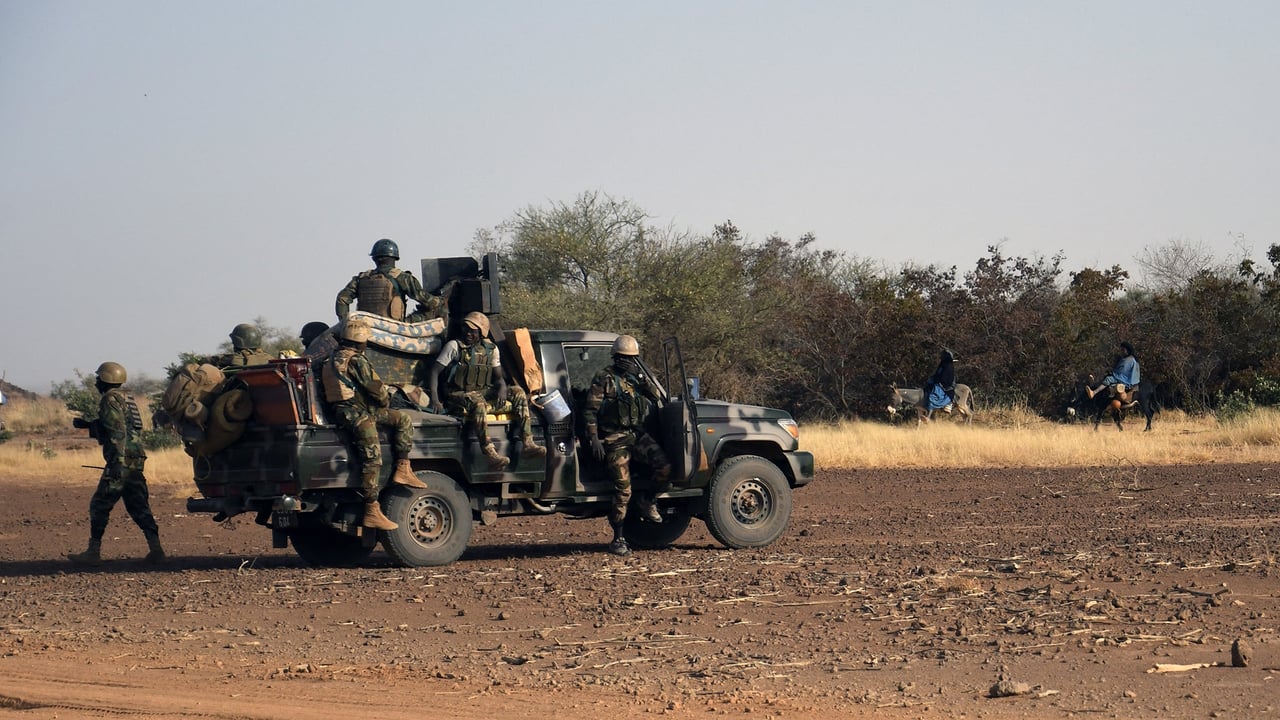
The recent attack on the strategic Al-Wigh airbase in southern Libya by the 'Chamber of Operations for the Liberation of the South' (Cols) marks a significant escalation in the ongoing struggle for control in the country. Formed in January 2026 under the leadership of Mohamad Wardougou, Cols explicitly rejects Marshal Khalifa Haftar's dominance over the Fezzan region, a vital area rich in hydrocarbons. The choice of Al-Wigh, located near the borders with Niger and Chad, underscores its strategic importance, not only for its proximity to neighboring countries but also due to the presence of Russian Africa Corps members, who support Haftar's forces.
This assault, dubbed 'Arendiga,' saw the assailants film their actions and seize a cache of weapons, including rocket launchers and anti-aircraft jamming systems, along with capturing approximately 15 LNA soldiers. The incident occurred concurrently with US-facilitated meetings between eastern and western Libyan military chiefs in Sirte, ironically highlighting the deep-seated divisions that continue to plague the nation despite diplomatic efforts. The attack serves as a stark reminder that while international attention often focuses on the coastal power centers, the vast and resource-rich southern territories remain a critical battleground for influence and control.
Escalating Conflict and Regional Implications
The LNA's swift retaliation, dubbed 'Operation Scorpion Hunt,' on July 14, demonstrates the intensity of the conflict. LNA forces struck positions held by Wardougou's group, which frequently retreats across the porous borders into Niger and Chad. This cross-border mobility is facilitated by Wardougou's Toubou tribal affiliations, whose communities span these three nations, effectively rendering national borders symbolic in practice. The LNA's previous pursuit of attackers into Nigerien territory using drones in February indicates a willingness to extend its operations beyond Libya's official boundaries, raising concerns about regional spillover.
The conflict has also spilled into the media, with both sides engaging in a propaganda war to sway public opinion. Cols released videos of captured LNA soldiers, mostly from southern Libya, while the LNA countered with its own footage of prisoners, claiming some were Chadian, Nigerien, or Sudanese—a claim disputed by Wardougou. This media battle underscores the importance of narrative control in a fragmented conflict where legitimacy is constantly contested. The presence of Russian paramilitaries, who view Libya as a strategic foothold in Africa, further complicates the geopolitical landscape, suggesting broader international interests at play.
The Shifting Sands of Tribal Alliances
General Saddam Haftar, the LNA's second-in-command, was dispatched to the South on July 14 to bolster troop morale and address the perceived weakening of the LNA's image following the attack. This move acknowledges the vulnerability of Haftar's control in the sensitive southern region, which both Wardougou's group and the Tripoli-based government assert is merely superficial. The social environment in the South, heavily reliant on tribal networks and local alliances, is crucial for any faction seeking to establish lasting authority. Haftar's influence, however, has reportedly caused divisions even within the same tribes, with some discreetly rebelling against his clan's power while others express discontent over the LNA's diminishing sway.
While some Tuareg and Toubou tribes have publicly supported the LNA and disavowed Wardougou's actions, Wardougou himself claims these statements do not represent the true sentiments of the southern populace. He further alleges that his group's activities have led to a reduction in taxes imposed on residents by the LNA, potentially garnering local support. Analysts have also pointed to alleged links between Cols and the Tripoli-based government, suggesting that the western-backed administration may be leveraging Wardougou's group to undermine Haftar's authority in the South. This intricate web of tribal loyalties, local grievances, and external backing highlights the complex and multi-layered nature of the Libyan conflict.
Key points
- An armed group, the 'Chamber of Operations for the Liberation of the South' (Cols), attacked a Libyan National Army (LNA) base in southern Libya on July 12, 2026.
- Cols, led by Mohamad Wardougou, was formed in January 2026 to oppose Marshal Khalifa Haftar's control over the hydrocarbon-rich Fezzan region.
- The targeted Al-Wigh airbase is strategically located near the Niger and Chad borders and hosts Russian Africa Corps members supporting Haftar.
- The LNA retaliated with 'Operation Scorpion Hunt,' pursuing Wardougou's group, which often retreats across the porous borders into Niger and Chad due to tribal affiliations.
- The conflict involves a media war between the LNA and Cols, and highlights the critical role of local tribal alliances and alleged links between Cols and the Tripoli-based government.
- General Saddam Haftar was dispatched to the South to address concerns about the LNA's control and boost morale following the attack.
The ongoing US-backed meetings between the chiefs of staff from Libya's eastern and western armies, despite the recent attack, offer a glimmer of hope for de-escalation. If these talks can foster greater cooperation, they might lead to a more unified approach to security challenges in the south, potentially stabilizing the region and its vital resources.
The continued harassment by armed groups like Cols, coupled with cross-border operations and deep-seated tribal divisions, risks further destabilizing southern Libya. This could prolong the conflict, draw in more regional actors, and disrupt the flow of hydrocarbon resources, exacerbating the humanitarian situation and hindering any prospects for national reconciliation.