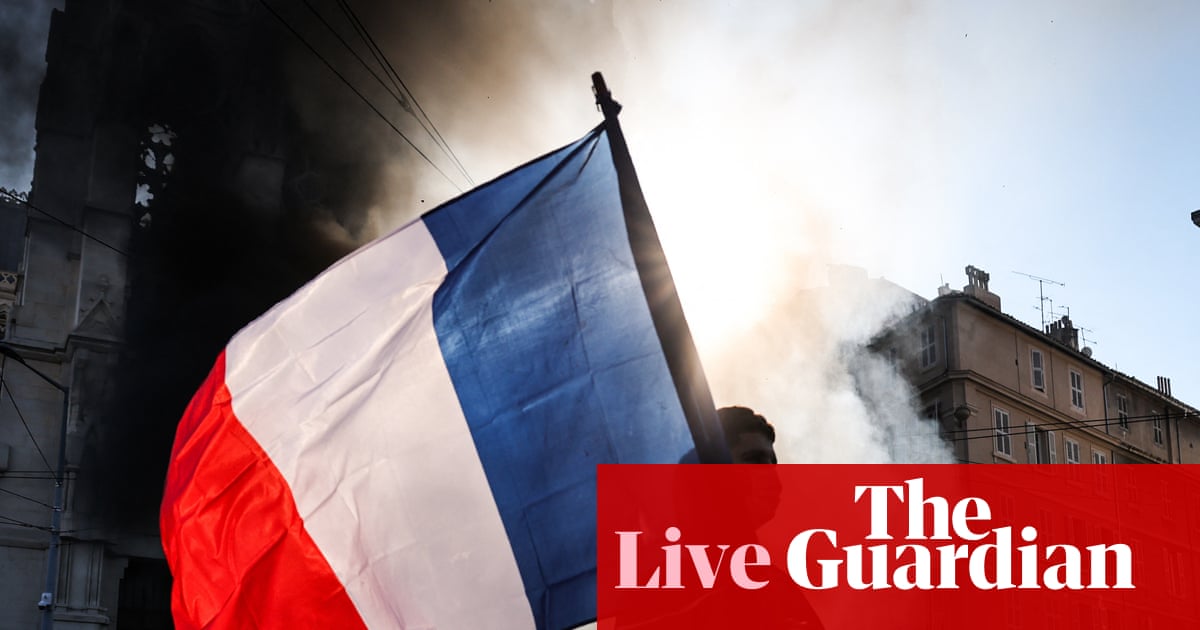
🔴 Live: Student protesters block access to Louvre museum as France reels from weekend of unrest
French President Emmanuel Macron rejected Interior Minister Laurent Nunez's resignation despite admitting security failures during widespread violent protests across France, which saw 2,400 arrests and hundreds of businesses looted.
Intelligence analysis by Gemini 2.5 Flash
France is grappling with severe unrest following a weekend of violent protests, looting, and property damage across major cities. President Macron acknowledged security failures but refused his interior minister's resignation, even as student protesters blocked access to the Louvre museum and authorities banned gatherings in Marseille.
Imagine a big playground where some kids are really upset and start making a huge mess, breaking things, and even blocking the entrance to a famous museum. The grown-ups in charge, like the principal (President Macron) and the security guard (Interior Minister Nunez), are trying to figure out what went wrong. The security guard even offered to quit because he felt responsible, but the principal said no, telling him to find better ways to keep everyone safe. Meanwhile, the principal still has to go on a trip to get more snacks for the whole school, even with all the chaos at home.
Analysis
The recent wave of unrest across France has exposed deep-seated societal tensions and significant challenges for the Macron administration. The scale of the violence, characterized by widespread looting and property destruction, suggests a breakdown in public order that has prompted a rare admission of security failures from the highest levels of government. The protests, which saw town halls burned and businesses damaged, are not merely isolated incidents but reflect a broader discontent that the government is struggling to contain.
2,400 people
The sheer number of arrests, exceeding 2,400 individuals, underscores the extensive nature of the disturbances. This figure points to a widespread participation in the unrest, far beyond what might be dismissed as fringe elements. The Justice Minister, Gérald Darmanin, specifically highlighted failings in dealing with "ultra-left" protesters, suggesting a perceived shift in the nature of the threats faced by security services. The deployment of over 800 police and security forces in Marseille alone, coupled with the firing of 4,000 tear gas grenades, illustrates the intensity of the confrontations and the significant resources required to manage them.
Louvre museum
The blocking of access to the Louvre museum by student protesters serves as a potent symbol of the escalating discontent and the broadening scope of the demonstrations. This action, aimed at expressing solidarity with high-school protests and denouncing "police repression," indicates that the unrest is not confined to specific grievances but is attracting support from various segments of society, including students. The inability of one of the world's most famous cultural institutions to open its doors due to protest action sends a strong message about the disruption and the protesters' determination to make their voices heard on a global stage.
Laurent Nunez
Interior Minister Laurent Nunez's offer to resign, which President Macron rejected, highlights the political fallout from the security lapses. Nunez's admission of being "entirely responsible for what happened" and accepting a "failure to anticipate" the challenges faced by security forces reveals the gravity of the situation from the government's perspective. Macron's decision to keep Nunez in his post, while simultaneously demanding new policing methods, suggests a strategy to maintain continuity in leadership during a crisis while pushing for operational improvements. This political maneuver aims to project stability but also places immense pressure on the Interior Minister to restore order and prevent future outbreaks of violence.
Key points
- French President Emmanuel Macron rejected Interior Minister Laurent Nunez's resignation despite acknowledging security failures during recent violent protests.
- Over 2,400 people were arrested, and more than 2,000 businesses were damaged or looted, with estimated costs in the hundreds of millions of euros.
- Student protesters blocked access to the Louvre museum in Paris to support high-school demonstrations and denounce police repression.
- Authorities in Marseille banned all public gatherings until 8 pm local time following intense rioting that saw over 30,000 looters at its peak.
- Justice Minister Gérald Darmanin cited failings in dealing with "ultra-left" protesters, describing the violence as a "form of insurrection" fueled by drug trafficking.
The ongoing unrest, coupled with the government's admission of security failures and the minister's offer to resign, suggests a period of sustained political instability and social tension in France. The economic damage, estimated at hundreds of millions of euros, could further strain the national budget and impact businesses, potentially leading to a prolonged recovery and deeper public dissatisfaction.