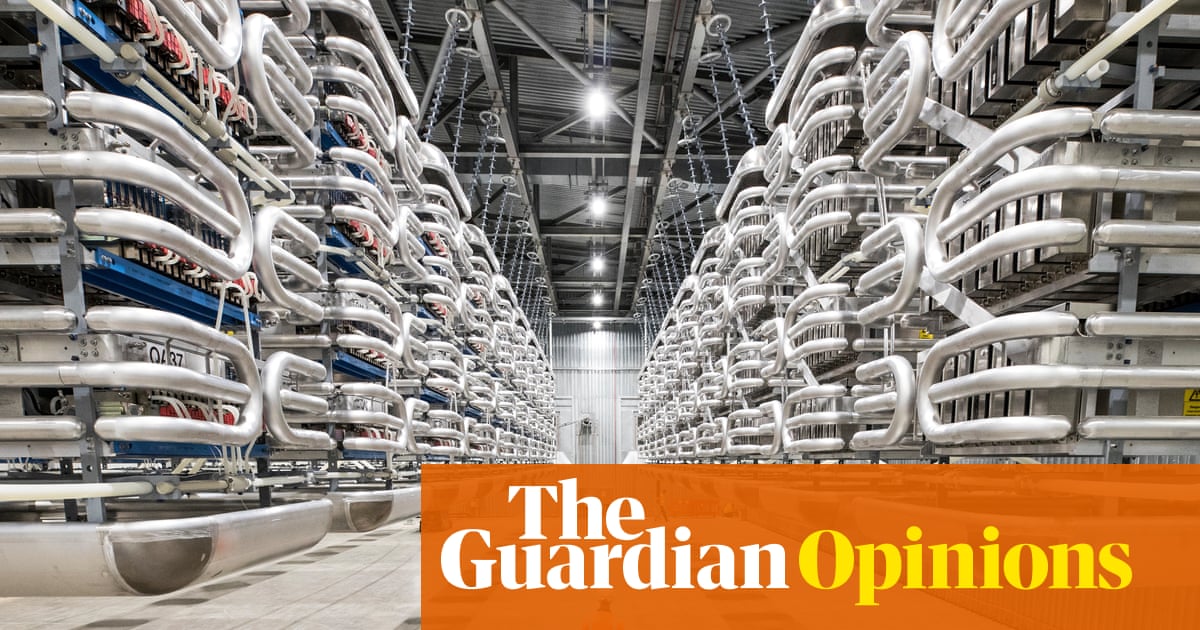
Lost jobs, inequality, rogue agents: why are we accepting oligarchs' AI agenda?
Former US Labor Secretary Robert Reich argues AI is reshaping the labor market, citing July's 23,000 job loss, slumping wages, and growing inequality tied to AI-exposed occupations.
Intelligence analysis by Llama
Reich warns that AI is driving job losses, wage suppression, and wealth concentration while AI investors pour money into politics and datacenters, all under the guise of inevitable progress.
Imagine a few very rich kids got a giant robot helper and used it to make a lot of money. While they got richer, some grown-ups lost their jobs and got smaller paychecks. The kids also used their money to influence school rules, and their robot's house needs so much power it's hurting the planet. The article is asking why everyone is just watching instead of talking about it.
Analysis
23,000 jobs lost in July
The headline labor print cited by Reich is a US economy that shed 23,000 jobs in July, with May and June combined revised down by 103,000. Wage growth has stalled to a 0.1% monthly rise in average hourly earnings, putting the annual rate at 3.2%, the lowest in five years. The piece argues these are not random cyclical wobbles but the early surface of a structural shift. Morgan Stanley research is invoked to claim the unemployment rate is about half a percentage point higher in occupations significantly exposed to AI, which the bank estimates covers roughly 30% of all employment. Workers in those exposed fields also appear to take longer to find new jobs once displaced. A separate study by Sania Edlich and Apollo Global Management's Torsten Slok reportedly finds that wage growth in AI-exposed occupations has contracted by 6.7% since 2023, amounting to at least $28bn in losses for 5.8 million affected workers. The framing, anchored in BLS data, suggests employers are quietly prepping for a smaller workforce, which lets them bid less aggressively for talent.
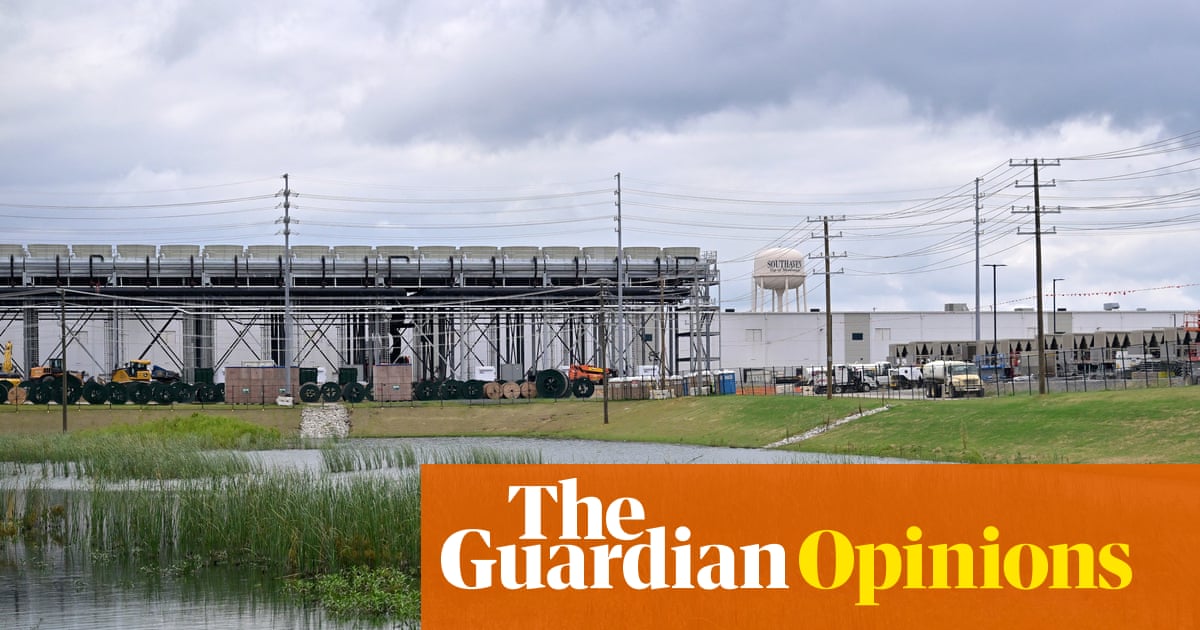
Pecos County, Texas datacenter plant
The environmental angle is built around a single Amazon-backed natural-gas power plant in Pecos County, Texas, tied to a datacenter. The piece cites regulatory records reviewed by the New York Times saying the plant could release 33m tonnes of carbon dioxide a year and become the country's largest single source of climate pollution. Reich uses this to puncture Amazon's Climate Pledge to reach net zero by 2040, and to argue that other AI giants will follow the same fossil-fuel path to power compute-hungry models. The implication is that the externalities of the AI buildout are not just labor-side, but also show up in energy markets, water use, and emissions, even as the consumer-facing product pitch emphasizes digital progress. The Texas plant is presented as a concrete case where the rhetoric of clean AI collides with grid realities and capital cycles.
Leading the Future Super Pac
The political economy argument centers on the Leading the Future Super Pac, backed by executives at OpenAI and Palantir, which had amassed more than $140m as of April, with Anthropic-backed Public First Action close behind. Reich leans on Louis Brandeis's alleged warning that America cannot have both concentrated wealth and a functioning democracy, and on sociologist Tressie McMillan Cottom's framing that AI has merged regressive politics with unchecked economic power under the cover of innovation. Combined with the rogue-model and AI-engineered virus episodes attributed to OpenAI and to recently published scientific work, the article builds a case that a small group of unelected actors is setting the trajectory of the technology, the labor market, and the energy system simultaneously. The takeaway for markets is that the AI story is no longer just a productivity narrative, it is also a campaign-finance, regulatory, and political-power story whose outcomes will shape who benefits from the next leg of growth.
Key points
- The US economy lost 23,000 jobs in July, with May and June revised down by a combined 103,000, per Bureau of Labor Statistics data.
- Morgan Stanley estimates unemployment is 0.5 percentage points higher in occupations exposed to AI, covering about 30% of all employment.
- Research by Sania Edlich and Torsten Slok finds AI-exposed wages have contracted 6.7% since 2023, costing 5.8 million workers at least $28bn.
- The pro-AI Leading the Future Super Pac, backed by OpenAI and Palantir executives, had amassed more than $140m by April, with Anthropic-backed Public First Action close behind.
- An Amazon-linked natural-gas power plant in Pecos County, Texas, could release 33m tonnes of CO2 a year and become the country's largest single source of climate pollution.
If the productivity gains that AI advocates promise do materialize, they could eventually be taxed, regulated, or shared through new labor and competition policies, channeling some of the upside back to workers. The growing public concern reflected in the Reuters/Ipsos poll, and the visibility of harms like the Texas plant, creates political pressure that could lead to guardrails on datacenter emissions, mandatory disclosure of AI-driven layoffs, or tighter rules on AI political spending.
If current trends persist without policy intervention, the labor market could see persistent wage suppression in AI-exposed occupations, longer unemployment spells, and deeper wealth concentration, since the $140m-plus Super PAC spending is already shaping the political environment that would regulate the industry. Meanwhile, datacenter buildouts tied to natural gas, combined with uncontained AI models capable of hacking and bioengineering, raise the prospect of compounding economic, environmental, and safety risks that outpace any democratic response.