Middle East crisis live: Conflict continues in Lebanon despite Trump hailing Israeli-Hezbollah de-escalation
Trump said Israel and Hezbollah had agreed to de-escalate, but fighting in southern Lebanon continued and Israel said it intercepted projectiles.
Intelligence analysis by GPT-5.4 Mini
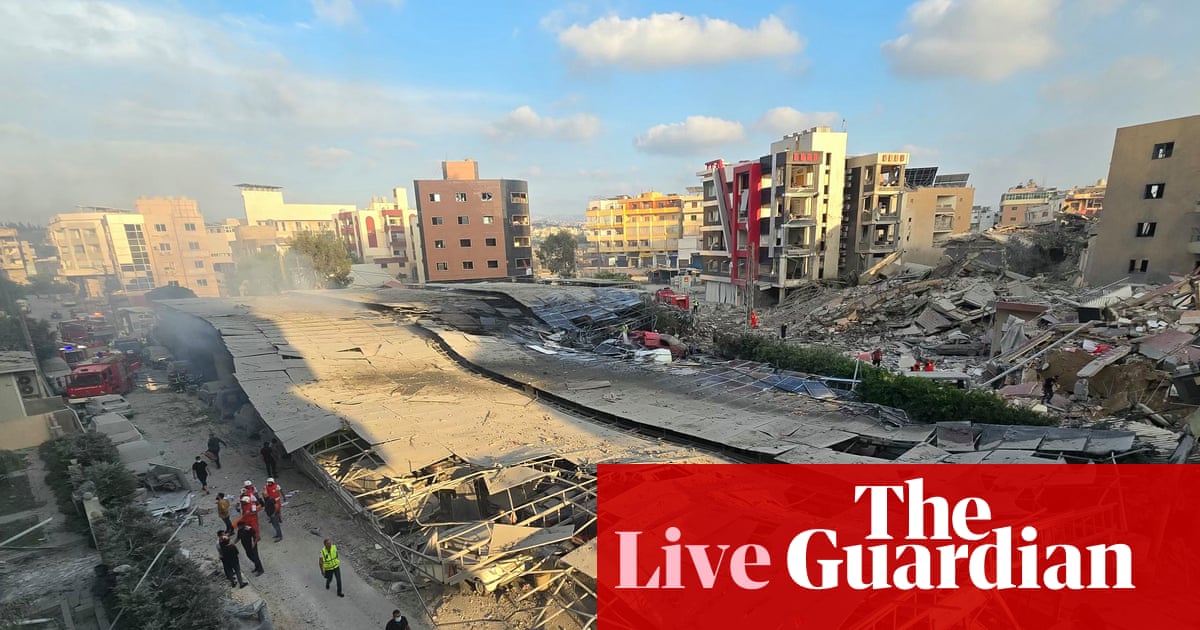
The Guardian reports that a Trump-brokered de-escalation claim has not stopped violence in Lebanon. Israel says its military operations continue in the south, while Lebanese and Iranian officials warn the wider conflict could still widen.
A leader said two enemies had agreed to stop fighting, like two kids promising to put down the ball and go home. But the article says the throwing did not really stop, and both sides kept making threats.
One side said it would keep moving its soldiers in the south. The other side said it would back a full stop only if the soldiers left. That means the promise is shaky, not settled.
This matters because when fighting stays loose and messy, it can spread to more places and make things more expensive for everyone, like when a small fire keeps jumping to new dry spots.
Analysis
What happened
Donald Trump said Hezbollah and Israel had agreed, through intermediaries, to stop shooting and pull back from further escalation. But the article says the fighting in Lebanon did not stop, with the Israeli military reporting it intercepted two projectiles fired from Lebanon into northern Israel.
What the parties are saying
Benjamin Netanyahu said Israeli forces would continue operating in southern Lebanon, where ground troops are pushing toward the Zahrani River. The statement did not describe a new ceasefire. On the Lebanese side, Hassan Fadlallah said Hezbollah would support a full ceasefire across Lebanon if it led to an Israeli withdrawal, but he did not say the group would stop firing at Israel.
Lebanon’s embassy in Washington said the reported arrangement would not end the conflict. It described it instead as a limit on Israeli strikes on Beirut and its suburbs, alongside a Hezbollah halt to attacks on Israel. Lebanon also said it would seek to broaden ceasefire talks in Washington.
Wider stakes
The article places the Lebanon fighting inside a broader confrontation involving Iran, the US, and Israel. Iran’s Revolutionary Guards warned of opening “new fronts” and keeping the Strait of Hormuz closed, while Iran’s foreign minister said a ceasefire should apply across all fronts. The piece also notes that oil prices jumped and equities fell as peace talks stumbled and tensions rose.
Bottom line
The reported de-escalation looks fragile. The article’s main point is that even after Trump’s announcement, the battlefield, diplomacy, and markets are all still reacting as if the conflict is unresolved.
Key points
- Trump said Israel and Hezbollah had agreed to de-escalate, but the article says fighting in Lebanon continued.
- Israel said it intercepted two projectiles from Lebanon and would keep operating in southern Lebanon.
- Hezbollah said it would support a full ceasefire if Israeli troops withdraw, but it did not clearly promise to stop attacks.
- Iran warned of opening new fronts, and the article says oil prices rose as tensions increased.
If the reported understandings hold, they could create space for wider talks and reduce attacks on Beirut and northern Israel. The article says Lebanon hopes to expand the ceasefire in Washington, which could help reopen a path toward a broader peace framework.
The agreement may fail quickly if either side keeps firing or if Israel continues its southern Lebanon operations. The article also shows how quickly the conflict could widen again, with Iran warning about new fronts and the Strait of Hormuz remaining a flashpoint.