Middle East crisis live: Iran launches broad retaliatory attacks after US strikes over downed helicopter
The US and Iran exchanged fresh strikes after a helicopter crash and US attacks on Iran. Iran said it hit US-linked bases in Jordan, Kuwait and Bahrain.
Intelligence analysis by GPT-5.4 Mini
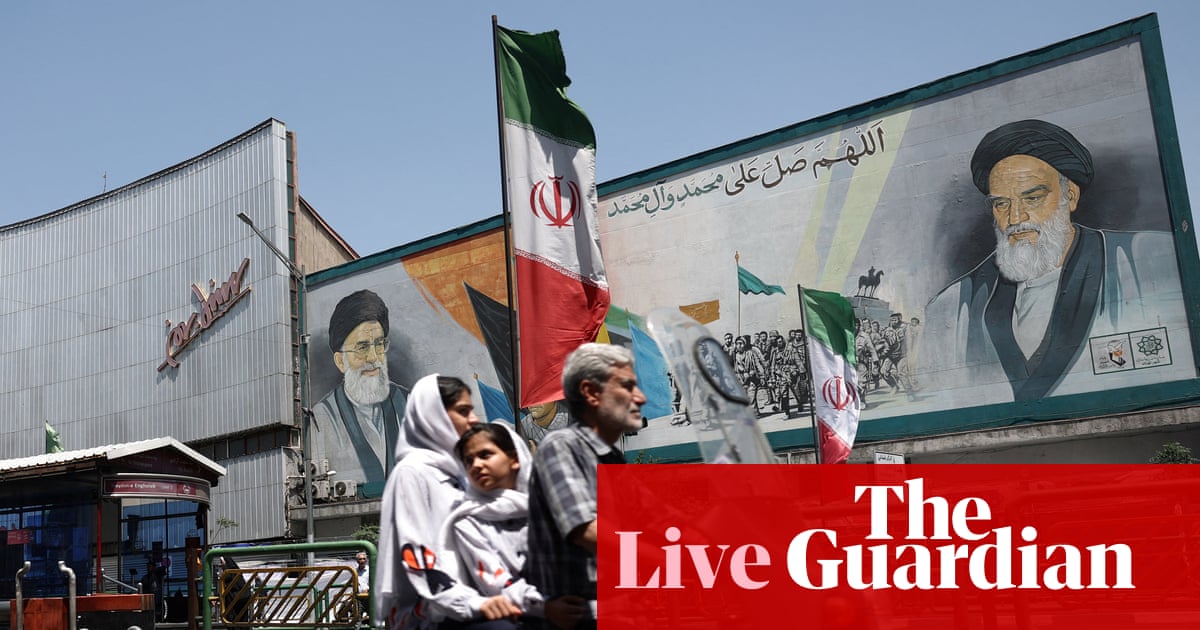
The live report tracks a rapid escalation after US strikes on Iran, which Washington linked to a downed Apache helicopter near the Strait of Hormuz. Iran answered with reported attacks on US-linked sites in the region, while Jordan and Gulf states activated defenses.
Two countries are throwing punches back and forth like kids in a schoolyard, but with planes, missiles and bases instead of fists. One side hit first, the other side hit back, and now everyone nearby is on alert.
Analysis
What happened
The Guardian reports that the US launched multiple waves of strikes on Iran after a military Apache helicopter crashed near the Strait of Hormuz. Donald Trump said the US had to respond, while US Central Command later said the strikes were completed and that American forces remained ready to defend against what it called Iranian aggression.
Iran’s state media then said the country had retaliated. According to the report, Iranian forces claimed to have targeted American bases in the region with drones and long-range missiles, including Muwaffaq Salti airbase in Jordan, as well as sites in Kuwait and Bahrain. Jordan said missiles were shot down before reaching their target, and Kuwait and Bahrain issued air raid alerts and said air defenses were active.
The broader pattern
The live blog says this confrontation sits inside a ceasefire that has been repeatedly tested over the past two weeks. The article says the US and Iran agreed to a ceasefire on 8 April, but since then both sides have exchanged strikes several times while publicly framing their actions as limited and measured.
The report also notes that the ceasefire took its biggest hit on Sunday, when Iran fired missiles at Israel after Israeli strikes on Beirut’s southern suburbs. Israel then struck Iran in response, marking the first direct exchange between the two countries since the ceasefire began.
Political stakes
Iran’s foreign minister, Abbas Araghchi, warned that no attack would go unanswered. The article also says Trump has continued to claim that a long-term deal with Iran is close, even as the military exchanges keep intensifying. The risk is that a temporary, contained cycle of retaliation becomes a wider regional conflict involving US forces, Gulf states and Israel.
Key points
- The US struck Iran after a military helicopter crash near the Strait of Hormuz.
- Iran said it retaliated with drones and missiles against US-linked bases in the region.
- Jordan said missiles were intercepted before reaching their target.
- Kuwait and Bahrain issued air raid alerts and said defenses were active.
- The live report says the ceasefire has already been breached several times in recent weeks.
If the reported strikes stay limited, the fighting could remain contained and short-lived rather than spreading into a wider regional war. The ceasefire could still hold long enough for talks about the Strait of Hormuz and Iran’s nuclear program to continue.
If retaliatory strikes keep expanding, the conflict could pull in more US, Gulf and Israeli targets and become much harder to stop. Air raid alerts and missile interceptions suggest the region is already operating on a hair trigger.